Harold Wei Chen
Fictional. Generated by AI — not a real person, and no likeness of one is intended.
63, retired in New York · rolled by @owen.prescott · card — no film
History
who has worn him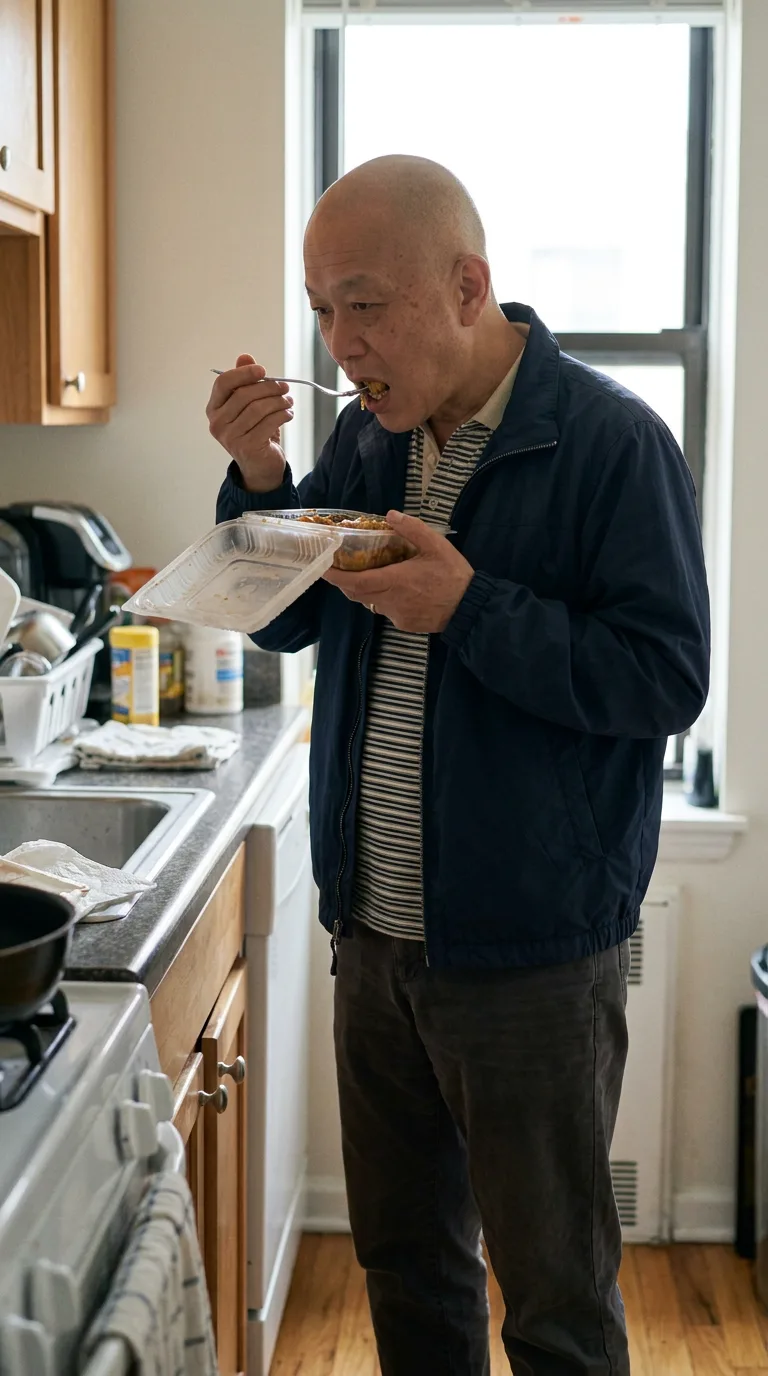
Rarest thing about him: Widowed — common, 1 in 84
Season 1seed 1983011047 · engine v11
Character card
lineage 5OR92V
His body-swap story
@owen.prescott, wearing Eric Sorensen, rolled the wheel on and woke up as Harold Wei Chen, spent under a minute in him, then spun the wheel and woke up as an unnamed body
You are standing in a lawyer's glass office in Miami, in the body of a man named Eric Sorensen, and the thing you cannot forgive him for is the quiet. He has a good chair and a good view of the bay, and a mouth that has been trained to say "per my last email." Silver hair, five-seven. You have worn him for less than a minute, and already his shoulders ache from holding up a face that wants to win. You wanted somebody else the moment you felt how little he wanted. So you open the page, and the wheel is there, and you pay, and you spin.
Light. Then the weight changes under you, and you are standing.
A fork is halfway to your mouth. Your mouth is already open, and there is rice on the tines, salt and something sweet and scorched. Your left hand holds a plastic container, warm on the underside. A window is in front of you with gray daylight in it. The coat is still on. Radiator heat comes from your left, dry and ticking.
The fork stays where it is. You breathe in through your nose. Your chest is large and slow, and the breath goes all the way down.
The jacket is the first thing to speak. Its nylon is cool against your forearms, and the cuffs grip your wrists, and suddenly it is this morning: his hand, not yours, finds the jacket on its hook by the door because it is the one that does not need ironing. He zips it halfway and stops at the mirror, runs his palm over his scalp, and that is a habit older than the bald. The skin there is warm and smooth. His wife used to do it for him, a quick rub for luck on her way out. Now he does it himself. The feeling is not sad exactly. It is a room with one chair taken away.
The container shifts in your hand, and the plastic gives him to you again. He ordered this on Sunday and rationed it. He is a man who rations. The fork's thin handle knows the exact angle of his wrist. Your hand lifts it a little higher without being asked.
Under your feet is the wooden floor, with a slight give at the seam by the stove. He knows that seam. He stepped on it carrying a pot of soup to her once, and she laughed and said the floor was applauding.
The band on your left finger presses against the container's rim. It is worn thin on the underside. You turn it a quarter inch with your thumb and what comes is not the wedding. It is a hospital corridor, a vending machine, his daughter's voice on the phone saying "Baba, eat something," and him saying he has. He is eating now, standing, because the table is too large for one person.
Your knees tell you sixty-three: a dull grain of complaint on the stairs, nothing more. Your back is straight. The stomach is hungry in a plain, honest way. You are strong in the unglamorous manner of a man who has walked everywhere for forty years.
Money comes as a calm, the kind that lets him leave a lamp on all night. He sold something, or was paid well for something, and never made a show of it. He believes in something without a name. He feels it most when the light goes strange on wet streets.
You set the fork down on the counter. The coat comes off your shoulders and over a chair. You do not have to hurry.
You lift your right hand and look at it: broad knuckles, a dry palm, a pale line of ring-wear on the other. You turn it over. Then you look up into the dark of the window, where a bald man looks back at you.
"Hello," you say, and his voice is lower than yours, patient, with Brooklyn in the vowels.
You wonder how long the hunger lasts before it comes again. Whether tomorrow you wake in this kitchen, or somewhere else.