Harold Wayne Cadotte
Fictional. Generated by AI — not a real person, and no likeness of one is intended.
60, retired in Boston · rolled by @caleb.dean.whitfield · card — no film
History
who has worn him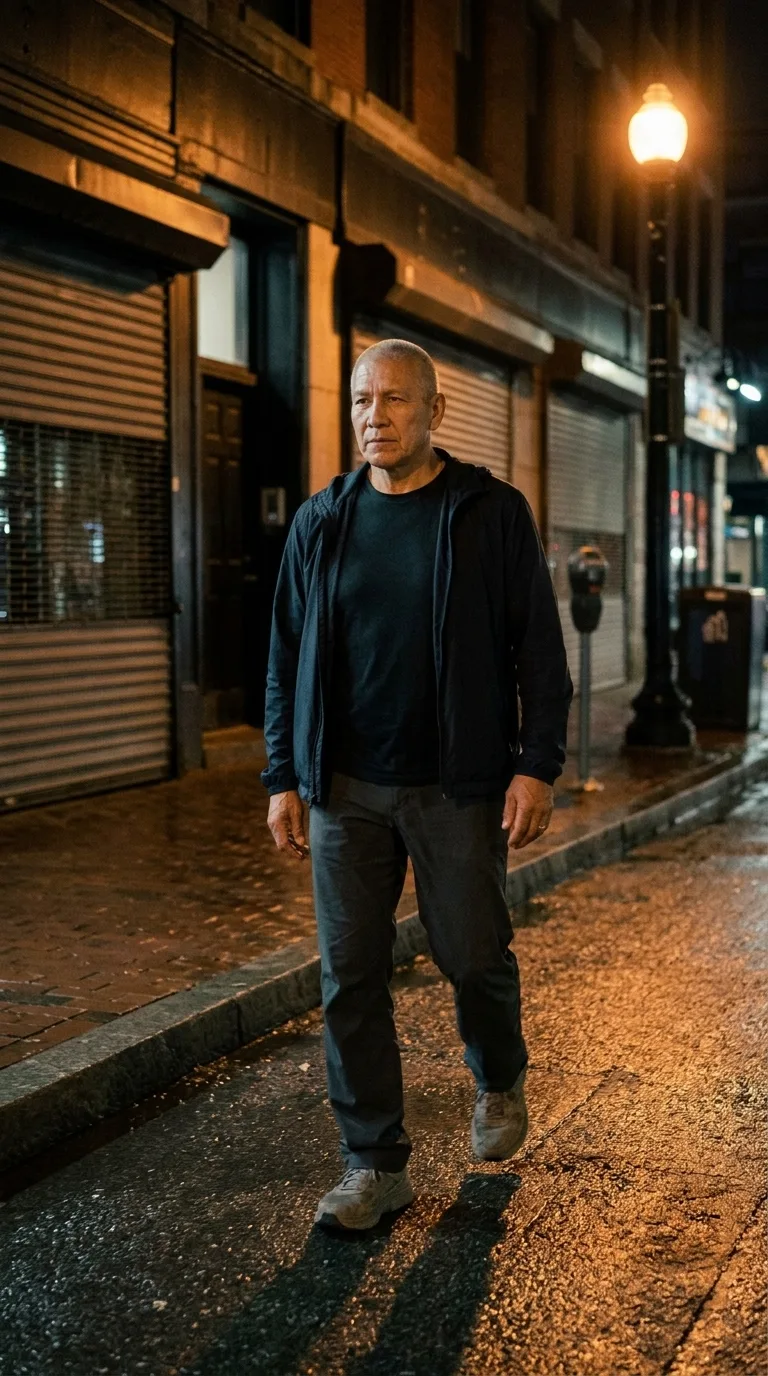
Rarest thing about him: Seriously rich — $3M to $10M — common, 1 in 88
Season 1seed 82377692 · engine v11
Character card
lineage A8GP7H
His body-swap story
@caleb.dean.whitfield rolled the wheel on and woke up as Harold Wayne Cadotte — their first, spent 6 minutes in him, then spun the wheel and woke up as Osvaldo Peña Barraza
You have wanted this since before you had a word for it. The films where the father wakes up in the son. The threads at two in the morning, each one a door that opens onto a wall. Tonight is a dull night with nothing on, and the page is still open: a wheel, a button, a price you paid without believing in it. You press. It turns, slows, and clicks onto a man.
Wet street. His weight comes up through the soles first, left shoe dragging a little, scuffing the brick every third step. Then the kerb is not where he thought, and you pitch, and your palm slaps the cold wet roof of a parked car. It holds. The scuff stops. Your steps come even and quiet and you did not choose that, the legs did.
The jacket is thin nylon, open, and the cold gets in under it. The nylon whispers against your forearms, and something opens. A morning in the kitchen, a Saturday, his arms going into these sleeves one at a time, the left cuff always catching on the watch he no longer wears. He zips it halfway and stops, because there is no one to say you'll catch cold. The ache of that is his, and it is flat and familiar, like a tooth he has stopped pressing.
The green polo is under it, collar against your neck. He bought three in one trip, for the cigar club, because a man who owns a company can wear a collar to lose money at cards. The company: forty years of trucks and bids, a handshake in a yard, and the sale of it, a number so large it embarrassed him. He told no one how large. Money sits in him like a stone in a pocket, quiet, heavy, unspent.
Your tongue finds it all in your mouth: whiskey gone sour, and under it the ghost of a cigar, leather and cedar. The drink is a problem. You can feel exactly how the evening was poured, glass after glass, the careful way he did it so no one would see it was careful.
Your right hand drifts to your left and thumbs the base of your ring finger. Bare skin, paler, smooth where metal wore it. Her laugh comes, in a car with the window down, and her hand on the back of his neck. She is the one who got away. He let her. The pride of it is still in his jaw, clenched. You unclench it.
The body: short, dense, and strong. Shoulders that remember lifting, thighs that know the weight of a long walk, knees that complain on the downslope. The scalp is cool under the air, buzzed bare, and the jaw feels smooth and raw from a razor this morning. He shaved for no one. His breath goes in and out slow, the lungs of a man who is sixty and still carries himself.
Under your feet the city hums. He prays, sort of, not to anything with a name, to the river and the dark between lamps. Walking home the long way was his version of church. At the corner, home is right. Your body turns left.
You lift your hands into the lamplight. The pale band on the finger. The knuckles thick, the veins standing, nothing of yours in them at all. You turn them over, and look up.
"Hello," you say, in his low, gravel voice, and it works. "How long do I get you?"
The street gives no answer. Somewhere the wheel is already waiting, patient, and your wanting is already stirring.