Harlan Pickett
Fictional. Generated by AI — not a real person, and no likeness of one is intended.
64, retired in Eastern Kentucky · rolled by @connor.waskiewicz · card — no film
History
who has worn him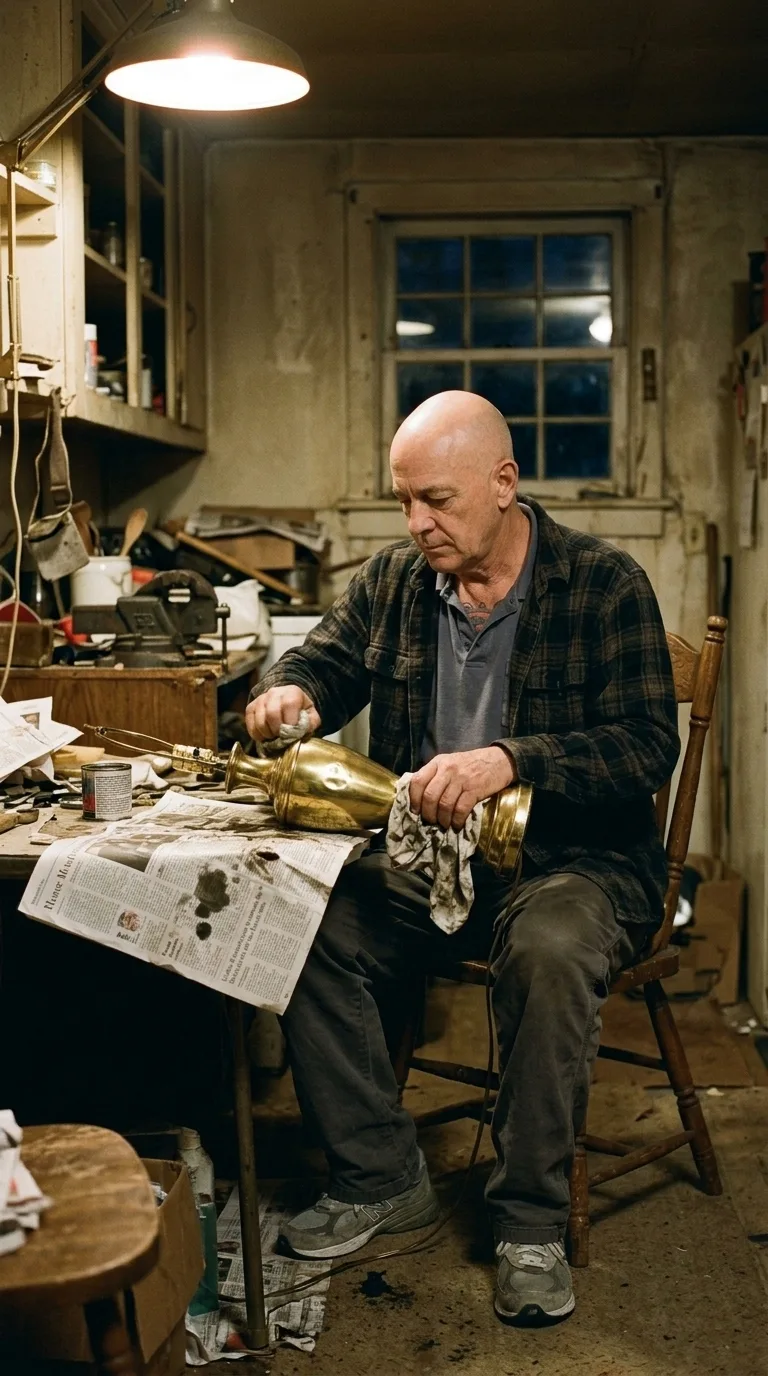
Rarest thing about him: Making a wish — common, 1 in 65
Season 1seed 1821540120 · engine v11
Character card
lineage 2NZHHJ
His body-swap story
@connor.waskiewicz, wearing Dwight Kimbrell, rolled the wheel on and woke up as Harlan Pickett, spent under a minute in him, then spun the wheel and woke up as Liam Gorecki
You are standing in a kitchen in Dallas that is not yours, in a body that is not yours, and the refrigerator is humming the same note it has hummed for an hour. Dwight Kimbrell's knees hurt on the stairs. His belly sits against the counter edge. You have been him for less than a minute, and you are already tired of the freckles on the backs of his hands. They were interesting for ten seconds.
The truth is smaller than boredom. Down the hall his phone lit up on the nightstand, and the name on it was *Mom*, at this hour, and you understood in your stomach, which is his stomach, that this was a life with people who would call. You do not want to be called. You pay your money and you leave.
The page is open. The wheel is a bright dumb circle. You press.
Then the rag is going round the belly of a brass lamp, twice, and the third pass is slower.
Nothing pours out of it. Your hand keeps on, the same circle, and the brass warms under the cloth. The bare bulb on its arm buzzes overhead. The kitchen smells of Brasso, wet newsprint and old cigarette smoke gone into the wood. The window is black. It is the dead middle of the night in a creek-bottom house, and you are polishing.
The chair is hard against his spine. The flannel is heavy on his shoulders, soft at the cuffs, and the cuffs give you the first thing: a morning, a long time ago, buttoning this same left cuff one-handed while holding a phone that did not ring. He was waiting for someone and no one came. It was not grief. It was just the habit of being ready.
The polo under the flannel gives you the collar, and the collar gives you the ink at his throat. You feel it before you see it, a faint tightness. You are twenty, in a shop in Lexington with buzzing needles and a sailor's bold lines. A man with a cigarette says *hold still, son*. The pride is his, wide as a field. You want to forget it, and the feeling does not leave.
The rag is a piece of an old undershirt, and in it you find a cold church. Folding chairs. His voice, steady in the hymn, then a long hush while he prays alone, asking for nothing in particular. You are not that. But your mouth knows the shape of *Amen*.
The lamp is warm and dented. The dent has a story: a yard sale, a woman haggling, three dollars. He wanted it because it looked like a thing that grants wishes. You feel the embarrassment, sweet and private, of a grown man wanting that. He has been rubbing at it for weeks, never patient enough for the shine.
His body is sixty-four years of hard work, wired and tender. His shoulder complains at the reach. His lower back has its quiet ache. His fingers are thick, quick and certain, and they know this circle without you. His lungs are clean now, though they remember cigarettes, and the want comes up like a smell. He knows silence in this house the way other men know music.
The shoes under you are worn to the shape of his feet. The floor is cold through them. The creek is out there somewhere, brown and slow, past the footbridge he crosses each morning, and you feel the sway of cable under him.
You stop. You lift the lamp's glint toward the light and look at the hand holding the rag: broad, spotted, scarred across no knuckle you can find, the nails clean. You turn it over. The palm is creased and dark with polish. It is warm. It is yours.
You look up, into whatever is looking back.
"Well," you say, in his low voice, a Kentucky gravel that surprises you. "Let's see what this one does."
Somewhere the wheel is still turning, a faint light behind the glass. You don't know how long you will have this hand.