Gregory Vantassel
Fictional. Generated by AI — not a real person, and no likeness of one is intended.
44, teacher in Houston · rolled by @gregory.vantassel · card — no film
History
who has worn him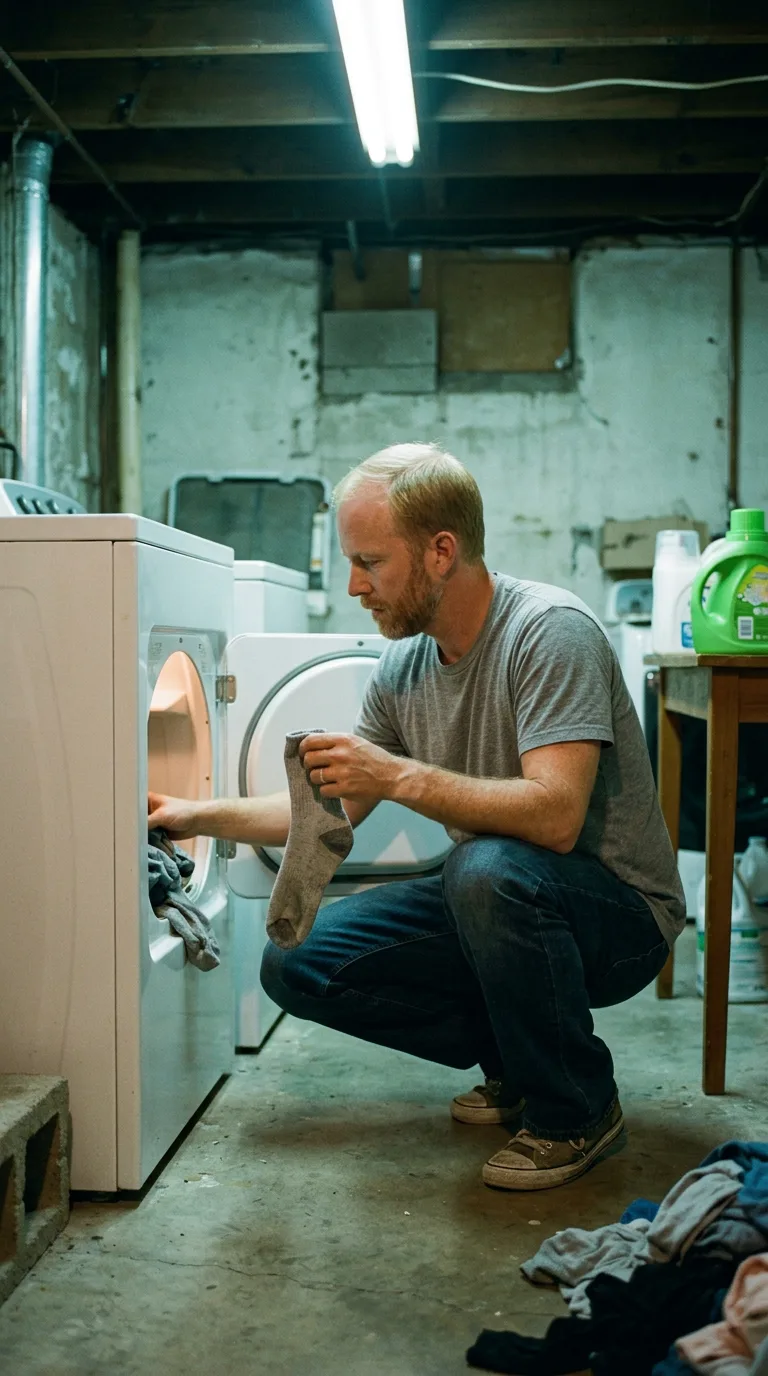
Rarest thing about him: Doing laundry — common, 1 in 36
Season 1seed 1037578367 · engine v11
Character card
lineage 37QKXL
His body-swap story
@gregory.vantassel, wearing Walter Pelkey, rolled the wheel on and woke up as Gregory Vantassel
Walter Pelkey's hands are bad hands. You noticed it inside the first minute, before you even knew his name — the knuckles swollen like something was trying to climb out of them, the right thumb that won't quite straighten, a moustache he keeps running his tongue under like it itches. Thirteen minutes on the lot of Coastal Chevrolet, a Sunday afternoon so slow the flags out front just hang, and nothing in this body wants to move right. You tried to crack his knuckles out of old habit — not his, yours, some habit from a life before any of this — and it hurt enough that you laughed out loud, alone, in a showroom that smelled like Armor All and burnt coffee. Sixty-one years old and gray and skinny and his knees pop going down two stairs. You did not come back here to spend an afternoon arguing with a body like this.
So you go to the laptop in the little back office with the Jesus calendar and the Fantasy Football bracket taped to the wall, and you pull up vessel.cards again, and the wheel is right where you left it, spinning lazy colors like a slot machine that never stopped since this morning. You pay. You spin.
The seams of the room don't even flicker. One second you are Walter Pelkey's aching hand on a mouse, and the next you are crouched, warm air pouring over your forearm, a sock dangling from your fingers by the toe. Fluorescent light hums too close overhead. Concrete under your knees through denim. Somewhere behind you a dryer door bangs gently against a dented washer, metal on metal, patient. You are thirty, forty pounds heavier than you were a breath ago and none of it is hurting. The knees don't pop. You nearly laugh again, differently.
You pull the load out in both arms, warm, heavy, smelling like the green jug of detergent on the folding table, and drop it into the basket at your hip. The shirt you're wearing — gray, thin, a V at the collar going soft from washing — sends up the first flash before you've even had a thought of your own: a Saturday morning, a woman's voice down a hallway saying *you're wearing that to the game?*, laughing, not unkind, years ago now. Gone before you can hold it.
The jeans against your knees know how to kneel like this; they've knelt on this exact concrete a hundred Sundays, this particular unevenness by the drain where the slab cracked. Houston. The word arrives with the floor itself, with the specific mildew-and-bleach smell of a finished basement that never quite finished drying out after some storm years back. A name comes with the socks in the basket — *Nathan loses these, every single week, I don't know how a boy loses one sock seventeen times* — and under the name is a feeling, warm and tired, three kids' worth of warm and tired, maybe four, laundry mountain never cratering no matter how fast you work it.
The ring finger on your left hand itches at nothing. There's no ring there. There hasn't been in some time — you feel the absence before you feel the fact, a tan line gone pale and a story folded up small enough to carry without looking at it: a woman across a table, calm, done, the two of you deciding like adults while something in your chest came apart like wet paper. Shauna. The name comes with the shirt sleeve brushing your wrist. You do not go further into it. It's Sunday; some part of this man has trained himself not to go further into it on Sundays, because Sundays have church in them and youth group at six and a sermon about forgiveness he has heard delivered by men younger than him.
Your hands square a t-shirt into a fold so fast and clean it startles you — corners meeting corners, a motion with no hesitation in it at all, thirteen years of single-parent laundry living in the wrists. These hands know this. They do not know how to hold a steering wheel the way Walter's did, easy and loose on a test drive, bantering about financing; they know how to staple a hundred and forty vocabulary quizzes into order by last name, how to hold a coffee mug that says WORLD'S OKAYEST TEACHER that a student gave him as a joke that landed closer to true than funny. A classroom comes with that, empty after the last bell, fluorescent light almost exactly like this basement's, chairs upside down on desks, him alone at the whiteboard erasing something nobody will ever read again.
There's a taste at the back of your throat that belongs to him and not the laundry — last night's bourbon, more of it than he'd admit to anyone with a collar on, the quiet kind of drinking that happens after the kids are asleep at their mother's and the house is too big for one man and three bedrooms he keeps made up anyway. You feel the shape of that loneliness the way you feel the room's temperature, ambient, always on.
You fold the last shirt. The basket is full, square-edged, better than anything that man upstairs in Maine ever managed with a drawer of wrinkled shirts he never once ironed in sixty-one years. Your knuckles ache to crack, an itch under the skin, old habit this body owns completely, and you do it, one hand then the other, the small violence of it almost satisfying.
Then you look at your hands — broader than you expected, a faded white band of skin across one finger where sun never got to, blond hair going translucent at the wrist — and you turn them over once like you're checking they're load-bearing.
"Nathan," you say out loud, to the empty basement, to nobody, trying the name in his voice, "quit losing your socks."
And you don't know yet how long you get to mean that.