Gregory Salamone
Fictional. Generated by AI — not a real person, and no likeness of one is intended.
46, priest in Chicago · rolled by @colin.hasbrook · card — no film
History
who has worn him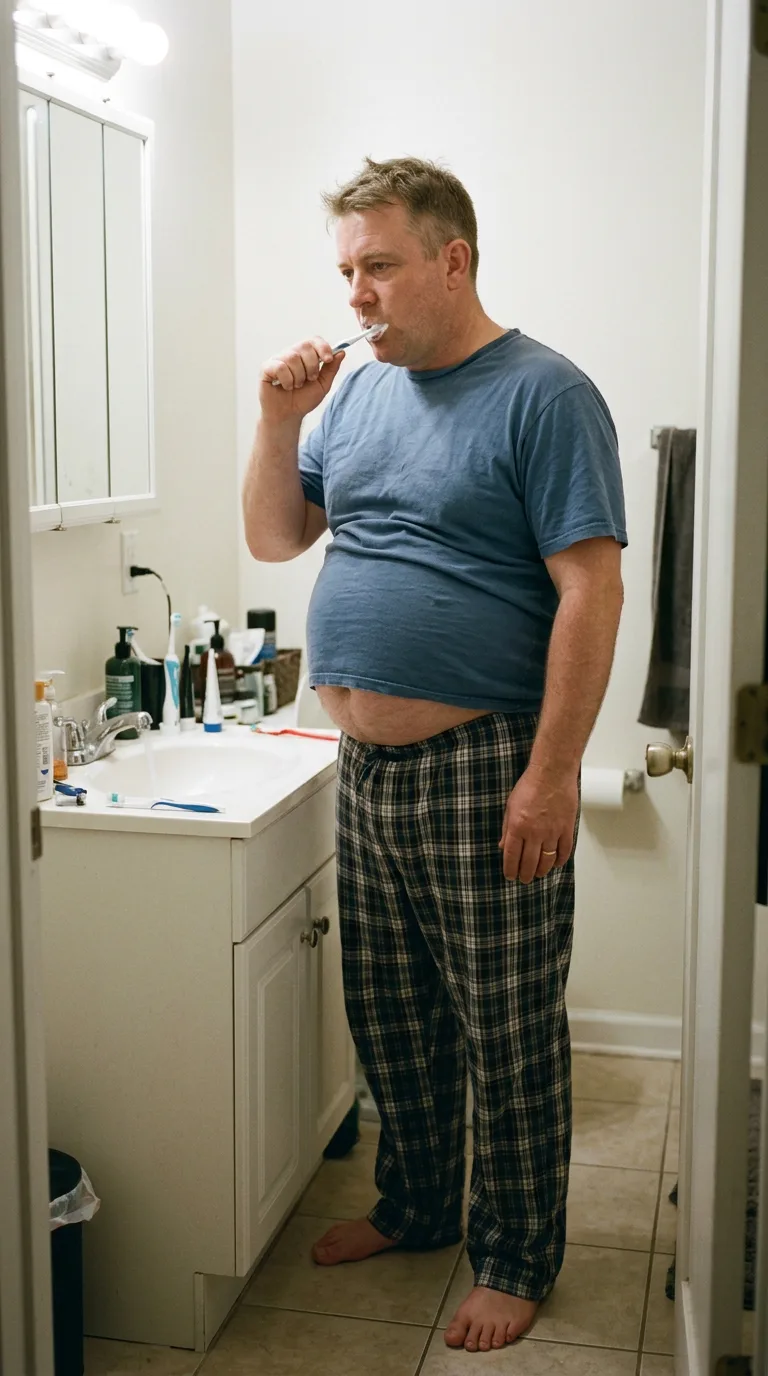
Rarest thing about him: Priest — uncommon, 1 in 128
Season 0seed 1203893782 · engine v10
Character card
lineage 2NZHHJ
His body-swap story
@colin.hasbrook, wearing Nolan Kettering, rolled the wheel on and woke up as Gregory Salamone, spent under a minute in him, then spun the wheel and woke up as Douglas Pemberton
Nolan Kettering's forearm is going numb where the client leaned on it wrong six hours ago, and the studio still smells like green soap and cigarettes that aren't his, because Nolan never touched a cigarette, that habit belongs to somebody who used to sit in this chair before him. It is the middle of the morning in New York and the shop is empty and you are standing in front of the mirror behind the counter working your thumb over the shaved dome of his skull, over and over, a tic that isn't yours but that you've inherited along with everything else — six hundred bodies deep, or five hundred ninety-eight, and this one has been yours for less than a minute and already the ceiling feels low. Not bad. Not wrong. Just known already, in the particular way a rented room is known the second you set your bag down in it. You did the ink on your own forearm an hour ago, freckled skin taking color easy, and it should have felt like something. It felt like signing a form. That's the whole reason, if you're honest, and you are, in the private unwatched way you're always honest with yourself between spins: it went quiet too fast. The wanting came back before the coffee did. So you open the laptop propped against the register, the page loads the way it always loads, plain, almost boring, a wheel on a field of grey, and you don't say goodbye to Nolan Kettering because you were never really introducing yourself to him in the first place.
You pay. You spin.
The tile is cold under bare feet, cold in a way New York never got to be this late in spring, and there is a bulb-lit medicine cabinet throwing yellow light across a gut that hangs low and soft over plaid pajama pants, and a toothbrush is in your mouth mid-stroke on the left side, foam gone thin and minty at the corner of your lip, and the tap is running loud into a sink already fogged pale from the hot. You do not gasp. You do not drop anything. The stroke you were mid-way through finishes on its own, muscle already knowing the pattern, and then — because you are here now, actually here, not merely watching — it starts again on the other side, slower, deliberate, working the back molars the way this mouth has always done it, twice on each side, no shortcuts, forty years of the same square pattern. You rinse twice. You stand the brush bristles-up in the cup, out of the grey standing water that has apparently always lived there, because some part of this hand knows exactly where that brush goes and does it before you've caught up enough to wonder why.
The shirt against your back is a plain cotton undershirt gone soft with washing, and through it comes a Tuesday in October, hanging a black clergy shirt on the bathroom door hook the night before because the collar band needs the steam from his own shower to sit right, a habit he picked up from an old monsignor in seminary and never let go of, small vanity, the only one he'd admit to. The plaid pajama pants carry a Christmas morning, his daughter — seven, then, now eleven — climbing onto the bed in these same pajama's older brother, before this pair wore through at the knee and Denise bought the replacement at the Target on Elston without telling him, and he found it folded on the dresser and laughed because she'd matched the plaid almost exactly, not quite, close enough to be a joke between them that lasted a year.
The mirror gives you his face straight on — Gregory Salamone, hazel eyes a little bloodshot from a bad Sunday of five Masses back to back, light brown hair flattened where a stole sat on his collar for three hours — and behind the face comes the collar itself, memory arriving off a thing not even in the room: the give of the plastic tab against his throat when he preached too long, the vestibule after the ten o'clock, shaking eighty hands, an old woman named Consolata gripping his wrist to tell him about her son in Stateville, the particular fatigue of listening like it's the only thing you're for. And behind that, further back, a girl who is not Denise — Colette, nineteen years gone, a name that still moves something in his chest when it surfaces, a summer before seminary when he'd thought his life might go a completely different direction, a screen door in Cicero, her laughing at something he doesn't remember anymore, only the laugh. He married Denise nine years later in a church that wasn't this one. Two kids. A boy who wants to be an architect and has no interest in church at all, and Gregory has decided, somewhere private, that this is fine, that this is even good, though he has never said that last part out loud to anyone, not even in confession, because it isn't exactly a sin, just a thing he carries.
The wedding band is cool and forgettable on the left hand, the way rings get after enough years that you stop feeling them, and it gives up nothing new, just the weight of always having been there.
Your feet ache slightly, flat-footed, standing too long at the sink the way he stands too long everywhere — at the altar, at the rail, at the reception line — a big soft-bodied man who has made peace with being big and soft, who runs a hand over his scalp when a homily isn't landing and he can feel it not landing, who has never had a drink in his life and doesn't miss what he never wanted. Nothing under $5,000 to his name and he has never once thought of that as poverty. It has simply never occurred to him to want more than the rectory gives him.
You look down at the hand still holding the toothbrush handle, then set it down properly this time, deliberate, watching your own thick fingers do it.
You look up into the fogged mirror, into hazel eyes that are yours now and were his an entire heartbeat ago, and you say, quietly, to no one, in his own unhurried Chicago vowels:
"Morning, Father."