Gregory Farwell
Fictional. Generated by AI — not a real person, and no likeness of one is intended.
64, retired in Los Angeles · rolled by @marco.villagrana · card — no film
History
who has worn him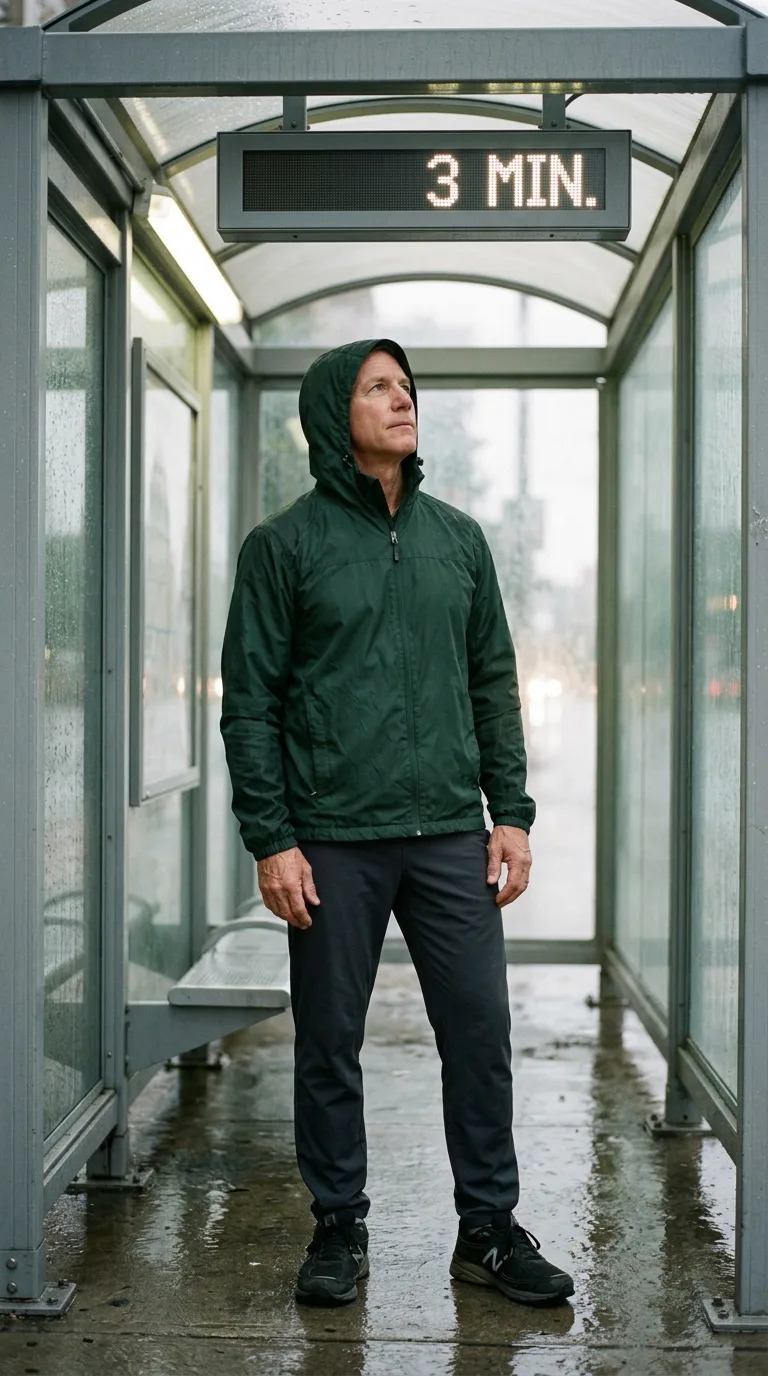
Rarest thing about him: Deep in the hole — $25k to $100k under — epic, 1 in 182
Season 0seed 1838104679 · engine v10
Character card
lineage LJL8SV
His body-swap story
@marco.villagrana, wearing Walter Chessman, rolled the wheel on and woke up as Gregory Farwell, spent 3 minutes in him, then spun the wheel and woke up as Marco Oyuela
Two minutes is nothing, and that is the problem.
You sit in Walter Chessman's body — 61, soft in the middle in that specific way of a man who used to be an athlete and stopped noticing when he stopped being one, gray hair, blue eyes, a condo somewhere above Biscayne Bay with sliding doors he never opens because the salt air ruins the hinges. It is a Tuesday evening in Miami. You've been him for two minutes. The chair under him is good leather, the kind that came with money nobody spent on anything else. His phone is on the table, cracked in one corner, a photo of a woman on the lock screen you have not asked about because you don't ask about them anymore. There are sixty of them now, in the drawer of you, if a drawer could hold that many men.
The trouble with two minutes is that it isn't enough to find out what's wrong with a body before you're already bored of finding out. Walter's knees ache going down stairs. Walter has a grown son who doesn't call. Walter is, by the account of his own mirror, exactly what he looks like: fine. Comfortable. Entirely without urgency. You didn't spin the wheel to get less urgent.
So you open the laptop that is not yours, on the site that is not anybody's, and you look at the wheel that has never once, in sixty spins, made you wait.
You spin it now for no better reason than this: Walter Chessman is a man at rest, and rest, it turns out, is the one thing you cannot stand to wear.
---
Rain. That's the first thing — not sound but weight, water finding the back of his neck where the hood has slipped, and you are standing in it, face tipped up, mouth open a little to the runoff like it's the first rain that's ever fallen anywhere. Behind you a shelter, a board that reads 3 MIN, a bench nobody's sitting on. You are not cold. You should be cold — everything about the hour says early evening, the light going long and gray over stucco — and you are not, and the body under you doesn't flinch from it either, just stands, sixty-four years old, muscular through the shoulders in a way that surprises you after Walter's soft drift, and lets the water run.
A hand — his hand, wide, a plain gold band on the left one — hangs at his side, doing nothing, and you feel the itch in it before you feel anything else: fingers wanting to worry at a cuticle that's already torn.
The jacket is the first door in. Navy, nylon, zipped to the throat — and it opens onto a closet with the light already on, an early morning that isn't this one, a wife's voice from the next room saying something about the Nordstrom return, and his own hand — this hand — pulling the zipper up over a green quarter-zip he'd already chosen without thinking, muscle memory older than the argument they were having. Marnie. Her name comes with the smell of the coffee she'd left half-finished on the counter, and the whole shape of thirty-one years arrives folded into that one motion of the zipper: her leaving grad school unfinished for his transfer to San Diego, the three kids stacked eighteen months apart like she was racing something, the year the insurance business nearly went under and he lay awake doing math that never once made her doubt him, because he'd built the never-doubting himself, brick by brick, out of nothing but consistency. He is proud of that the way some men are proud of money. He does not have the money. He has the consistency instead, and some mornings — this one included — that feels like a worse trade than it used to.
The shoes are New Balance, broken in exactly to his foot, and stepping into them this morning had brought a flash of a golf course in Palm Desert, 2019, a foursome, a man named Rick laughing too hard at something, and underneath the laughing the flat gray fact that Rick had made four times what Gregory had that year and Gregory had smiled through eighteen holes doing arithmetic on his own house. The hole he's in isn't a number he says out loud even to Marnie. Especially not to Marnie. He tells her the market's soft. He's been telling her the market's soft for six years.
The rain on his scalp brings something else, older, sharper: Diane. Not his wife — before his wife, a girl at Long Beach State with a laugh like a car backfiring, and a fight on a beach at night that he has replayed maybe four thousand times across four decades, always landing on the same unsent apology. He does not think of her often. He is thinking of her now, standing in the rain with his face turned up, because some part of this exact posture — chin up, eyes closed, water on the mouth — belongs to a night with her he never told anyone about, not even the version of himself that goes to church every other Sunday and believes, mostly, that he'll be forgiven for the parts he doesn't mention.
His chest under the jacket is solid still, gym-built, a vanity he allows himself since he stopped drinking — quit eleven years ago on a Wednesday for no dramatic reason he'd ever admit to, just tired of the taste — and vaping now instead, the tight throat-pull of it so familiar his lungs ask for it even now, wet and empty-handed at a bus stop. The blood pressure medication is in the jacket pocket, one pill left in the little plastic wheel, and touching the fabric near it brings a flat, unglamorous worry: a doctor's voice, a number too high, a promise to walk more that he's kept by waiting for buses instead of driving when Marnie has the car.
Three grown kids. A voicemail from the middle one, unheard, sitting in a phone in his other pocket. Grandkids' names arriving like a chant he could say in his sleep. None of it is unhappy, exactly. It's just underwater — the whole life pitched a little below where it should float, the mortgage and the second mortgage and the thing he hasn't told Marnie about the retirement account — and he has spent so many years holding his chin up out of that water that standing in the rain with his face lifted feels, for one unbothered body, almost like relief.
You look down. His hands, both of them, gone still in the wet — the left one with its band gone dark and shining, the right one lifted halfway, fingers open, like he was reaching for something the old owner never finished reaching for.
You turn it over once, watching the water run off the palm.
"Guess it's still raining," you say, out loud, to no one, and you don't know yet if that's true tomorrow, or in an hour, or ever again.