Grant Mallory
Fictional. Generated by AI — not a real person, and no likeness of one is intended.
42, student in Miami · rolled by @connor.waskiewicz · card — no film
History
who has worn him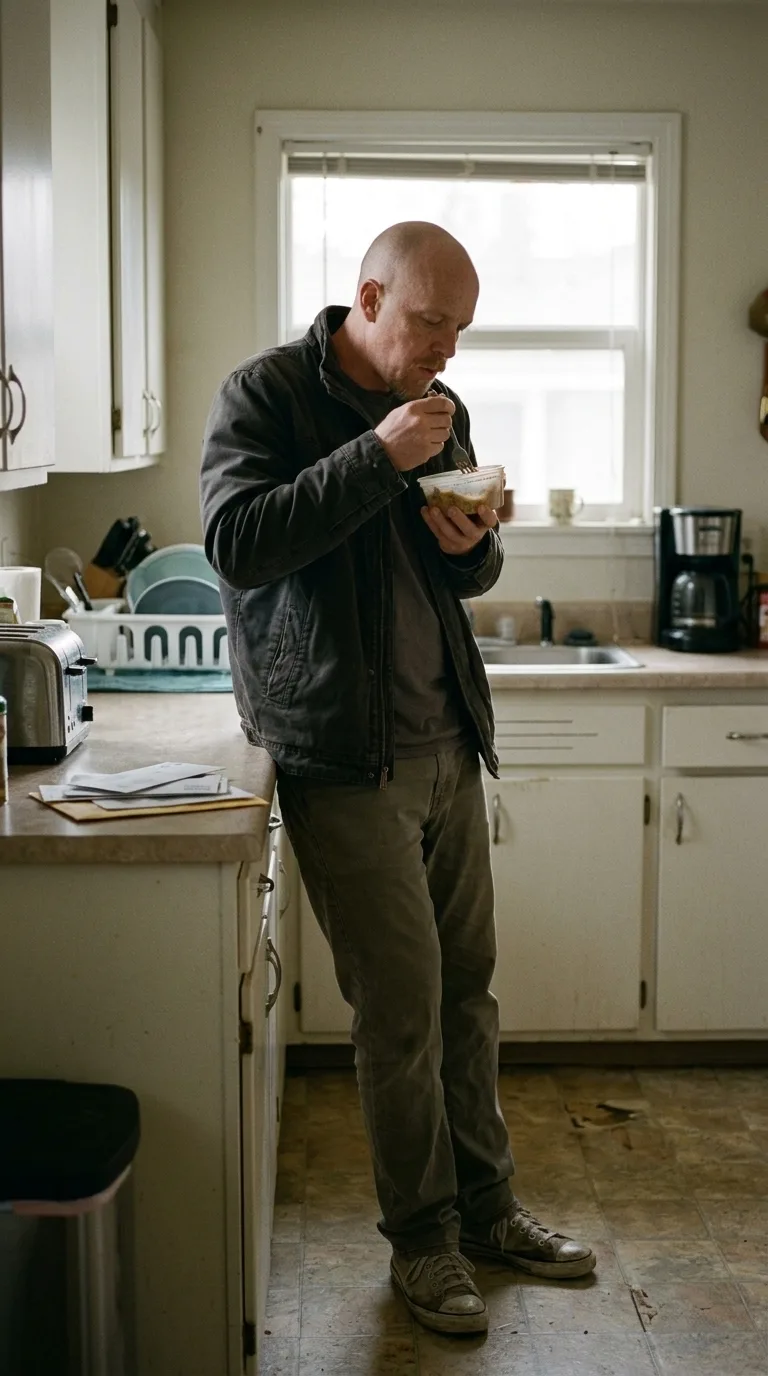
Rarest thing about him: Flips a lighter — common, 1 in 37
Season 1seed 1843829345 · engine v11
Character card
lineage 2NZHHJ
His body-swap story
@connor.waskiewicz, wearing Anthony Brandl, rolled the wheel on and woke up as Grant Mallory, spent under a minute in him, then spun the wheel and woke up as Marcus Odom
You are in a monk's body, and it is tired of silence. Anthony Brandl, thirty-two, five-foot-eight, heavy, the beard soft against your collar. You have worn him for less than a minute and already you know the trouble with him: a man who has spent ten years learning to want nothing. You sit in the cell with the cold stone under your sandals and the bell somewhere above, and you can feel that nothing in him will ever want back. You came for appetite. He has none to give. So you press the page, and the wheel turns, and the beauty mark on his cheek is the last thing you feel of him.
Then you are standing, and there is a fork in your hand.
It is halfway to your mouth. The weight arrives all at once: tall, a long spine leaning into a counter edge, the laminate pressing a line across the hip. A heavy coat is on you, canvas, stiff at the elbows. The container is warm against your left palm, rice and something brown. The window shows dark glass with your own shape in it, and behind it the first gray that is not yet morning. Somewhere the ocean is thick in the air even here, through a gap in the sash. You have been given a man eating before the day starts.
The coat is first. Your shoulders move inside it and the canvas gives him up. He bought it at a farm-supply place in a cold state, years ago, with the girl who is now the recent ex, and she said it made him look like a man who fixed things. The pocket against your hip holds a lighter, and your thumb finds the wheel before you ask it to. Flick. Flick. A small flame he does not light. It is what his hands do when he is afraid of his own thinking, and with it comes the feeling: the two kids asleep in another house across the causeway, the Sunday handoff in a parking lot, his daughter's seat belt clicking, how he stays smiling until the car turns the corner.
The fork is cool steel, the handle bent a little. He eats like a man who learned to eat fast in a kitchen with someone waiting. Under it, a taste: garlic, cumin, his own cooking, made Sunday for the week. He is forty-two and he is a student. It comes up through the counter edge and the envelopes by the toaster, whose corners your free hand has found. A tuition statement. A grade. A lawn, a laptop, the glare of the screen in the sun, twenty-year-olds calling him sir and then not calling him anything. He quit the drinking two winters ago and does not talk about it. He keeps cigars for Fridays, one, on the balcony, the smoke going pastel in the neon.
His body speaks under it all. The knees are older than the rest of him. The lower back holds a dull ache from the way he leans. His feet are wide and sure in worn canvas shoes, the soles thin enough that you feel the tile's seams. His scalp is smooth and cool, the goatee faintly rough when your wrist brushes it. His hands are strong and dry, with a chef's small scars he never earned. No, there are none; just calluses on the thumb from the lighter wheel, and a thickness at the fingertips from keys.
You look at your hands. Turn them over. They are not yours, and they are yours.
You lift your eyes to the dark window and the stranger in it.
"Hello, Grant," you say, quietly.
The fork is still in your fingers. You don't know yet how long he will last, or when the wanting returns.