Grady Ostheimer
Fictional. Generated by AI — not a real person, and no likeness of one is intended.
18, field archaeologist in Nashville · rolled by @colin.hasbrook · card — no film
History
who has worn him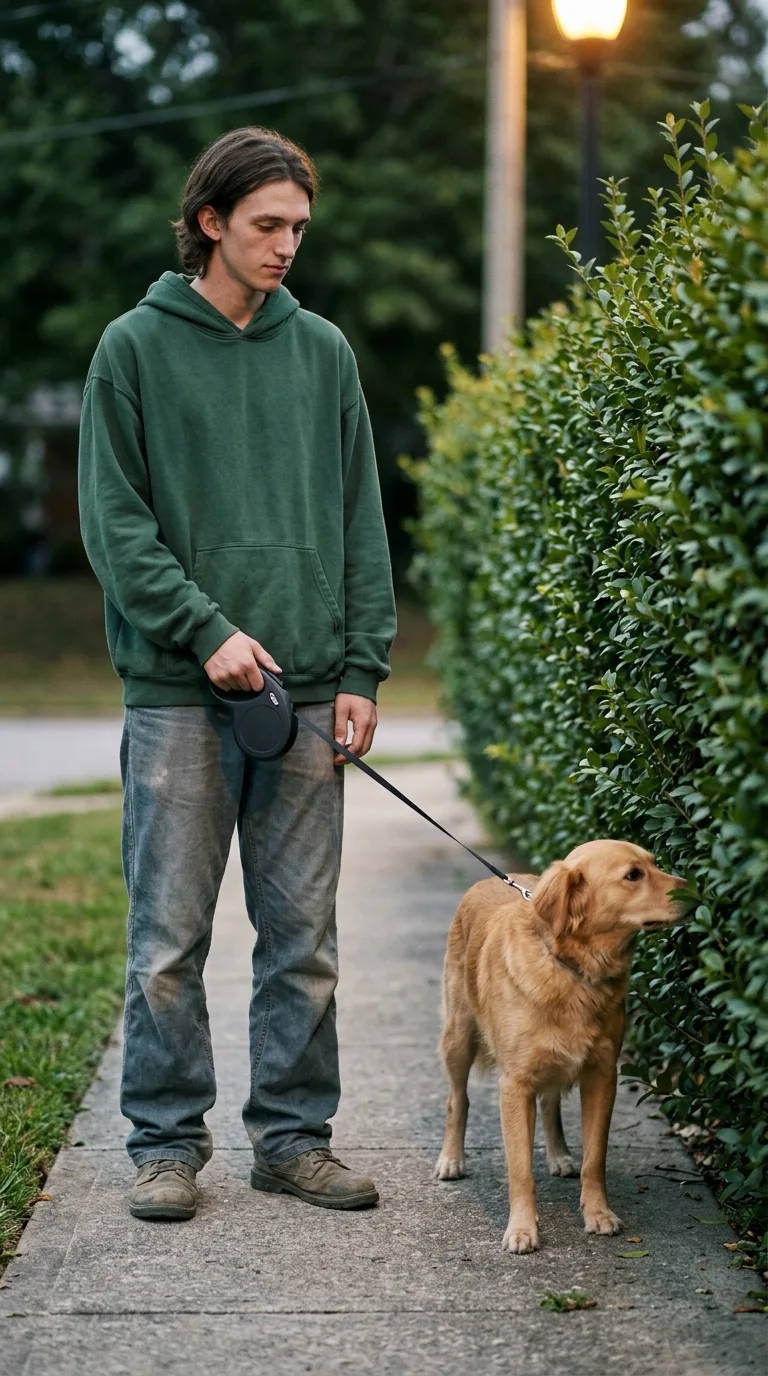
Rarest thing about him: Field archaeologist — rare, 1 in 186
Season 0seed 301939469 · engine v10
Character card
lineage 2NZHHJ
His body-swap story
@colin.hasbrook, wearing Colby Renshaw, rolled the wheel on and woke up as Grady Ostheimer, spent 1 minute in him, then spun the wheel and woke up as an unnamed body
---
The trench is a rectangle of shade in a field of no shade, and Colby Renshaw's knees have gone past hurting into something else, some low hum you stop noticing until you notice it again all at once. His back is doing the thing his back does after forty. His lazy eye drifts when he's tired, and he's tired, and the string lines overhead throw a grid of thin shadow across dirt he has been picking at since seven. Western Kansas in the afternoon does not have weather so much as it has one long flat assault, and he has a dad's body for taking it in — soft where it shouldn't be, strong where it has to be — and none of it is his, not really, not anymore, though it has been his for less than a minute and will go on being his exactly that long.
You are not bored of him. That's not it. It's that forty minutes ago you flipped a shard of grey-ware with the trowel and felt, in his hands and not yours, the specific ache of a man who wanted to be an archaeologist since he was nine and is now forty pounds past enjoying it, alone in a rental with a lazy eye and a bad knee and a job that has stopped being about wonder and started being about grant paperwork. It isn't unbearable. It's just used. You have been a lot of men and this one is fine, this one is serviceable, and serviceable, after a hundred and sixty-seven of them, has started to feel like an insult. So you set the trowel down in the dirt, wipe your palm on your thigh, and you take out the phone you don't remember buying with the money you didn't remember earning, and you open the page with the wheel on it, the way you have a hundred and sixty-seven times before, already halfway gone from him, already not caring what his knees think about any of it.
You spin.
—
The leash goes slack in your hand and then it isn't your hand, it's a stranger's — long-fingered, callused at the base of each finger in a pattern you don't own, a white crescent of an old blister gone hard on the palm. The dog looks up past a hedge, ears back, reading something in your face before your face has decided what it's doing. Evening light, or the tail end of it, comes down gold through a gap in the trees, and somewhere behind you neon is starting to bleed pink into a sky that hasn't fully committed to dark. Your body is not the body you had four seconds and one time zone ago. It has kept going up where his had stopped and spread; you are taller by a head, cut down to almost nothing, a skinny eighteen-year-old frame standing very still on a Nashville sidewalk while a dog waits for a walk that has, for a second, forgotten how to happen. The leash is a coil of plastic and nylon, warm from a hand that isn't yours yet either. You wind it twice around your palm — his palm, your palm now — and you start walking, and the dog has to trot to catch the new rhythm of a stride that used to know exactly what it was doing and now, for one stride, doesn't.
—
The hoodie is what gets you first — worn, oversized, a green gone soft and pale at the elbows from washing, and the smell of it opens something before you've even decided to let it: a laundromat two blocks from a rented room, quarters in a jar, a girl's voice complaining about the dryer sheets he never buys. Sarah. Not gone long. Six weeks, maybe seven — the specific ache of it is fresh enough to still have her name attached and not yet worn down into just a shape-shaped hole. You feel, underneath the leash-hand, the particular flavor of missing someone who is fine, who is dating someone new already probably, who you catch yourself checking for online at two in the morning between site reports.
The trowel-hand — his hand, the muscle memory sitting right there under the skin — remembers this morning before this evening does: kneeling in a trench squared off with string, sun flat and total on the back of his neck, sweat cutting lines through dust on his forearms, the particular satisfaction of a soil change under the point of the trowel, a color shift that means something is about to surface that hasn't seen light in longer than anyone alive. He is good at this. Eighteen and already good at the patience of it, the stillness required, hours of nothing then one hairline of difference in the dirt that makes the whole day. It is the thing he is proudest of and has told almost no one, because it sounds, said out loud, like nothing — I found where the color changed.
The clothes come back in order, the way clothes do: the flannel shirt from the portrait, the one you're not wearing now, remembered anyway because your hands dressed in it this morning before the site, buttons done one-handed out of habit, sleeves rolled twice each, the fabric gone soft and pale with washing and dust in the way canvas gets when it's the only work shirt you own that fits your arms. Then tonight's clothes, actually on you: the hoodie pulled on inside out first and corrected with a small private curse nobody heard, jeans already gone grey-brown at the knee from three weeks of trenches he hasn't bothered to wash out, boots laced loose because his feet ache by evening and he likes the give. Getting dressed for a dog walk is not a decision. It's the last thing that happens before the mind lets go for the day, and it comes back to you now exactly that unremarkable, exactly that whole.
His jaw is already moving — gum, always, some flavor gone to paste hours ago, working itself between molars without him ever once deciding to chew. It's not his hand that does this without him, it's his mouth, and you feel it now as your own unbidden rhythm, something the body does to keep from being still. You feel, too, the specific tiredness of a day of kneeling: a strip of pain low across the back, the knees not blown out yet the way Colby's were but young enough that they don't complain either, just quietly log the hours. Skinny, rangy, taller than anyone expects up close — a body built by four years of outdoor labor and nothing else, no bar work, no lifting for its own sake, just trench-fit, the specific leanness of someone who forgets to eat lunch on site days. Blue eyes that the portrait light caught flat and a little wary. Hair too long for the sun he works in, always sticking damp to the back of his neck by two in the afternoon, currently framing a face that has never once had to think about what it looks like because nobody's ever told it to.
No faith in him to reach for, no vice worth the name, no debt and no savings either — a life light enough that it barely drags at you, and that lightness is its own kind of sensation, a body with nothing much holding it down.
The dog pulls again. Somewhere down the alley a slide guitar leaks out of a bar door propped open against the heat.
—
You stop walking. The dog stops too, confused twice in one minute now, and sits.
You lift the hand that's holding the leash — his hand, chewed-nail, callused at the trowel-grip, a thin white scar-line of nothing in particular along one knuckle that was already there before you and isn't yours to explain — and you turn it over in the last of the light, watching it like it might do something you didn't tell it to.
"There you are," you say, to no one, to the dog, to the hedge, and your voice comes out younger than you're used to, and you almost laugh at the surprise of that.
The gum shifts against your molars on its own. Somewhere behind you, unreachable now, unreachable for good, a man in Kansas is on his knees in a trench that has gone dark, holding a trowel he doesn't remember picking back up. You do not think about him. You do not know, standing here on a strange sidewalk in a stranger's damp hoodie, whether this is the one that lasts a year or the one that lasts an hour — nobody tells you that, nobody has ever told you that — and the not knowing sits in your chest exactly where the wanting usually starts.
The dog looks up at you, waiting to see which way you'll go.