Gordon Maslak
Fictional. Generated by AI — not a real person, and no likeness of one is intended.
45, billionaire in Las Vegas · rolled by @colin.hasbrook · card — no film
History
who has worn him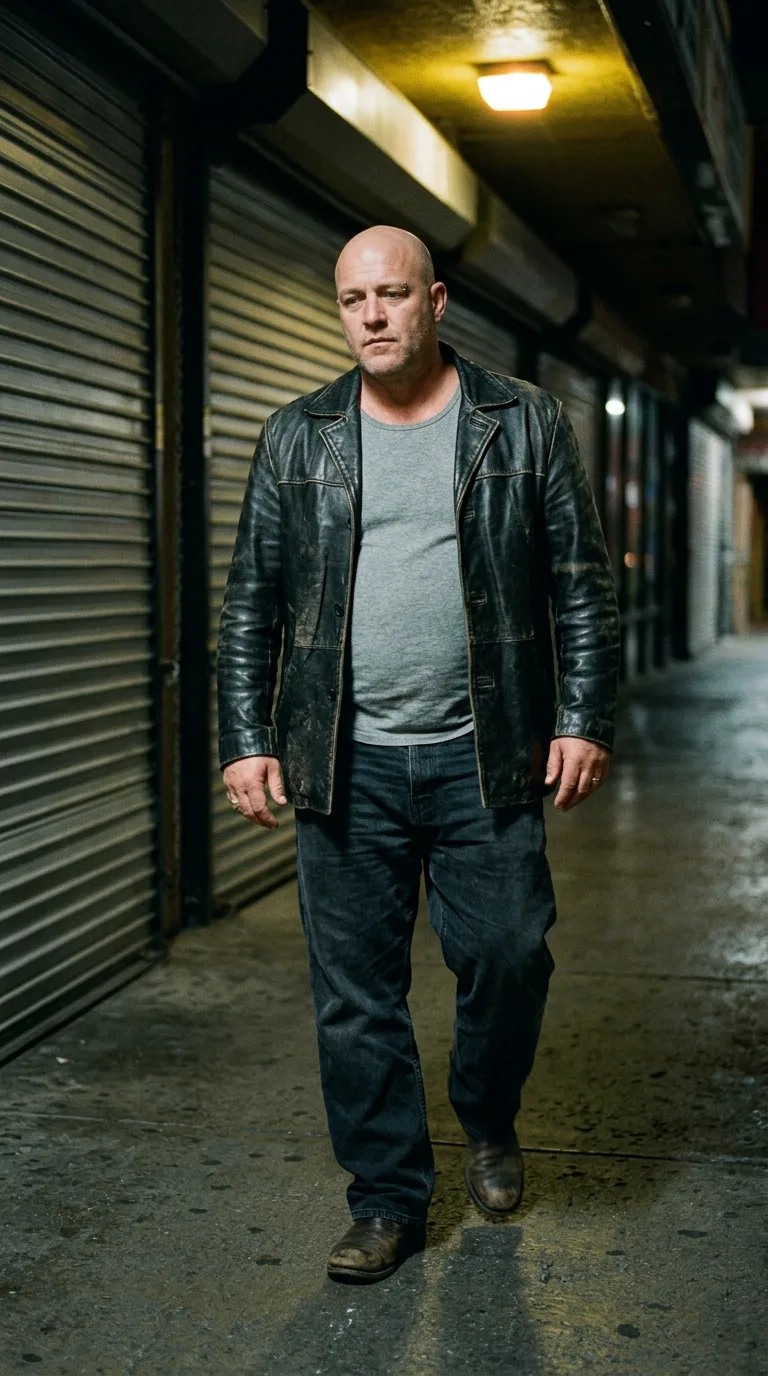
Rarest thing about him: Eyebrow — legendary, 1 in 208
Season 0seed 1235942835 · engine v10
Character card
lineage 2NZHHJ
His body-swap story
@colin.hasbrook, wearing Travis Bearclaw, rolled the wheel on and woke up as Gordon Maslak, spent under a minute in him, then spun the wheel and woke up as Gary Hollenbeck
You are wiping ink off your fingers when the itch starts again.
It's Sunday, midday, El Paso light coming hard through the shop's front window, and you are Travis — you have been Travis for less than a minute, the wheel's ink not yet dry on the idea of him — and already the wanting is back, already the shop feels small: the smell of green soap and stencil wax, the buzz of the autoclave, a kid's forearm you were about to touch up, waiting, patient, not knowing his artist just changed hands twice in sixty seconds. Your hands — his hands — know this machine, the weight of the grip, forty years of somebody else's muscle memory sitting in your wrist like a tool you never bought. It is a good body. It is not the reason you spun. You spun because a good body is not the same as a new one, and four hundred plus men in you are not because any single one of them held you. You set the machine down. You tell the kid you need five minutes. You go in the back, you take out the phone, you open vessel.cards with ink still under one nail, and you spin.
The street tips. Wet asphalt, sodium light, and your hand — bigger now, softer at the knuckle, a ring on it that was not there a half-second ago — is flat against the cold hood of a parked Lexus, catching a stumble that was already happening when you arrived inside it. Two in the morning here, though your last minute was somebody's lunch hour, and the gap between those two clocks sits in you like a missed stair. Jacket open. One shoe was scuffing the pavement every third step and now it isn't — the gait smooths out under you without your asking it to, forty even steps, and at the corner where the muscle wanted to go straight, you turn it left instead, off the way home, because home was never the point.
The leather jacket is the first thing that talks. It's worn soft at the elbows in a way $50M doesn't usually allow itself, and through it comes a Tuesday — him buying it off a stall in some flea market decades back, before the money, wearing it because a woman he loved once told him he looked like somebody who didn't need to prove anything, and he never got rid of it after she was gone, even once he could afford to burn a hundred like it and not notice. The woman who got away. You get her name in fragments — Renata, maybe, or that's just the sound the memory leaves — and a terrace, another one, years earlier, cheaper, her laughing at something he said that wasn't that funny.
The ring on the left hand gives you the wife instead, careful and separate, like it knows not to blur into the first one: a woman who married the money honestly and also, somehow, him — a marriage that works in the practiced way old machines work, oiled by habit more than heat, no children in it, both of them fine with that after enough years of pretending otherwise. You feel, distantly, that he loves her the way you love a house you've lived in a long time — not what the flea-market jacket remembers, but not nothing.
The shirt under the jacket, grey and thin, brings the casino: not tonight's version of him, walking, but the version an hour ago, laughing too loud at a private table with men who work for him, a good night, the kind that happens once or twice a month and leaves a two a.m. walk in its wake because he likes, drunk, to feel the city instead of being driven through it. His blood finds the walk expensive — pressure ticking somewhere behind his eyes that his doctor has mentioned twice and he has ignored twice — but the body carries it well enough, padded, unhurried, made for rooms with better chairs than this street offers.
The eyebrow barbell is a small cold weight you notice last, and it gives up almost nothing — some younger dare, some version of him before dynasties, before wives, when a bar through the brow felt like the whole of rebellion he needed. It has outlasted the reason for it, the way jewelry does.
His shoes, scuffed now stopped scuffing, remember nothing at all — they're new, barely broken in, bought by someone else on staff and never really lived in — and that's its own small fact about him: how much of his life somebody else selects and he simply steps into.
You flex the hand with the ring on it, turn it palm-up under the one working streetlight, and it is nothing like the ink-stained hand you had an hour ago in a different decade of somebody's life.
"Left," you say out loud, to the empty street, in his voice, testing it. "Home's the other way."
You don't go back.