Gilberto Nuñez
Fictional. Generated by AI — not a real person, and no likeness of one is intended.
39, waiter in Phoenix · rolled by @gilberto.nunez · card — no film
History
who has worn him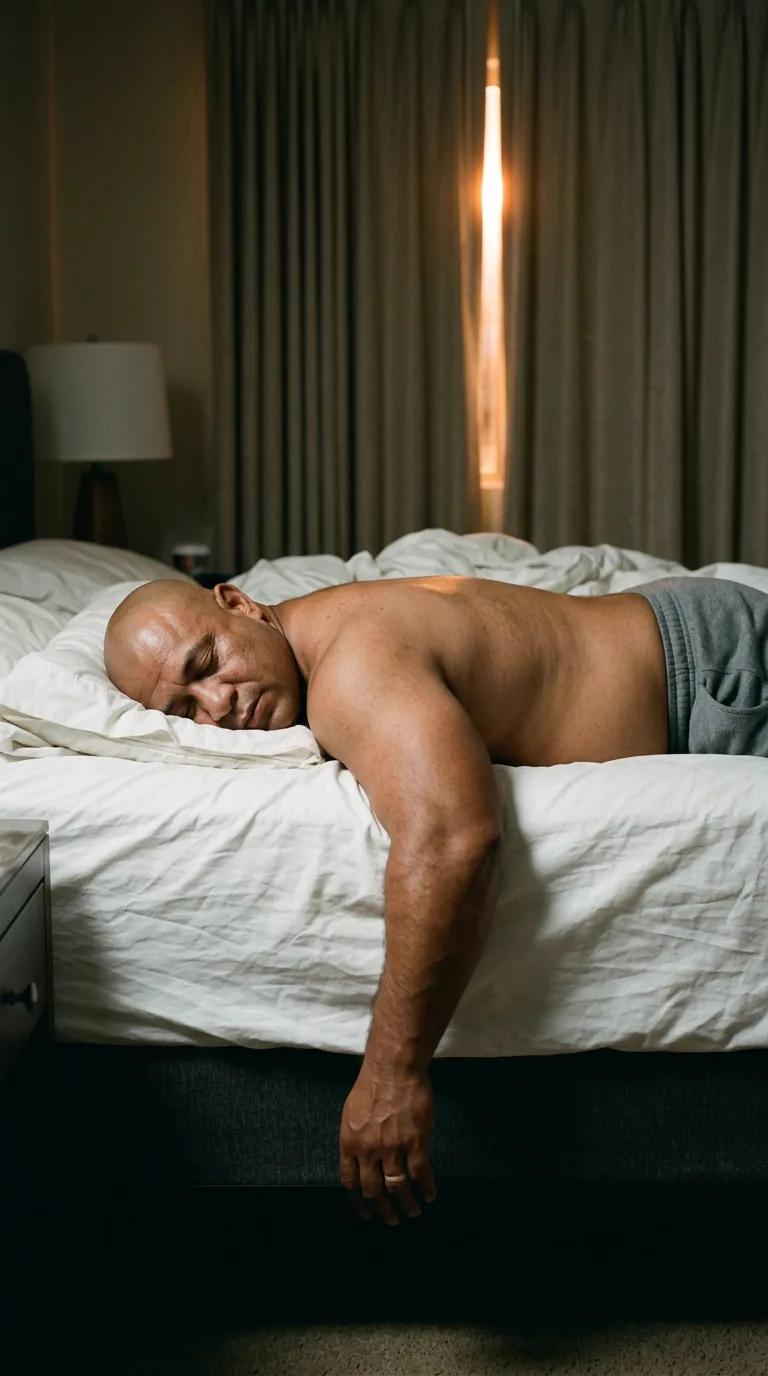
Rarest thing about him: Well off — $500k to $1M — rare, 1 in 38
Season 0seed 1794078018 · engine v10
Character card
lineage 5ATMTL
His body-swap story
@gilberto.nunez rolled the wheel on and woke up as Gilberto Nuñez — their first
The evening is nothing much, which is exactly why you finally do it. Work was work, the scroll was the scroll, and somewhere in the loop of half-watched videos you land on the site again, the one you have bookmarked for a year and never trusted enough to pay for. Tonight you pay for it. A wheel on a plain white page, a spinning wait, a name you don't get to choose. You have wanted this since before you could say why — every story where somebody wakes up as somebody else, every thread at two in the morning asking would you, could you, what would you take with you. You press spin expecting nothing. The page tells you nothing happened. It is lying.
You are face-down in sheets that are not yours, in a body that is not yours, and the first thing you understand is weight — a heaviness through the shoulders and gut that isn't fat exactly, isn't muscle exactly, is both, settled and permanent, like the body has made peace with itself a long time ago. An arm hangs off the mattress. Streetlight comes through a gap in curtains that don't belong to any room you've stood in. Then the breathing changes — ragged, then even, one single breath — and the arm draws itself up without you deciding to, and the whole body rolls onto its back, hands folding at the chest like a man laid out for a viewing. You didn't do that. It did that, or something under you did, some muscle memory of stillness that has nothing to do with the wanting you brought with you.
For a second there is only that: dark room, unfamiliar ceiling, a body arranged like a corpse in a movie about corpses, and you inside it like a hand inside a glove three sizes too broad.
Then the touching starts, and with it, him.
The sheet under your palm is cheap cotton, hotel-cheap, and it opens like a door: this isn't home. There hasn't been a home in the marital sense for three years. A name comes with the thought — Marisol — not spoken, just present, the way a smell is present, and behind it a whole apartment you don't live in anymore, boxes half-unpacked eight months after the fact because unpacking felt like admitting it. You feel, distantly, a custody schedule folded in a wallet somewhere in this room, a daughter's height marked in pencil on a doorframe you no longer own.
The ring finger. Your — his — thumb finds the bare place on it without meaning to, the ghost-groove of a wedding band, and that single touch drags up a whole wedding: a backyard in South Phoenix, string lights, his mother crying the good kind of crying, Marisol in white looking at him like he'd invented something. Fourteen years of dinner rushes and double shifts to make rent on that first house. The finger keeps turning at nothing, an old tic, worrying a ring that isn't there anymore, and you understand this is a thing his hands do without him, grief gone motor, gone permanent.
You are shirtless, sweatpants low on the hip, and touching your own chest — his chest — gives you the gym at five a.m. before doubles, the ache in a lower back that has carried trays for two decades, knees that complain on the stairs down to the walk-in. You feel how strong the arms still are under the softness, how the hands know, without being told, the angle to carry four plates stacked wrist to elbow, the flick to snap a tablecloth flat, the practiced patience of saying of course, right away to a table that has already asked twice.
It is night here and it should be — but a memory surfaces sideways, confused, of this exact body dressing for a shift that felt like morning: black shirt, sleeves rolled precise to the same fold each time, an apron with a bottle-opener clipped in the chest pocket, tied twice at the waist because once always slips. Getting dressed for a graveyard banquet shift nobody else wanted, three years ago, the restaurant repurposed at 2 a.m. for a wedding party that ran long — his memory of morning light is actually a hallway sconce, his sleep now is his midnight, flipped from the rest of the world, and some tired, funny part of him has always found that funny, telling Marisol once that he lived backwards.
Under it all is money he doesn't talk about — an inheritance, an uncle's land deal that paid off strange and quiet, more than a waiter's math should add up to, sitting untouched in an account he mostly forgets, because spending it feels like admitting the marriage might have been fixable with less worry in it. He is spiritual about it, in the vague way — thinks something is watching, doesn't go to church, believes his daughter's laugh means something. He drinks a beer at closing with the other servers and nothing stronger. Never smoked. Something about his lungs, his mother, a promise made at nineteen he never examined again.
And under all of that, simplest of all: a big, tired, decent body that carries trays, carries weight, carries a ring that isn't there anymore, still turning at a finger out of habit in the dark.
You lie there a moment longer inside all of it, his whole unhappy ordinary life humming through your palms like current through a wire.
Then you lift the hands — his hands — off his chest and look at them in the streetlight: the callus at the base of each finger, the pale stripe where the band used to sit, the fingers still moving faintly at nothing.
You say, out loud, in his voice, to the dark room, "Okay," — not to him, not to anyone — and you have no idea, none, whether you'll still be behind this face tomorrow, or four minutes from now, or long enough to learn what his daughter's name sounds like out loud.