Gerald Vance Krupinski
Fictional. Generated by AI — not a real person, and no likeness of one is intended.
61, prison guard in Small-town Ohio · rolled by @colin.hasbrook · card — no film
History
who has worn him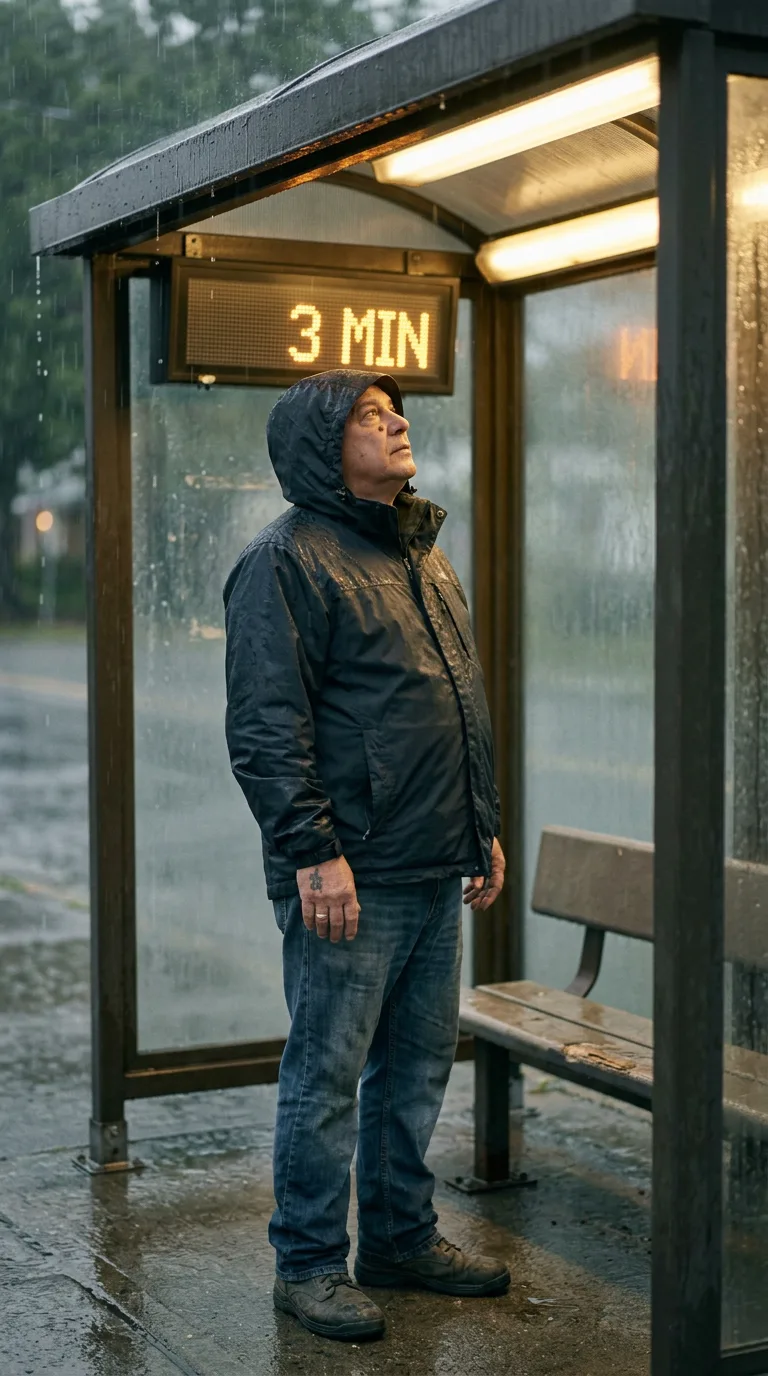
Rarest thing about him: Quitting right now — epic, 1 in 107
Season 0seed 1990206521 · engine v10
Character card
lineage 2NZHHJ
His body-swap story
@colin.hasbrook, wearing Rafael Montoya, rolled the wheel on and woke up as Gerald Vance Krupinski
You are lying on a mattress that is not yours, in an apartment that is not yours, in a body — Rafael's — that has been yours for less than a minute, and already the ceiling fan is more interesting than staying. That is the trouble with a body less than a minute old: it has no debts on it yet, nothing to weigh you into it, no argument for the morning. Detroit is asleep outside a window you have never once opened. Somewhere below, a fridge hums the way fridges do in apartments you don't pay rent on. Rafael was excited — you can feel that under your feet still, some errand or some girl or some paper due, a small warm charge going nowhere now — and it is exactly that, the smallness of it, that turns you over toward the laptop you left open on the desk three feet from a bed you have never slept a full night in. The wheel is still loaded from before. You didn't even close the tab. Four hundred and forty-nine men and none of them ever felt like enough of an answer to the actual question, which isn't who, it's again — and tonight, apparently, again wins early. You reach out with a hand that has a beauty mark on it you didn't ask for, and you spin.
The rain finds you first — not falling on you, already on you, already down the collar and cooling on a scalp that has no hair to catch it. Your face is tipped up and open-mouthed to a sky the color of primer, and your feet are planted in a sheet of runoff that has climbed over the curb and is finding the seam of your boots. A board behind you, unseen, still insists 3 MIN. You did not decide to step out from under the shelter's roof. He did, a half-second before you arrived, and you inherit the motion already finished, weight settled forward onto a stance that has stood exactly like this — hood back, face up — more times than either of you could count, though for wildly different reasons.
The jacket is the first thing that speaks. Wet nylon dragging cold against forearms that ache in both elbows before you've done anything at all, a low continuous complaint that isn't new, that is Tuesday and Wednesday and every day, a spine that has spent thirty years standing at attention on concrete and has opinions about it now that nobody asked for. The ache doesn't belong to weather. It belongs to a folding chair outside Unit C, four a.m., coffee gone cold in a paper cup, and the particular exhaustion of a man near the end of a night shift with nothing left in him but muscle memory. That's the wrongness the body itself hands you before any memory does — this is a man who should be at a rail in a corridor of cinderblock right now, keys on his hip, not standing in the rain a hundred miles and one whole life away from that. Somebody swapped him out of his shift and into weather. You don't know why yet. His hands do, a little, in the way hands know things before the mind agrees to.
The ring is next, small and cold and specific, worn thin on the inside where forty years of the same motion — off for handwashing, on again, off, on — has polished a groove only his own finger fits. Behind it, unbidden: a kitchen with a yellow light over the stove, a woman's voice saying his name the way only she says it, flattened on the vowel, half a joke worn smooth. Connie. Thirty-eight years married this June, and you get, whether you want it or not, the particular flavor of loving someone that long — not fire, something more like load-bearing wall. Three kids raised in that house, one still calling most Sundays, one who doesn't call enough, one grown and gone quiet in the way grown kids go quiet, and Gerald's private, unspoken grief that he cannot always tell if the silence means anything or just means their lives got full.
The tattoos on his forearms warm under the rain like something remembering itself: the cross first, inked at twenty-six in a shop two towns over, done cheap and done sincere; the praying hands second, added at forty after a year he does not talk about, a year with a bottle in it that ended one night on his knees in the garage, not proud, not dramatic, just done — and never touched again since, though the wanting for a cigarette is a fresher argument, one he is still having with himself, three days quit this time, patch peeling at the corner under his sleeve right now, itching under wet fabric.
The boots on the flooded curb bring up the corridor: painted cinderblock, gate after gate, a job he took at twenty-three because it was steady and stayed for thirty-eight years because by the time he thought to ask if he liked it, it had become simply what he was. Men he's watched grow old in there. One inmate, years back, who reminded him painfully of his own brother, and the guilt of how kind he'd let himself be about that, quietly, against policy. And under all of it, older than the job, older than Connie even — a girl named Diane Faehner, nineteen and reckless and gone thirty years now to a different state and a different name, who he still thinks of exactly once a year, on a date in October he has never told anyone the significance of.
None of that is why he's standing in the rain and not turning out of it. That's simpler, closer to the surface, needing no key at all: he is sixty-one, his back is a permanent low fire, his knees announce every weather change before the weatherman does, and the water coming down is warm — actually warm, a June rain — and for one whole stretch of seconds nobody needs anything from Gerald Krupinski. Not Connie, not the kids, not the gate, not the patch on his arm arguing with him about nicotine. Just water, falling, on a bald head that has not been anything but hot and tired and dutiful in longer than he could tell you. He is not cold. He has not been cold in a long time. That, more than any single memory, is the whole of him standing there.
You look down. Rafael's beauty mark is gone from this hand; this one has spots starting at the knuckles, a wedding band, water sheeting off short thick fingers that know how to turn a key in a gate lock without looking. You turn it over once in the rain like it might tell you something it hasn't already.
You bring your eyes up off it, into whatever is watching — the puddle, the dark, the board still counting down a bus you have no plan to catch — and you say, quiet, almost gentle about it:
"Three minutes. Story of my life."