Gerald Thomas Brophy
Fictional. Generated by AI — not a real person, and no likeness of one is intended.
41, manager (mid-level) in Philadelphia · rolled by @declan.michael.farrow · card — no film
History
who has worn him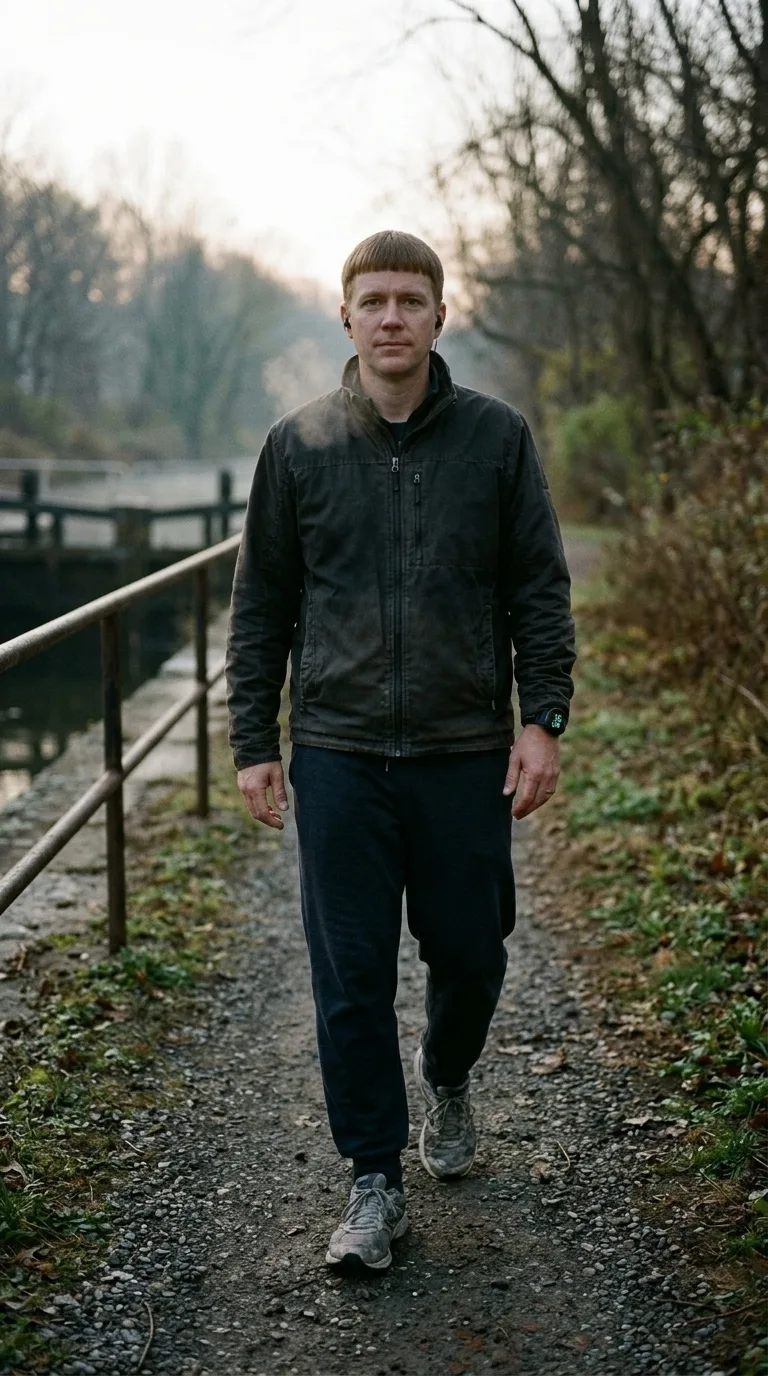
Rarest thing about him: Out for a run — common, 1 in 41
Season 1seed 1361399868 · engine v11
Character card
lineage 5OR92V
His body-swap story
@declan.michael.farrow, wearing Ramón Eliseo Ibarra, rolled the wheel on and woke up as Gerald Thomas Brophy, spent 1 minute in him, then spun the wheel and woke up as Warren Eugene Talbot
You are standing in Ramón Ibarra's kitchen in the dark before the trucks, and his knees are telling you about the stairs. You have been him for less than a minute. That is the trouble. You felt the cold of the alley come up through his boots and the weight of the day lying ahead like another man's coat, and the wanting came back anyway, sharp and small. You did not even need to decide. You only needed to stop pretending you were done.
His hands are around a mug. His cleft chin is a thing you keep touching with your tongue, a notch in the world. Nothing is wrong with him. That is what you would say if anyone asked, and no one will.
You pay. You spin. The wheel clicks down through its small teeth and lands, and the kitchen is gone.
Cold. Breath ahead of you in a white rag. Gravel under the soles, a steady grind, and your weight is already in the air on the left foot with nowhere to land. The stumble never completes; the right foot takes it, the arms drop low, the head stays level. A buzz on the left wrist. Something in your ears, a thin pulse of drums.
The jacket first. Waxed cotton gone soft at the cuffs, the zipper cold against the underside of your chin. It gives you a morning: his own hands in a hallway, tugging this zipper up past the second tooth that always catches, and the feeling under it is not quite sadness, more a habit of not waiting for anyone. Then the sweatpants, the drawstring knotted in a double bow he tied wrong years ago and never fixed. Then the shoes, gray, worn through at the outside edge of the right heel, so he lands a little wide. You land a little wide. His body knows. The lungs open and close at a pace set long before you, and the ache in the left hip is a small familiar tenant.
The watch hums again. Mile four. A split on it you have no record of him ever holding, and the pride that rises is his: he has been slow for a long time and has been getting less slow in secret.
Then the glass-walled office comes, door open, because he decided once that a closed door makes people afraid to knock. A Tuesday spreadsheet. A girl on his team crying about a number, and the stiff careful kindness he gave her. Then the rowhouse door, the white marble step worn into a bowl by a hundred years of other people's feet, the first sun coming down the block like a slow hand. A dull weight sits behind all of it, a number he owes that is larger than the house is worth. He doesn't speak of it. He stopped drinking so he could look at it straight, and it is still there, looking back.
Nobody waits for him at the end of this path. You feel the quiet where somebody might have been, and it is clean, not bitter, a room with the window open.
You slow. Your chest works. You lift his right hand in front of you and turn it over: the palm pale, the fingers long and unfamiliar, steam rising off the skin into the dawn.
You look up, past the rail and the black water, and say, "Well. Hello."
The wind moves in the dead branches. The watch is quiet. You wonder how long it will be before the wanting comes back, whether it is a day or an hour or the next breath, and whether the man who wakes tomorrow in this body will be you.