Gerald Ottaway
Fictional. Generated by AI — not a real person, and no likeness of one is intended.
63, surgeon in Detroit · rolled by @colin.hasbrook · card — no film
History
who has worn him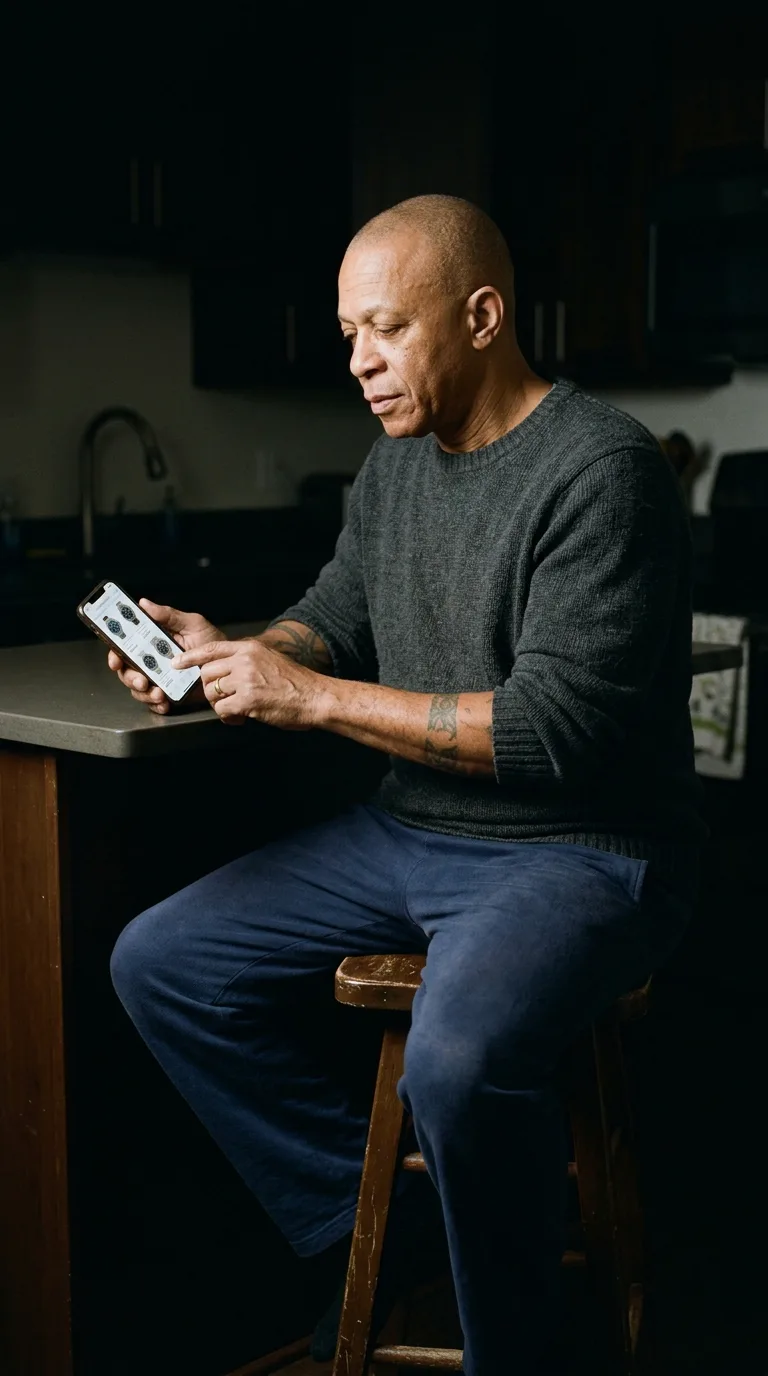
Rarest thing about him: Surgeon — rare, 1 in 202
Season 0seed 1897364434 · engine v10
Character card
lineage 2NZHHJ
His body-swap story
@colin.hasbrook, wearing Marcus Theriault, rolled the wheel on and woke up as Gerald Ottaway, spent under a minute in him, then spun the wheel and woke up as Arthur Delacroix
---
Marcus Theriault's knees ache from a crawl-space job in Damariscotta that morning, and that ache is the last thing you feel as him — kneeling on a customer's basement floor at eleven, phone forgotten in the truck, thinking about a compressor that wouldn't hold charge. It's afternoon now, truck parked, boots off, and you're back on the site before the mud on those boots has even dried. You have been Marcus for less than a minute of his life and a hundred and eighty-six spins of yours. That's not why you're leaving him. It's dumber than that: he flinched putting weight on his left knee going up the basement stairs, and something in you — old, worn down to a reflex — decided a body that hurts isn't worth keeping if there's a wheel that says otherwise. You don't even open the app to look. You just pay, and spin, already halfway gone from him.
The kitchen is dark and it is not the same hour. Your thumb is mid-drag on a watch you will never own, and then it isn't your thumb, it's his — shorter, broader, a plain gold band catching what little light there is — and it lifts off the glass and does not come back down. The phone goes face-down on the counter under a hand that used to be Marcus's and is now, entirely, someone else's. Gerald Ottaway's. He does not gasp. He does not know anything happened. The stool underneath him creaks once, settling, as if it, too, has just taken on a slightly different weight.
You are 5'3" and every year of sixty-three sits low and dense in that height — a body built for standing still for hours, not for the basketball hoop you can feel, absurdly, was once nailed to a garage two states from here in a memory not yet arrived. Your feet are flat on the floor. Your lower back has already announced itself, a familiar dull clamp above the belt, the kind of pain that has stopped being news. Your knuckles ache to crack and before you've decided to do it, his hand has already done it for you, one fist, four small pops, a habit older than the ring on that finger.
The ring is the first door. It swings open onto a church in Detroit thirty-some years back, incense and a choir he didn't want but Denise did, and the particular terror of being a resident making no money promising a woman forever anyway. You feel his younger heart in that pew, hammering the way it hasn't in years, and you feel how right it turned out to be — decades folding down into this kitchen, into her asleep down the hall on a day that in his body is the deep dark, though the sweater on your torso — his sweater, wool going soft at the elbows — remembers being pulled on this morning in full grey daylight, both true, his night the same held second as your afternoon.
The sweater gives you dressing itself: him standing in front of a closet that still has white coats in it though he's seventy pounds and thirty years past needing scrubs every day, choosing the gray over the navy because Denise likes the gray, easing his left arm in first because the shoulder barks less that way, an old rotator cuff thing from decades of holding retractors at an angle no ergonomics textbook ever fixed. The waistband of the sweatpants, soft with age, gives you the deeper year underneath — med school on loans he was still paying off at fifty, the operating theater doors swinging shut behind him after a six-hour case this same morning his time, the particular held-breath quiet of scrubbing out, gloves snapping off, a nurse saying *good work, doctor* and meaning it. You feel how his hands, these exact hands, know things without being told — how to find a pulse by feel alone, how to hold absolutely still for hours, how to be gentle with a scalpel and rough with nobody.
The counter under your palm gives you money — not much, never enough by his own accounting, a retirement account he checks too often and a mortgage nearly beaten and two kids through college on a schedule that left nothing for himself, which is why the watch on the phone screen, priced like a used car, was never a serious wanting so much as a five-minute vacation from being careful his whole life. You feel, distantly and completely, that this was the whole crime of the moment before you: a tired man letting himself want something for ninety seconds in a dark kitchen. Catholic guilt closes over even that. He was already talking himself out of it.
The wedding band gives you Denise's laugh from the next room over, years of it, layered — young, then not young, then this. No mistress-shaped hole anywhere, no old flame worth the name; whatever ghosts he carries don't have faces. Two kids, grown, a framed photo somewhere close by that you haven't found yet with your eyes. A glass of wine he doesn't pour anymore, cigarettes he quit so long ago the want for one only visits when he's exhausted, which — this hand tells you, rubbing low on his own spine — he almost always is.
You look down. Brown skin, a shaved scalp reflecting the one weak bulb over the stove, tattoos on both forearms he got young and never regretted and never added to, black tribal bands gone slightly soft at the edges with sixty-three years of skin. You turn the hand over. It is a small hand for what it's done — valves, arteries, a boy's punctured lung once at 3 a.m., steady the whole time. It is shaking very faintly now, the way it does at the end of long days, a tremor his own and permanent, nothing you brought with you.
"Denise," you say, to the dark kitchen, in his voice, low and a little rough with the hour that is his and not yours, "you up?"
No answer yet. The phone sits face-down where his hand left it, screen already dark on a watch worth more than sense. Somewhere behind you a hallway clock you haven't looked at yet is keeping his time, not yours, and there is no telling, standing here in borrowed feet on a floor that has never once been level, how long that clock gets to run before the wheel comes around again.