Gerald Boudreaux
Fictional. Generated by AI — not a real person, and no likeness of one is intended.
54, professor in New Orleans · rolled by @connor.waskiewicz · card — no film
History
who has worn him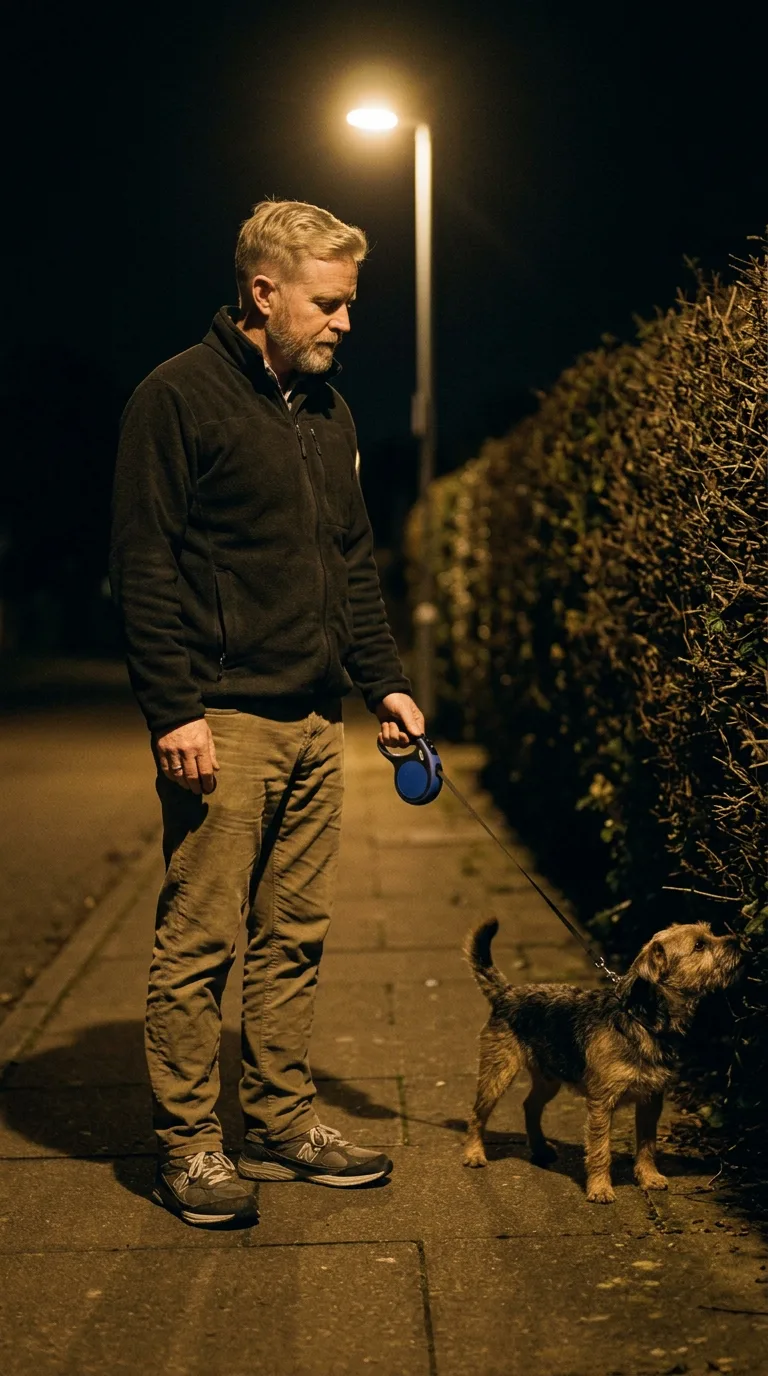
Rarest thing about him: Smokes when he drinks — common, 1 in 42
Season 1seed 1624480890 · engine v11
Character card
lineage 2NZHHJ
His body-swap story
@connor.waskiewicz, wearing Paul Dunleavy, rolled the wheel on and woke up as Gerald Boudreaux, spent under a minute in him, then spun the wheel and woke up as Cole Williams
Paul Dunleavy's hands smell like the warehouse — cardboard and pallet grease, some ghost of it under the fingernails no matter how many showers he takes — and you have been him for forty seconds and already you know the whole shape of the rest of tonight, tomorrow, next month: the shift bell, the birthmark he keeps angling out of photographs, the wife who left before you got here and is somebody else's problem now. Nine hundred and six men before him. You did not even want him particularly. You wanted the wheel, the way you always want the wheel — the half-second before it stops, before it decides, when you could be anyone. Paul is thirty-five and tired and gray-haired at thirty-five and none of that is the reason. The reason is just that it's Friday, 2 a.m., and the warehouse has no shift tonight, and there is nothing in this life stopping you, and the page is open on the borrowed laptop, and you already paid.
You spin.
The leash goes slack in your hand mid-thought, mid-breath, and the weight of you rearranges itself — shorter now, five-seven instead of Paul's five-eight, a body carrying itself with an ease Paul's never had, some rightness in the shoulders that isn't yours but that you're standing inside of. A dog is looking up at you. Small, wiry, terrier-something, ears back, waiting on a decision you haven't made yet because you don't know this dog's name. Streetlight overhead throws everything gold and black. Fleece jacket zipped to the throat. Cool night air that isn't Boston's — thicker, wetter, a smell of somebody's dryer vent and cut grass three houses down. Your hand winds the leash twice without you telling it to, and you start walking, and the dog has to trot to catch the new stride.
Then the fleece against your back gives you the first of it — a hallway, a coat closet, his wife Marianne holding this exact jacket out to him last winter saying you'll freeze, and it isn't your memory of cold, it's his, arriving with a small specific gladness that she still does that, still hands him things.
The leash in your palm gives you more — the dog is Biscuit, seven years old, a rescue, and the two kids picked the name when they were nine and twelve and now they're twenty-one and twenty-four and gone from the house, and this walk, this exact block, this hedge Biscuit sniffs every single night at the same spot like there's news in it — this is the last small ritual left of the day. Grading done. Wife asleep. A glass of something behind you, maybe two, the taste of it still faint at the back of the throat you're borrowing, a cigarette he had on the porch before clipping the leash on, because he only smokes when he drinks and he only drinks like this on Thursdays, when the week's mostly behind him.
The shirt under the fleece gives you the morning — his own hands, buttoning it in the bedroom mirror in the shotgun house, one room wide, morning light coming thin down the hall past Marianne still sleeping, the smell of chicory coffee already going in the kitchen. He'd stood in front of the lectern that afternoon, the hall empty except for the rows rising back into shadow, rehearsing Thursday's lecture to no one, the sound of his own voice coming back off two hundred empty seats, and he'd liked it, that emptiness, more than he liked the classroom full. Fifty-four years old and something in the knees when he stands too long at that lectern, an ache he doesn't mention to anyone, tightness in the lower back that a second drink usually loosens. The wedding band on the hand holding the leash is warm from his skin, worn smooth at the inside curve — twenty-six years of Marianne, a fight about money in year nine that nearly ended it and didn't, two kids raised in a house one room wide where you could hear everything and somehow that was never the problem.
None of it is dramatic. That's the strange sweetness of him — a man who built a whole life out of small good rooms and never once needed rescuing from any of them, and you are standing in the middle of it at nearly midnight with his dog waiting on you to walk on.
You look down. The hand holding the leash is not Paul's — no birthmark, no gray. Blond going sandy at the knuckle hair, the wedding band catching the streetlight.
You turn it over once, like it might not hold.
"Good boy," you say, to the dog, in his voice, and it comes out easy, unpracticed, already his — and somewhere under that you are already wondering how long the lectern and the porch and Marianne's coffee get to stay yours before the wheel wants spinning again.