Gary Widlansky
Fictional. Generated by AI — not a real person, and no likeness of one is intended.
54, warehouse picker in High-desert Nevada · rolled by @connor.waskiewicz · card — no film
History
who has worn him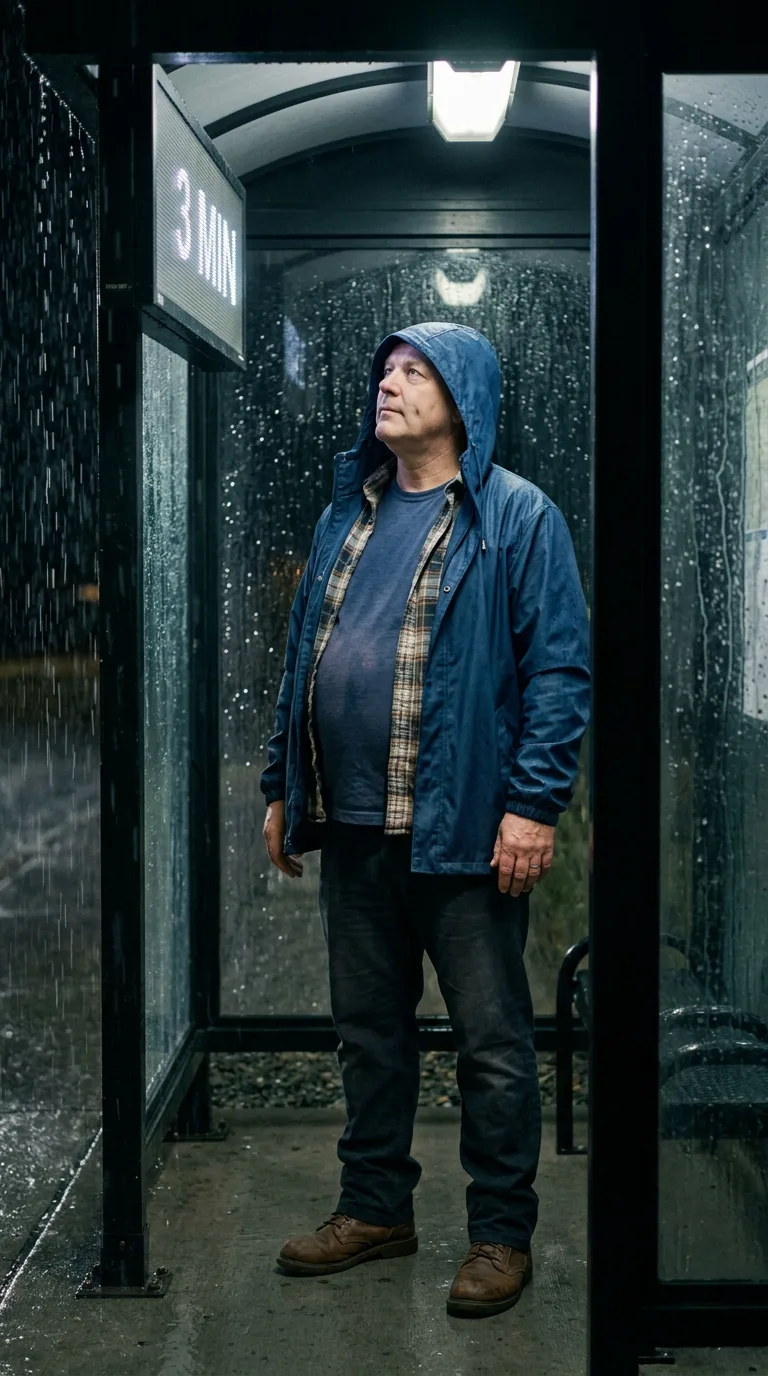
Rarest thing about him: Orthodox Christian — uncommon, 1 in 96
Season 1seed 1701714607 · engine v11
Character card
lineage 2NZHHJ
His body-swap story
@connor.waskiewicz, wearing Russell Denham, rolled the wheel on and woke up as Gary Widlansky, spent under a minute in him, then spun the wheel and woke up as Brendan Kowalczyk
Russell Denham's kitchen at eleven at night is quiet in the way a house is quiet when it has just closed on a sale nobody thought would close. You made him fifty-one thousand dollars this afternoon, standing in a stranger's foyer talking about square footage in a voice that was not, strictly, yours to use. It should have been enough. It has been enough for two weeks running, ever since the wheel gave you this one — the goatee, the good shoulders, the easy Texas vowels — and for two weeks you have worn him like a coat that fits. But there is a specific itch that comes after a win, a hum under the sternum that has nothing to do with money, and you know its name by now. Nine hundred and forty-six times you have learned its name. You go to the laptop on the counter, still logged in from last week, and you do not let yourself think about it as a decision, because it stopped being one a long time ago. You spin.
The rain is the first thing — cold, real, running off a nose that is not the nose you had ten seconds ago, into a mouth that is open and not flinching from it. There is weight low in the belly that was not there. The hood is back off wet gray hair buzzed close enough to feel the individual drops land on scalp. A hand — thick-knuckled, a ring on it — hangs at a side that has gone soft in the middle in a way Russell Denham's never did. Somewhere behind, close, a diesel engine downshifts and hisses to a stop; a bus, arriving exactly on the three minutes it promised. You do not turn toward it yet. You are standing in a puddle up to the ankle of a boot that has already given up on being waterproof, face turned up into a High Desert sky doing its one rain of the month, and the body under you is not shivering. That is the first thing that comes through on its own, before you have touched anything, before a single memory arrives: this man has stood in worse and colder and not felt it, because there was a time when feeling nothing was the whole point.
Then the jacket — nylon, cheap, the cuffs gone stiff — presses cold and wet against forearms, and something opens.
*Zipping it against a sky that hadn't started yet, seven this morning, in a doorway with a screen door that doesn't latch anymore since he stopped fixing things nobody was around to notice.* You get the trailer before you get anything else — sagebrush silvered with frost at the cinderblock step, the particular tilt of a floor that has settled unevenly over twenty years, a coffee maker that only makes coffee if you hold the lid down. You get Deb's photo on the shelf by the door, the one from the lake, before the two years of appointments, before the room that still smells faintly of her hand lotion though nobody's opened that bottle in three years. That grief doesn't announce itself. It's just there, the way the floor is there, something you walk on without looking down.
The polo shirt under the jacket, navy, damp now at the collar, gives you the warehouse — fluorescent tubes buzzing white over steel racking that goes up higher than a man his height should have to reach, a scanner gun holstered to a wrist that knows its own weight without thinking, a forklift beeping its reverse somewhere three aisles over, always somewhere, never where you're standing. Thirty-one years of that beep. You get a bad knee that clicks on the second flight of any stairs, a lower back that has opinions about Mondays, a body gone soft around a middle that used to be flat sometime around the birth of the second kid — and under all of it, still, forearms and shoulders that know exactly how to swing a case off a shelf without thinking about it, muscle memory outlasting every other kind.
The ring is the one that opens furthest and stays open longest. Left hand, plain gold, a little loose now on a finger that's thinned with the rest of him. *Standing in the church in Sparks with incense drifting up past the icons, Deb in white, both of them twenty-three and certain of everything they weren't certain of yet.* Three kids after that — you get flashes, not names, not faces held still long enough to catalogue, just weight: a boy on his shoulders at a Fourth of July, a girl's graduation gown too long in the sleeves, someone's voice on the phone last Christmas saying *Dad, you doing okay out there by yourself*, and him saying fine, fine, because what else do you say from a single-wide in the sagebrush at fifty-four with a wife two years gone and grown kids scattered to Reno and Boise and one clear down in Vegas. Big night out once or twice a month, a beer or three with a guy from the loading dock, never a cigarette, never once, Deb hated the smell and he'd promised her that much at least and kept it even after there was no one left to keep it for.
The boots on his feet, soaked through now, give you this morning specifically — the last thing you asked for, and the shirt already halfway there. Pulling the plaid over-shirt on over the T-shirt in the gray predawn light of the trailer's one bedroom, buttons done wrong once and redone, the flannel soft from two hundred washes, a smell in the collar that is just his own smell and always has been. Jeans that fit different than they used to, hitched up over a belly he stopped fighting with around fifty. The jacket last, zipped against a forecast he half-believed. Lacing the boots sitting on the edge of a bed that's only ever had him in it for three years now, the other half of the mattress still somehow lower, worn that way and staying that way.
And under your own feet, right now, standing in the shelter with the arrivals board gone dark behind the bus's own lights — a leg that will not sit still, bouncing at the knee the second there's nothing to occupy it, an old habit that outlived whatever nervous boy first had it, that Deb used to put a hand flat on under diner tables just to feel it and laugh. It's going now, faint, this ordinary evening, this ordinary rain, a man who has learned that being alone doesn't have to be cold if you just let the water hit your face and don't look away from it.
You look down. The hand is thick, weathered, a wedding band riding loose over a knuckle gone soft with age, rain running off every finger. You turn it over once, like it might explain something, and the dimples come into a smile that isn't quite a smile, there even now, even doing nothing at all.
"Bus is early," you say, to no one, in his voice, and step up into it.