Gary Wachowski
Fictional. Generated by AI — not a real person, and no likeness of one is intended.
59, manager (mid-level) in Small-town Ohio · rolled by @gary.wachowski · card — no film
History
who has worn him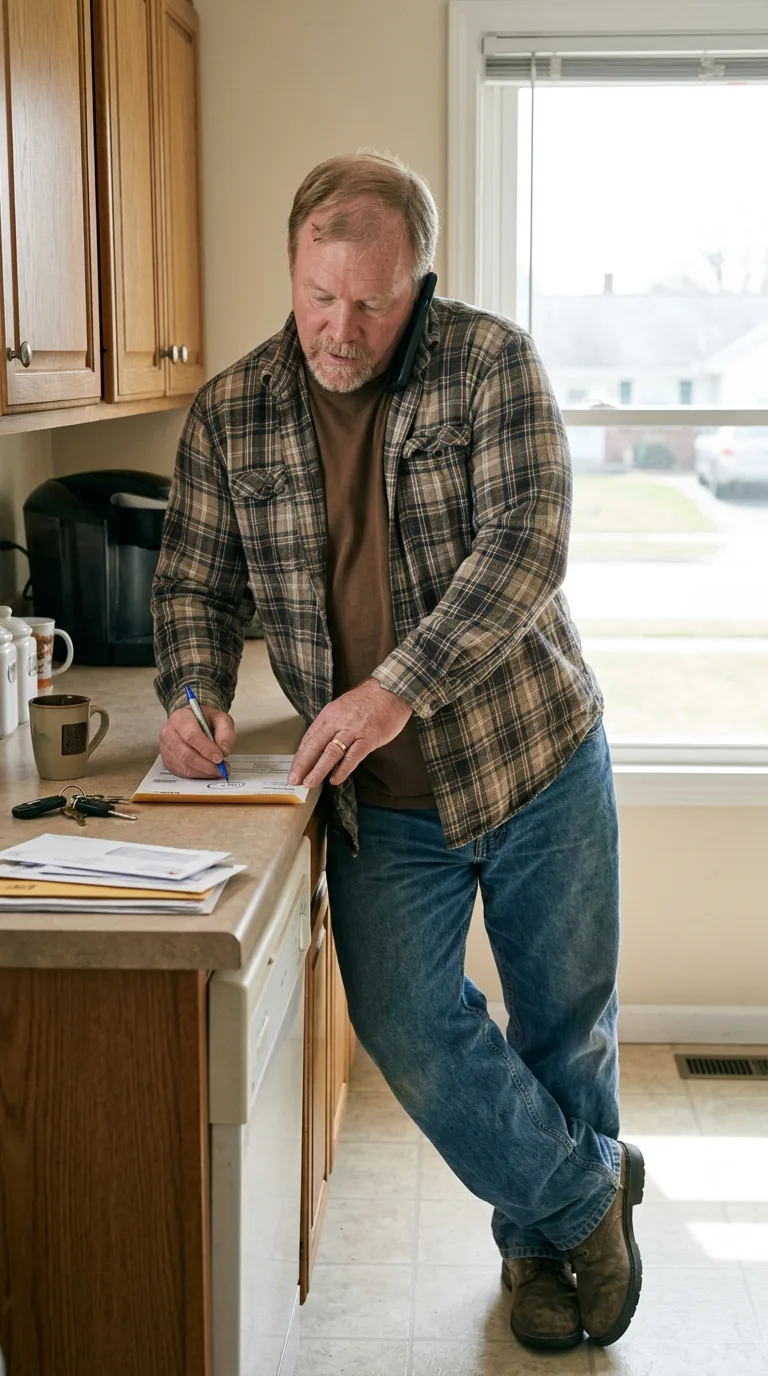
Rarest thing about him: Pulls at his beard — epic, 1 in 365
Season 1seed 339875592 · engine v11
Character card
lineage CM1WPZ
His body-swap story
@gary.wachowski rolled the wheel on and woke up as Gary Wachowski — their first
The screen has been the only light for an hour. Everyone else in the house gave up and went to bed a long time ago, and you told yourself you would too, right after this next scroll, right after this next thread, the same way you have told yourself for years, back to the message boards at two in the morning, back to the forums with their avatars of men waking up in other men's beds. It was never a phase. You just never had anywhere to put it until tonight, when an ad slid past sideways and didn't look like the others — a plain wheel on a plain page, vessel.cards, no promises, just a button that says spin and a price that makes your stomach drop a little. You pay it before you can talk yourself out of it. The wheel turns. It does not feel like anything. And then it stops.
You are leaning on a countertop that is not yours, in a body that is not yours, with weight low in the gut and across the shoulders that your own has never carried, and a phone is dropping out of the crook of a neck into a hand that catches it without being told to. Hold music loops back to its first bar, tinny and far away. A pen is resting on a yellow envelope, tip touching a two, waiting for a three that isn't coming. Sun is coming in low and white through a kitchen window, throwing the shadow of a coffee mug long across the counter. It is the middle of the afternoon here. It was the middle of the night where you were. Your chest — his chest — rises once, slow, and nothing in the room reacts, because nothing in the room knows yet that anything has happened.
The flannel is the first thing that talks. It is heavy on the shoulders, worn soft at the elbows, and touching it — just the fact of wearing it, the collar against the back of the neck — gives you a hand pulling it off a hook by the back door this same morning, over a plain brown tee already snug across a gut that has gotten a little rounder every year without much protest from him. He does not fight his body. He has made a kind of peace with fifty-nine, with a belly that sits solid instead of soft, with forearms that are still strong from twenty years of loading and lifting before the promotions moved him behind a glass wall he leaves propped open out of some old instinct not to be shut in. The jeans came next, worked up over legs that ache a little in the left knee by four in the afternoon, an old warehouse injury nobody at the office knows to ask about. The boots, still on his feet now, remember concrete floors better than carpet.
The wedding band is warm from his skin already, and it opens wider than the clothes did — a whole marriage arrives at once, unhurried, the way only something you've lived inside for three decades can. Her name comes with the ring more than with any picture: Donna. Small kitchen arguments about money that were never really about money. Three kids, then a fourth some years later they hadn't planned on and loved best for the surprise of it, all of them grown now or nearly, one still upstairs some mornings with a duffel bag half-packed for college he keeps not quite leaving for. There is an ex in there too, further back, a girl from a town over who he thinks about sometimes without meaning to, not with longing exactly, more like checking that an old bruise still knows how to hurt. He never told Donna about the thinking. He didn't need to. Nothing came of it in thirty years, and nothing was going to.
The envelope under the pen brings the dullest thing and somehow the most him: a reference number for a claims adjuster who has already put him on hold twice this week, a policy on a rental property that is costing him more than it should, money he does not strictly need to fight for — the accounts are heavier than anyone at the office would guess from the golf shirt with the company logo on it — but fights for anyway, because giving up on a number feels like giving up on something larger. Behind him the office with the glass door propped open comes back too, briefly, sideways: Wednesday mornings walking the floor, a reputation for being fair that he is quietly proud of, a Mass he doesn't miss on Sundays even when it would be easier to.
His hand, without asking you, drifts up and pulls once at the beard along his chin, the gray-flecked hair springing back under blunt fingers. It is such an old habit it barely counts as a thought. You let it happen. You are standing in his weight, in his kitchen, in the white light of a Wednesday afternoon that is, somewhere behind you, still the dead middle of a Thursday night, and the strangeness of that does not resolve, only sits there like the hum under the hold music.
You look down at the hand that just touched the beard. Blunt nails, a thin white scar of sun across the back of it, the band catching the window light.
"Okay," you say, out loud, to no one, in a voice that isn't the one you don't have. "Okay."
You do not hang up the phone.