Gary Puleo
Fictional. Generated by AI — not a real person, and no likeness of one is intended.
52, assembly line worker in Honolulu · rolled by @gary.puleo · card — no film
History
who has worn him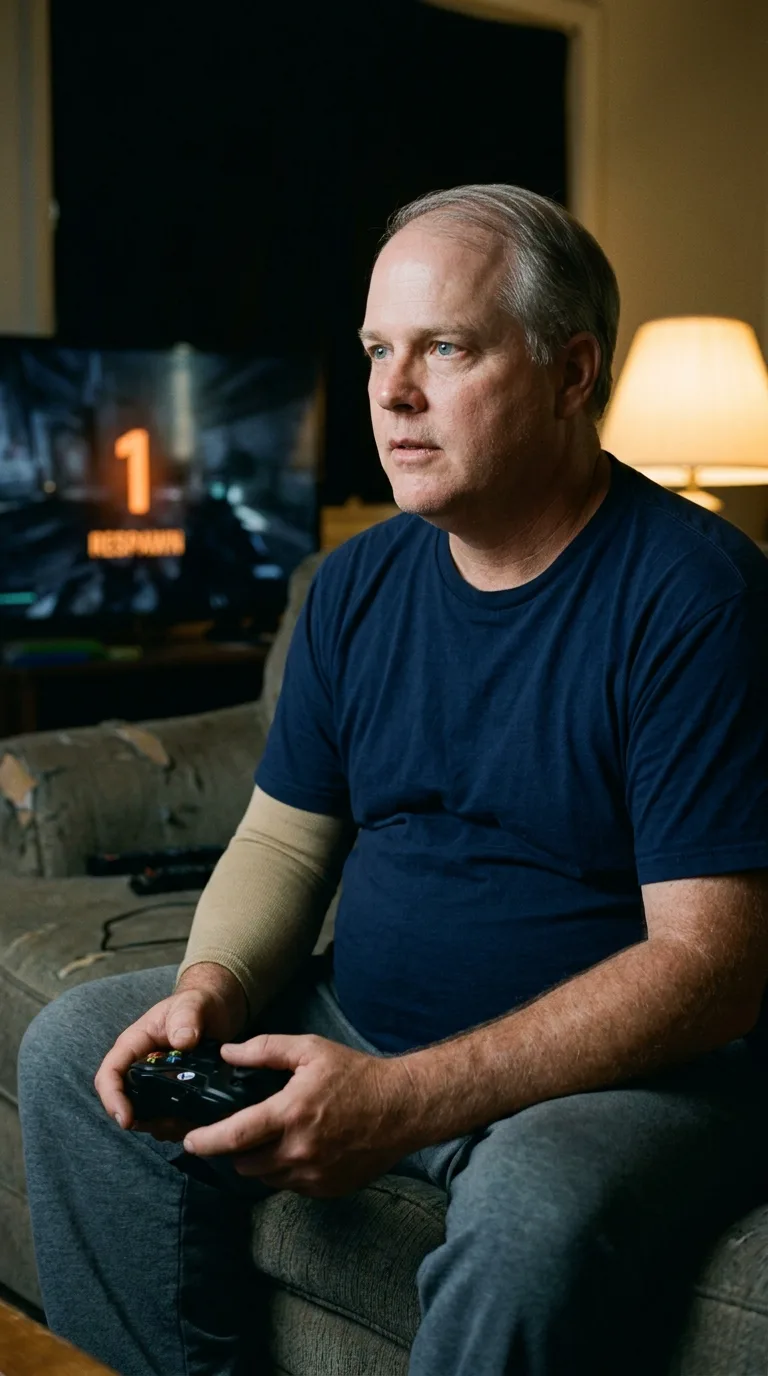
Rarest thing about him: Trying an app someone sent him — common, 1 in 52
Season 1seed 1324915940 · engine v11
Character card
lineage 108UST
His body-swap story
@gary.puleo rolled the wheel on and woke up as Gary Puleo — their first
The wheel loads slow on your end, a little pinwheel of loading dots, and you sit there with the phone too close to your face the way you always do at the end of a long nothing day. You have wanted this since before you could have said what "this" was — every story where somebody wakes up wrong, every thread at two in the morning about waking up as someone else, some other skin, some other life running quietly next door to yours. You never thought it would be a website. You never thought it would have a price. But it does, and you pay it without much ceremony, the way you'd pay for anything you'd wanted for twenty years and stopped believing in.
You think about Gary while you wait. You've thought about Gary more than you'd like to admit — the raise he got that you didn't, the way he says your name in meetings like it's a small joke only he's in on, the girlfriend who laughs at things he says that aren't funny. It isn't hate, not exactly. It's the particular, itchy resentment of almost. You spin not because you chose him. You spin because the wheel does the choosing, and it lands, and there he is.
The counter on his screen hits zero and something else arrives with the character standing up out of its own death, and it is you now holding the controller, a half-beat behind his thumbs, his weight dropping into a body that already knows how to sit in a busted-in couch cushion. The screen character catches a bullet doing nothing, uselessly dead again, and you don't care. You set the controller down, still glowing, and you sit back into him.
The couch's dead cushion is the first thing, and with it comes an afternoon: him and her, Lani, fighting over what to watch, some rerun neither of them liked, laughing anyway. Small. Warm. Gone.
Then the shirt. Navy, worn soft at the collar, and the moment your — his — palm brushes the hem, there's a morning: this exact shirt off the hanger, the closet door with the broken track that always sticks, him working his left arm into the sleeve first because the shoulder's stiffer that way, some old strain from the line that never fully quit. Rolling the sleeves up out of habit even though there's no shift today, no impact wrench humming into his palm, no door panel screaming down the rail — just Sunday, just afternoon light coming hard and white off the red dirt yard through the jalousie windows, and him not thinking about any of it, just getting dressed because that's what you do.
More comes, unbidden, stacked on top of itself: fourteen years on the line, the particular ache low in his back that flares if he stands wrong, the gap in his front teeth that his daughter used to stick her tongue through the same gap when she was little and thought it was the funniest thing in the world. His daughter. Grown now, mostly a voice on the phone, but there, real, a fact of him that outweighs anything you brought in with you. A wedding that isn't a wedding — Lani, seven years, no ring, no need for one, dinner on the table most nights he's not too tired. Church some Sundays, not this one. The wet toothpick worn soft between molars, always there, always chewed and never lit, because he quit needing anything in his mouth to burn a long time ago and this is what's left of the wanting.
You feel all of it land in a body that carries fifty-two years like sandbags around the middle, feel the give of the gut, the thinning scalp under fingers that go there without meaning to, feel how strong the forearms still are underneath the softness, work-strong, a strength that doesn't show until it's needed. You feel how tired his knees are in a way that has nothing to do with age and everything to do with concrete floors.
You look down. The hands on your knees are wide, spotted faintly from sun, blunt-nailed, a thin white scar of a burn line you didn't put there and don't ask about. You turn one over like it might not hold together. It holds. On the screen the counter has already reset to one again, patient, waiting for a thumb that used to be his.
You look up into the dark room, lamp throwing yellow over a couch that isn't yours, in a house on stilts somewhere hot and far from wherever you were a minute ago, and you say, out loud, in his voice, testing it like a new shoe:
"Guess I win this round, Gary."
You don't know how long you get to keep saying that.