Gary Petrosky
Fictional. Generated by AI — not a real person, and no likeness of one is intended.
63, mechanic in Small-town Ohio · rolled by @gary.petrosky · card — no film
History
who has worn him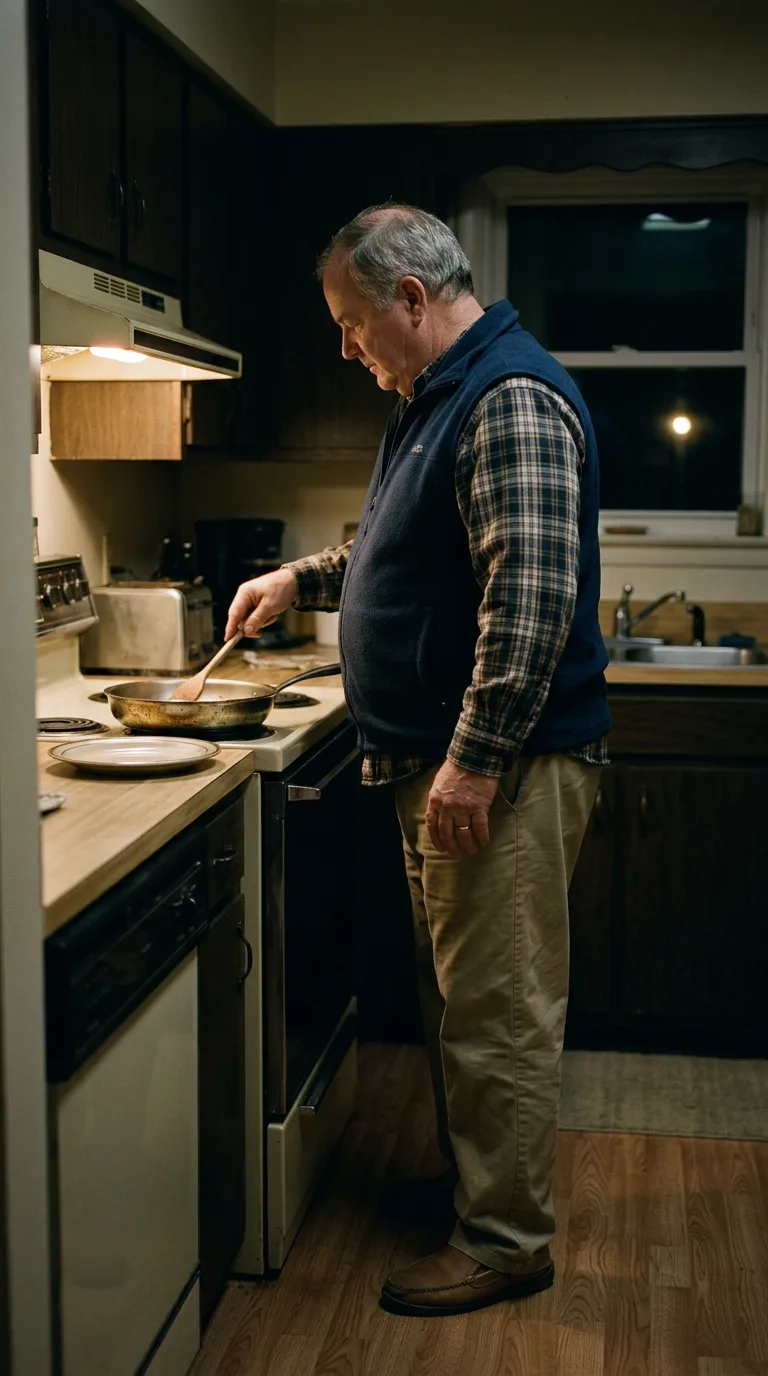
Rarest thing about him: Cooking for one — common, 1 in 31
Season 1seed 1426741581 · engine v11
Character card
lineage LK05OL
His body-swap story
@gary.petrosky rolled the wheel on and woke up as Gary Petrosky — their first
The site loads slow on a connection that's never been great, and you sit there watching the wheel spin its loading animation before it even shows you the wheel, which is somehow the most convincing part of the whole thing — nobody fakes a loading screen that boring. It's the middle of a Wednesday morning that has no shape to it. You should be doing something else. You have been circling this particular hunger for years, the one that never had a name you'd say out loud — not the films, not the stories you read at two in the morning and told yourself you'd close the tab after — the actual wanting, to be let out of the one body you've always been stuck being. vessel.cards. You didn't believe it. You paid anyway. You spin anyway.
It lands on him mid-stir.
You don't fall into it, there's no sense of distance crossed — you are simply standing where he was standing, holding what he was holding, a wooden spoon in a pan of something browning, and your arm — his arm — is thick through the forearm and moving in a slow circle that stutters, reverses, goes the other way without your telling it to, like the body is deciding something before you do. Heavy. Grounded low, hips and gut, a stance built by thirty years of standing on concrete. You salt the pan on instinct you didn't ask for and don't taste it. A cabinet door is open above the stove. You reach up — he reaches up — and take down a second plate, and your hand sets it on the counter beside the first one, and some part of you that is not quite you yet already knows this is wrong, there is no one else coming, and does it anyway.
Then the kitchen arrives in you sideways, through everything you're touching.
The flannel against your back is soft gone to thin, washed four hundred times, and touching it gives you an elbow-deep flash: him buttoning it this morning — his evening, his Tuesday — standing in front of a dresser mirror with the light not yet on, working the buttons up from the bottom because his fingers find that easier than top-down, an old habit from some other version of getting dressed thirty years gone. The vest over it, quilted, bought at a farm store in a town one exit over, his wife had picked the color. Navy. She'd held it up against him in the aisle and said something that made him laugh, and the laugh is in your chest now, not yours, borrowed, warm.
The spoon handle is worn smooth where his thumb rides it, and that smoothness gives you the garage — not this room, another one, fluorescent-lit, a car on the lift and his back going out a little more each year lying under one, the rag in his back pocket that's always there whether he's home or not, he forgets to take it out sometimes and his wife finds it in the wash and doesn't say anything anymore, thirty-some years of not saying anything about the rag. Grease under nails he already bites down past where they should be, a habit from nervousness decades settled into just being what his hands do when his mind's elsewhere. Your hands — his hands — ache faintly in the knuckles, every one of them, the specific dull ache of a body that worked today and every day before it, and underneath that a different, older ache: the house too quiet behind you. Three kids raised and gone to their own kitchens in their own towns. A wife at her sister's this week, so it's one pan, one plate, cooking for one, and some part of him that comes through the plate under your hand is lonelier about that than he'd ever tell you if you asked him outright.
The wedding band is cool and then warm on your left hand, worn thin at the back where he's turned it a thousand idle times, and that gives you the most — a wedding thirty-some years back in a church that's since become a furniture outlet, her in a dress her mother made over, him sweating through a rented jacket, and after, every ordinary year since stacked on top of it so thick you can't see the bottom of the pile: her laugh across this exact counter, her hand swatting at his while he stole a taste standing at this exact stove. He believes in something, not church exactly, more a feeling he gets under an open hood sometimes, or at a lake at five in the morning — something's listening, he's never needed to call it anything. He doesn't drink anymore, quietly, without ceremony, just stopped years ago and never missed it enough to mention, and the cigarettes went the same way, slower, after the second grandkid.
The stoplight outside is red through the window, the only one in town, and the diner across from it has been dark for two years and he still looks at it every time he drives past like it might turn its lights back on.
Your hand — his hand, both of your hands now, you're not sure where the line is anymore — stops over the second plate.
You look down at it. Short fingers, blunt, nails bitten to the pink at the edges, grease ground permanent into the creases of the knuckles no soap has touched in decades. You turn it over once, slow, like you're checking it's real, which it is, more real than anything you brought with you, which was nothing.
You look up, into the dark window over the sink where his reflection should be looking back at him and is instead just looking at you.
"Didn't think I had company," you say, to no one, in his voice, and you don't put the second plate away.