Gary Pelletier
Fictional. Generated by AI — not a real person, and no likeness of one is intended.
56, machine operator in New York · rolled by @gary.pelletier · card — no film
History
who has worn him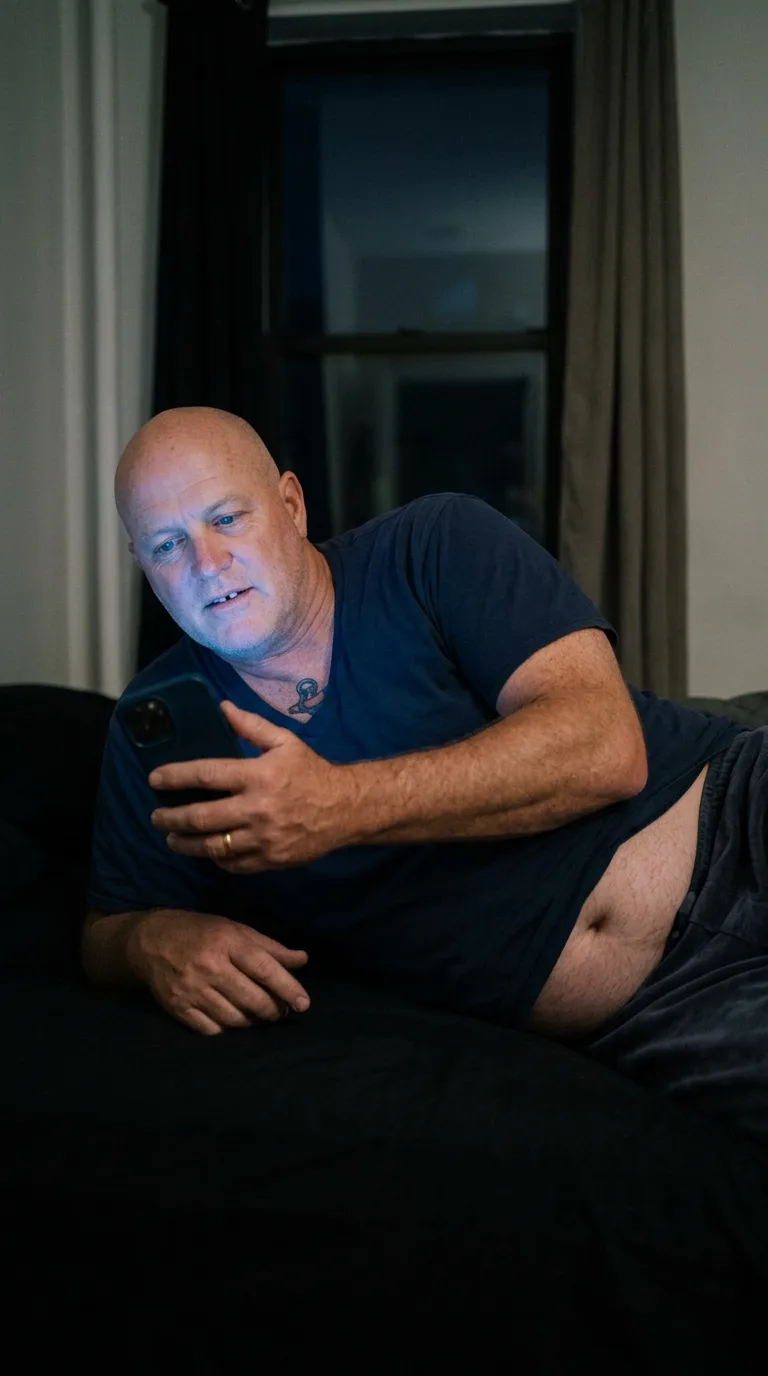
Rarest thing about him: One, chest — common, 1 in 32
Season 1seed 1355169258 · engine v11
Character card
lineage K8HOM5
His body-swap story
@gary.pelletier rolled the wheel on and woke up as Gary Pelletier — their first
---
It's a Sunday where you are, early afternoon, the kind of light that makes nothing look urgent. You've had the tab open for an hour, maybe more, the way you've had a hundred other tabs open over the years at two in the morning, reading about people who say they woke up as someone else and knew it in their bones. You never believed those. You believed the wanting, though. You've believed that since you were a kid lying awake running the question like a loose tooth — what if, what if, what if. The wheel on the screen is ugly, cheap-looking, the kind of thing that should be a scam. You spin it anyway, because it's a dull day and the wanting is older than your doubt.
It doesn't ask you to pay twice. It doesn't ask you anything. It just gives.
You are on your side in the dark. There's a window behind you with a curtain that doesn't quite close, and somewhere past it, Brooklyn is wet and orange under a sodium lamp. The phone is six inches from a face that isn't asking whose it is. A thumb — his thumb — stops mid-scroll on something, some video, something he'd been halfway caring about a second ago, and then it starts again. Faster now. Steadier. The blink that should happen doesn't happen on schedule, and nothing in the room notices because there's no one awake to notice.
You are heavy in a way you didn't expect, settled into a mattress that knows this exact weight, this exact dent. There's a drag in the shoulder, a thickness through the middle, a bald scalp warm against a pillow. Your — his — heart rate is low and slow, the rate of a man three hours into sleep who has no business holding a phone right now, except that his body clearly does this often, some middle-of-the-night reflex groove worn into him like a path through grass.
The shirt is the first thing. Just a plain navy tee, soft from a hundred washes, and touching it — being inside it — gives you the morning he put it on, except it wasn't morning, it was afternoon, because this man works nights. The extrusion line. You get it in pieces: the heat off the barrel, the smell of melted resin, a low mechanical roar that never really leaves his ears even on his days off, Gary's hand — your hand now — resting flat on a control panel out of pure muscle memory, checking a temperature readout without looking. Twenty-two years on that floor. He is good at it in the unglamorous way a man is good at a thing he never once called a passion. He clocks out at eleven, showers off the smell, and still can't fall asleep until one, two, scrolling in bed next to a woman who gave up asking him to put the phone down.
Her name arrives through the ring. Left hand curls faintly against the phone's case and there she is — Denise, nineteen years married, asleep three feet away with her back to him the way she sleeps when she's annoyed about something small, a dish, a comment, nothing. You get a wedding they couldn't fully afford, her sister crying through the vows, Gary sweating through a rented jacket that didn't fit his shoulders. You get a fight from eleven years ago that still sits in him like a stone he walks around. You get her hand on his chest at the hospital when their second kid came early and scared everybody for six hours.
The tattoo at the collarbone — you feel it rather than see it, an old ache of a different kind, the itch of a needle that stopped mattering to his skin decades ago. An anchor. Nineteen years old, a tattoo shop near the navy yard, a girl named Christine standing there laughing at him for flinching. Christine. She surfaces harder than you expect, sharper — not his wife, never his wife, but the one whose name still does something to his pulse if he lets it, which he mostly doesn't. Nothing happened in years. It's just a door he keeps shut, and shut doors still have weight.
The kids come through the blanket, worn thin at the corner where small feet used to kick it loose on Saturday mornings. A daughter who calls every Sunday without fail. A son who doesn't call enough and Gary doesn't say anything about it, just holds the silence like he holds everything, in the body, in the jaw, in the gap between his front teeth that he's never once liked in photographs.
Underneath all of it: the body itself, honest as a timecard. Fifty-six years in it. A lower back that complains if he stands too long at the line. A gut he's stopped fighting. Forearms still strong from twenty years of pulling spooled plastic taut. Hands that know, without being told, how to find a thread of drink at the edge of a long day — one, maybe two, never more, a man who learned early what more costs. No cigarettes, ever; his father died wheezing and that was enough of a lesson. Hands that, when his mind drifts, reach for each other and crack the knuckles one by one, a tic older than his marriage.
You feel all of it land at once, the whole unhurried freight of a stranger's life, while outside this one moment nothing has moved — his thumb is still going, the screen still lights one cheek blue, Denise still breathes evenly beside him in the dark.
The thumb stops. You stop it.
You look at the hand holding the phone — broad, lined, the wedding band catching the little light there is — and turn it over like it might answer something. Then you lift your eyes, past the window, past the room, toward nothing in particular, and you say, quiet enough not to wake her:
"Okay."