Gary Dunmore
Fictional. Generated by AI — not a real person, and no likeness of one is intended.
48, manager (mid-level) in Atlanta · rolled by @colin.hasbrook · card — no film
History
who has worn him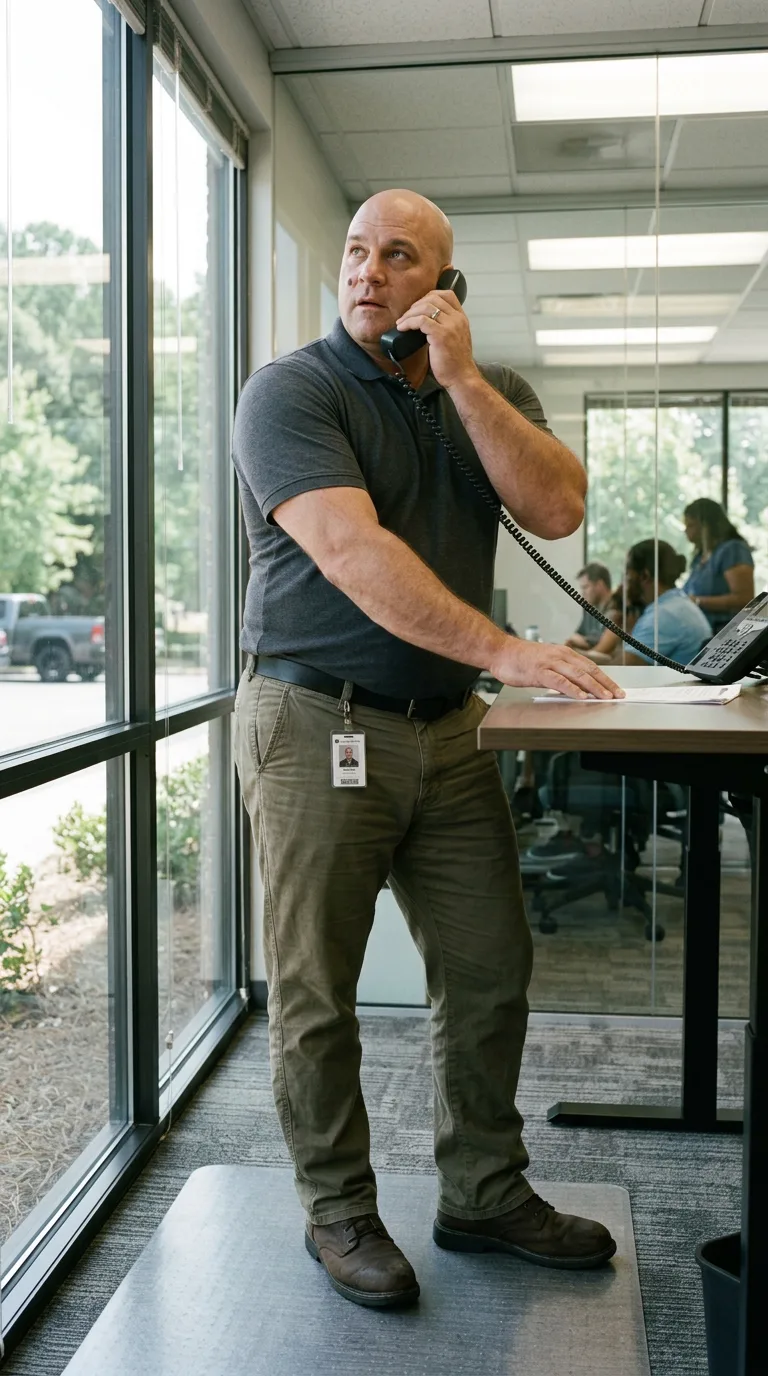
Rarest thing about him: High cholesterol — rare, 1 in 38
Season 0seed 767596068 · engine v10
Character card
lineage 2NZHHJ
His body-swap story
@colin.hasbrook, wearing Gary Selkirk, rolled the wheel on and woke up as Gary Dunmore, spent under a minute in him, then spun the wheel and woke up as Travis Woytek
The route is the same every day and that is the whole problem with it. Gray hair, the shoulder that clicks on cold mornings, the reading glasses pushed up on a forehead that has taken sun for thirty years — this is the body you have been wearing for what feels like a long stretch now, though you have lost the exact count of days the way you've lost the count of men. It is early, dark still, the kind of Seattle dark that sits low over the water. You didn't sleep. You stood at the counter with the laptop open and the coffee going cold and you told yourself you were just looking, the way you always tell yourself that, and your finger — this man's finger, thick-knuckled, a little arthritic — was already on the trackpad. Four hundred and some houses on this route and you know every one of them and that is the whole problem. You want to not know something for a while. That's the truth of it, plain as it gets: not boredom exactly, more like the feeling of a room you've memorized in the dark. You spin because the wanting came back, the way it always does, faster than you'd like to admit to anyone, including yourself.
The wheel turns on the screen. Somewhere a phone is ringing.
You are standing before you are anything else — that's the first thing, the weight settling into legs that are not the mail carrier's legs, thicker through the middle, planted wide like they've had to hold a bigger man up for a long time. A phone cord is looped around two fingers. There is a window full of green Georgia light and a parking lot with a pickup truck in it, and a phone is ringing against your ear, already answered, because the hand brought it up before you arrived and now you are the one holding it there. Your mouth is halfway through a word. "—can have that pulled together by end of day, no problem—" and it comes out smooth, unbothered, because the body has said this sentence, or one just like it, ten thousand times and doesn't need you for it. The rhythm catches for half a second — a stutter in the middle syllable, the tongue going to the wrong place — and then corrects itself, slow and careful, like a man rereading a sentence he definitely already knows how to read.
The receiver is warm against your palm from another man's grip, and that's the first door: it opens on a hallway of identical calls, hundreds of them, the particular ache of a shoulder that holds a phone the same way every day for fifteen years. Then it widens — this office, glass on three sides, people at their desks visible through it like fish in a tank, and you understand without being told that he likes it this way, likes being seen working, likes that anyone walking past can see him standing instead of sitting because his back complains if he sits too long. The standing desk mat under boots that are worn soft at the ankle. A gray polo, damp a little under the arms already though the day is young — Atlanta heat doesn't wait for noon — and touching the fabric brings back a closet, cedar-smelling, his wife's hand smoothing a collar that didn't need smoothing, her saying you look fine, Ray, and the memory arrives with his own faint irritation at being fussed over and his own gratitude for it in the same breath, because those two things had never once been separate in twenty-two years of marriage.
The name comes with the collar: Raymond. Ray to the wife, to the guys on the floor, to the ex-girlfriend from college who still texts him a birthday message every October that he answers with more warmth than he'd ever admit to Denise. The wedding band on the hand holding the phone catches memory like a hook catches cloth — the wedding itself, a hot September, his daughter not yet born, decades of Sundays at Mass where he stands in the same pew and doesn't really listen but likes the standing and sitting and standing, the shape of it, the not having to think.
The ID badge swings faintly against his chest on its cord — his photo on it, taken three years ago, thinner-cheeked. Touching its plastic edge gives you a hallway of performance reviews, budget calls, a promotion he wanted and got and then discovered was mostly more of the same phone calls from a slightly better window. Whatever he was chasing, it was here, in this glass box, and it is enough, mostly. The mole on his cheek itches faintly in the AC — nothing, just skin, but his hand comes up out of habit and rubs near it without thinking, an old tic from childhood, some aunt once told him it looked like a chocolate smudge and he never quite lost the reflex of checking.
His knuckles want cracking. That's under everything, a low static in both hands, and when you let the right one close it pops loud enough that a woman at the nearest desk glances up through the glass and half-smiles, used to it, the sound as much a part of him as the voice. His feet ache pleasantly, the good ache of a man who was on them all morning and doesn't mind it, chest and arms carrying real muscle under the give of forty-eight years and cigars and a cholesterol number his doctor keeps circling in red. Cigars, not cigarettes — Saturday evenings on the back patio, an ex-girlfriend's laugh from twenty years ago somewhere in the smoke of memory, gone before you can hold it.
The pants were pulled on this morning without thought, olive chinos worn soft at the knee, a belt cinched at a notch that used to be looser — his hand remembers threading it, remembers the small private accounting every man does at a mirror at 6 a.m., not unhappy, just aware. The boots were double-knotted out of habit from a father who told him once that a man's shoes say more than his mouth does.
You look down. The receiver is still in your — his — hand, cord swinging faintly. You set it back in its cradle slow, like it might argue with you, and turn the hand over, palm up, studying the small scar you don't remember and he never explained to anyone, a callus at the base of the thumb from a grip on something you haven't found yet.
"Sorry," you say, to the woman near the desk, to no one, your voice coming out of his chest like it belongs there, which it does now. "Lost my train of thought."
You look up into the glass wall, into your own reflection standing in it against the green outside, and you hold there, not sure yet how long the wanting will stay quiet this time.