Gabriel Yellowhawk
Fictional. Generated by AI — not a real person, and no likeness of one is intended.
30, lifeguard in Houston · rolled by @gabriel.yellowhawk · card — no film
History
who has worn him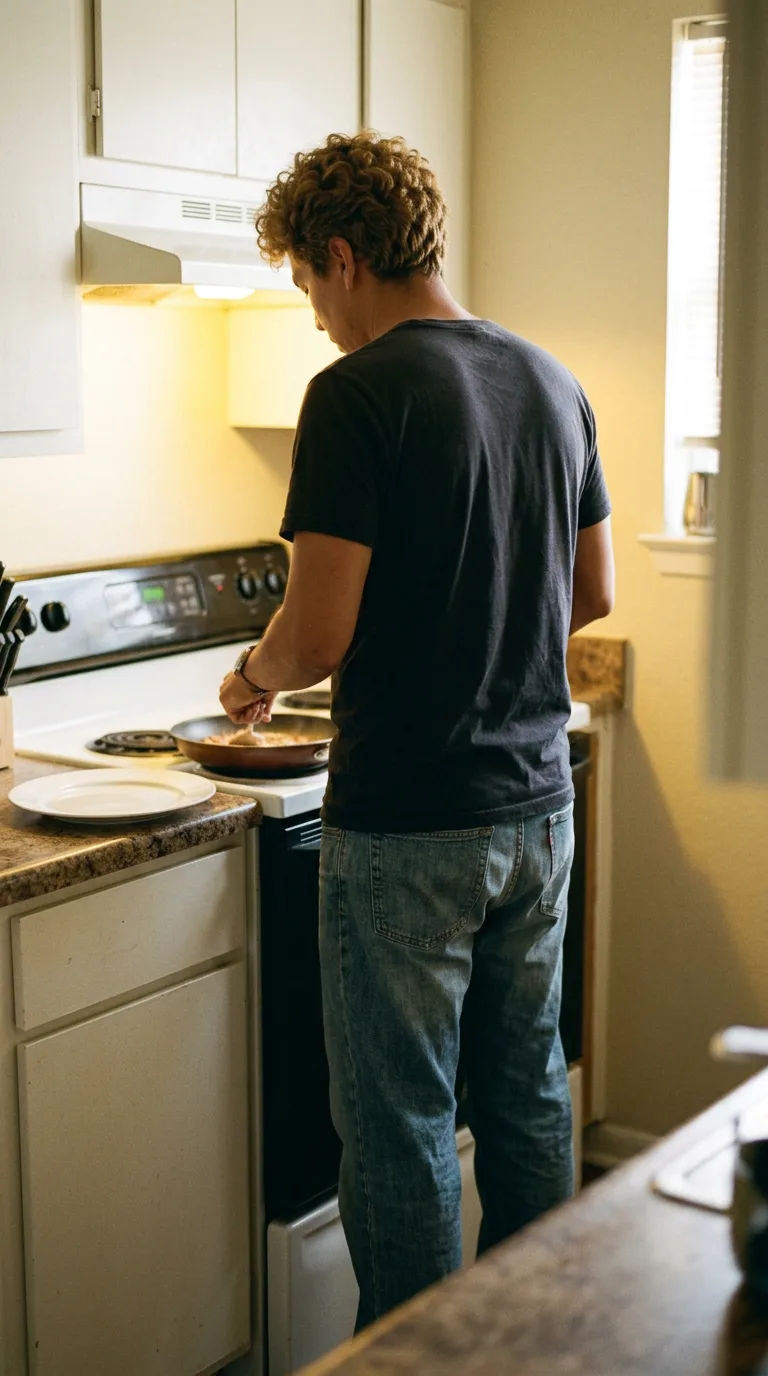
Rarest thing about him: Native American — rare, 1 in 41
Season 0seed 1053036060 · engine v10
Character card
lineage Q3LU95
His body-swap story
@gabriel.yellowhawk rolled the wheel on and woke up as Gabriel Yellowhawk — their first
The site loads slow on purpose, like it wants you to sit with the decision. A wheel, a price, a button that says SPIN in a font too friendly for what it's doing. You have wanted this since you were a kid pausing body-swap movies on the VHS, since the two-in-the-morning threads, since always — a private, specific hunger nobody diagnosed and nobody shared. Tonight is nothing. Doomscroll, dull apartment sounds, the particular emptiness of a Monday that already used itself up. You have the money and you have the wanting and for the first time in your life those two things can meet in the same place. You spin.
There is no falling, no tunnel, no in-between. There is a pan, and a wooden spoon, and your hand — his hand — moving in a slow circle through something that smells like garlic and dark meat, and then you are simply standing in it, mid-stir, like you'd been doing it for years and just hadn't noticed until now. The spoon keeps going a half turn on momentum before you catch it and reverse the circle the other way, testing the strangeness of a wrist that isn't yours. You salt the pan without tasting it — an old habit arriving before you do — and something in you, in him, some leftover motion, reaches up into the cabinet and brings down a second plate. You set it beside the first without deciding to.
It's the middle of the night here, wherever here is, and that's wrong in a way you can't place yet — a stove lit, a kitchen awake, everyone else in the building surely asleep — until the shirt against your back answers before you ask: swim trunks folded on a shelf by the door, a whistle looped over a nail, the particular ache low in both shoulders that isn't soreness so much as memory of soreness, four hours of sun poured into muscle and then walked home. Nights. He works nights now, some new rotation at the county pool that doesn't open till noon, and this — cooking alone at an hour when the rest of Houston is dark — is just breakfast wearing dinner's clothes.
The T-shirt is the first thing that really opens. Grey, soft from a hundred washes, and putting it on this morning comes back sleeve by sleeve, unbidden: standing in a bedroom with light coming low and yellow through blinds, one arm already through, the fabric catching on the leather cord and whistle around his neck so he'd had to duck his head and thread it through separately, cursing under his breath, careful with it the way you're careful with things you've decided matter more than they should. The cord itself, when your fingers find it against your sternum, brings a beach — glare, kids screaming happily, a coworker's radio — and under the collarbone, a small mean itch of a memory: a tattoo he got at twenty-two, a friend's apartment, a first-time gun, an arrow that came out crooked and thin-lined and permanent, and the way he'd pulled his shirt collar higher for a solid year afterward. He still does, a little. You feel that flinch live in the muscle now, a habit older than any decision.
The jeans remember a different morning than this shirt — worn soft at the knee, a little tight now where he's put on some strength this year, legs that know exactly how many steps it is from stand to shoreline and back, an economy of movement that isn't athletic so much as practiced, ten thousand small rescues that never had to become one big one. Bare feet on cool linoleum bring back sand instead — actual sand, gritty in the folds of a towel, the smell of coconut oil and chlorine and hot vinyl — and beneath that, further down, a girl he doesn't think about enough on purpose, someone from before the girlfriend now asleep two rooms over, someone who left for a job in another state and who he sometimes still almost calls when a certain song plays. That's a bruise that's mostly healed. It still says his name a little when you press on it.
The counter under his left hand holds the story of the apartment itself — moving boxes two years ago, her taste in curtains, his mother's disapproval softened slowly by grandkids-someday small talk neither of them mean yet, church on Sundays when the shift allows it, a God he talks to more than he admits, gratitude said quietly over food he eats now, alone, for one, because she's working a closing shift at the hospital and won't be home till after two. The second plate he just set down — that's not habit exactly. That's for her, so it's warm when she gets in, so the kitchen looks like somebody was thinking of her even at this hour. His hand did that before his mind caught up, which is the whole shape of him, maybe: quietly, uncomplicatedly good, biting his nails to the quick worrying over things he'd never say out loud, no drink in him ever, cigarettes given up three years back and still occasionally missed at exactly this kind of hour, standing at a stove with nowhere else he has to be.
You look down. The spoon is still in your hand, sauce cooling unevenly around its edge. You turn the hand over — his hand, blunt nails bitten short, a thin pale watch-line on the wrist where a strap usually sits — and it doesn't feel like wearing something. It feels like arriving somewhere that was already furnished.
"Hey," you say, to the empty kitchen, to the second plate, to no one — just to hear it come out in his voice, gap-toothed and a little rough with the hour. "Didn't know I was that hungry."
You don't know yet how long the kitchen stays yours. You don't know when the wanting comes back, sharp and specific, aimed at the wheel again. For now there's a pan, a plate for two, and a night that isn't going to end the way he thought it would — and neither, maybe, will you.