Frank Ostrowski
Fictional. Generated by AI — not a real person, and no likeness of one is intended.
54, tow truck driver in New York · rolled by @frank.ostrowski · card — no film
History
who has worn him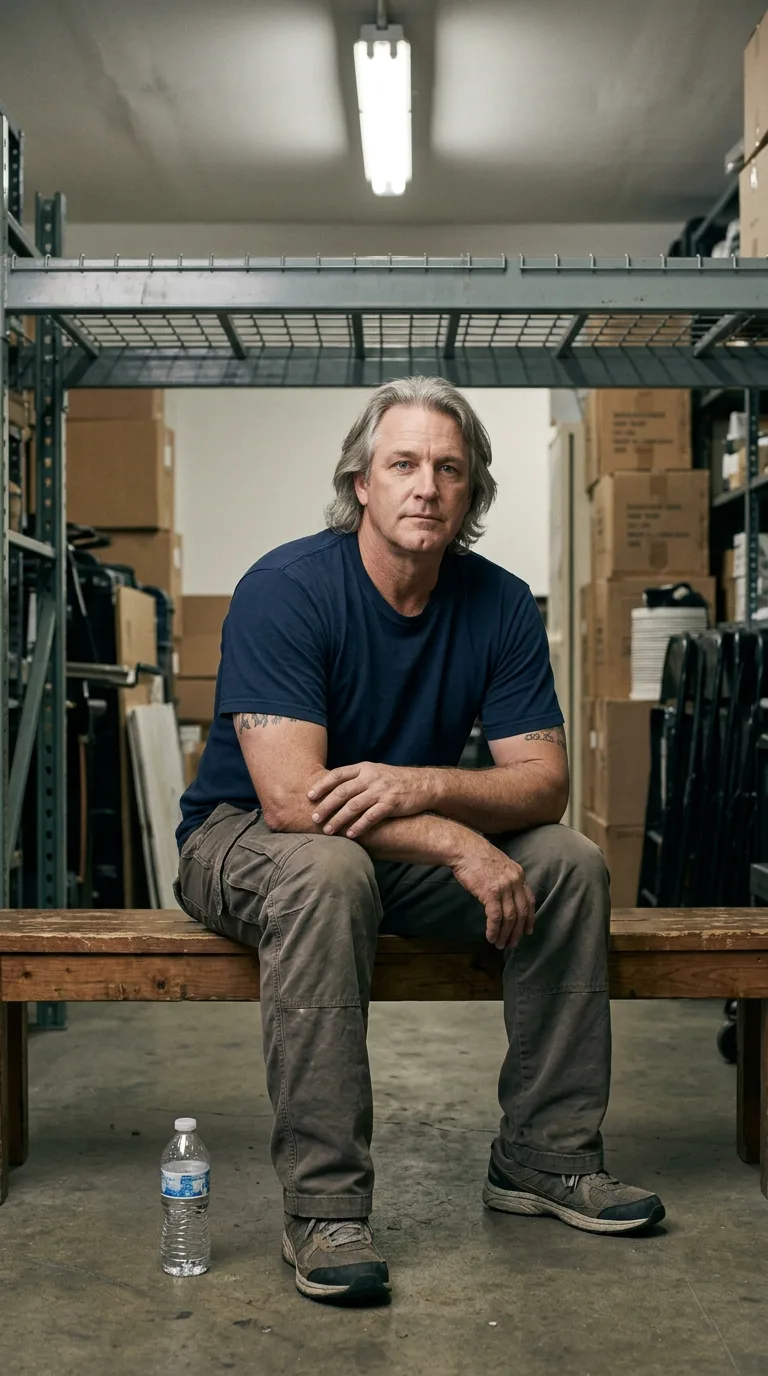
Rarest thing about him: Buried — $100k+ underwater — epic, 1 in 191
Season 0seed 1889185847 · engine v10
Character card
lineage OQVWFR
His body-swap story
@frank.ostrowski rolled the wheel on and woke up as Frank Ostrowski — their first
The screen has been open for forty minutes and you've refreshed it eleven times without meaning to. A wheel, plain as a slot machine, on a page that looks like it was built by someone who didn't want to spend money on looking legitimate. You've wanted this since before you could name what it was — every story where someone wakes up behind a stranger's eyes, every thread at two in the morning you told yourself you were reading ironically. It has never once been real. It has never been for sale. The afternoon outside is doing nothing, the kind of gray Monday that doesn't ask anything of you, and that's exactly the kind of afternoon this always happens on in the stories. You pay. You spin. You do not expect it to catch.
It catches.
There is a bar in your hands, cold-knurled steel, and your arms are pushing it up against weight that is not imagined weight, and breath is going out through teeth that are not your teeth in a rhythm already halfway to its last rep. The bench is under you. A rack frames a strip of fluorescent light two feet above your head. Somewhere below and to the left there's a bottle sweating a ring onto concrete. You are not scared, not yet — there isn't room for scared, there's only the bar, and the fact that your hands went two inches wider on it than they meant to, and the fact that the rest of the reps come out slow and even, no grind in the face at all, like whatever finished the set wasn't struggling.
It's evening here. Somewhere behind that thought, small and irrelevant, is the fact that it was afternoon a half-second ago, somewhere else, and the gap between those two clocks doesn't matter yet because the shirt is already talking.
It's a plain navy tee, soft in the way cotton gets after two hundred washes, and pulling it on this morning comes back in the arms first — one sleeve, a pause, the other sleeve, a wince stitched into the motion that isn't a memory of pain exactly but the shape a body makes around a memory of pain, a shoulder that doesn't go all the way up anymore and hasn't since a call three winters back, a flatbed hitch that came free early. Frank Ostrowski. The name arrives with the shirt like it was folded into it. Fifty-four years old, and the body under your hands agrees: forearms corded from winch cable, a low permanent stiffness in the lower back that flares if he sits too long in the truck's cab, and under the sternum a small hot coin of acid that never fully goes away, that he's stopped mentioning to Denise because mentioning things starts a conversation about the doctor he can't afford to have.
Denise. She comes in through the smell of the gym towel slung over the rack — no, wrong, she comes in through the ring on his left hand, thin gold, worn thin at the back where it rests against the wheel all night. Eleven years. The brownstone stoop, sodium light on wet stone, her key already in before his because his hands are always full of something — a bag, a thermos, once a stray cat he'd found stuck under a Buick on Nostrand. Their daughter, Ava, nineteen now, away at school upstate on loans he is still paying down alongside everything else, because there is a number attached to this life that never stops being true no matter how many hours the truck logs: he is buried, six figures under, has been since before Ava was born, and some nights the number sits on his chest heavier than the reflux does.
The back piece surfaces last, because you can't see it, only feel the pull of skin at the shoulder blades when you rack the bar — script, a name, a date, his father's, done the year the old man died, the pain of the needle indistinguishable now from the pain of missing him. Frank doesn't think about the tattoo. He thinks about the road. Headlights doubled in wet asphalt, hazards ticking, the particular relief of a chain going taut and a stranger's car lifting clean off a shoulder at two in the morning while the stranger says thank you like Frank just saved something more than a bumper. He likes that part of the job. He has never told Denise that some nights, alone on the shoulder of the Belt Parkway with the flashers going and nobody else awake in the world, he is almost happy.
His hand wants a lighter. Not for a cigarette — quit that eleven years ago, around when the ring went on — just the flip, thumb over the wheel, a habit with no fire left in it, worn into muscle memory the way some men chew a pen. The bar is back in the rack. The set is over. Whatever finished it for him is still finishing it, still sitting in his weight, his breath, his sternum's small burn, and only now does the room come all the way into focus: the fluorescent tube, the shelf of loose plates, the bench cold through cotton shorts.
You look down. His hands, scarred faint white across two knuckles from a chain that got away from him once, turn over in front of his face like a man checking they're still attached.
"That the last set?" you say, out loud, to no one, in his voice, and it doesn't sound like a question about the gym at all.