Frank Delacroix
Fictional. Generated by AI — not a real person, and no likeness of one is intended.
65, retired in Chicago · rolled by @colin.hasbrook · card — no film
History
who has worn him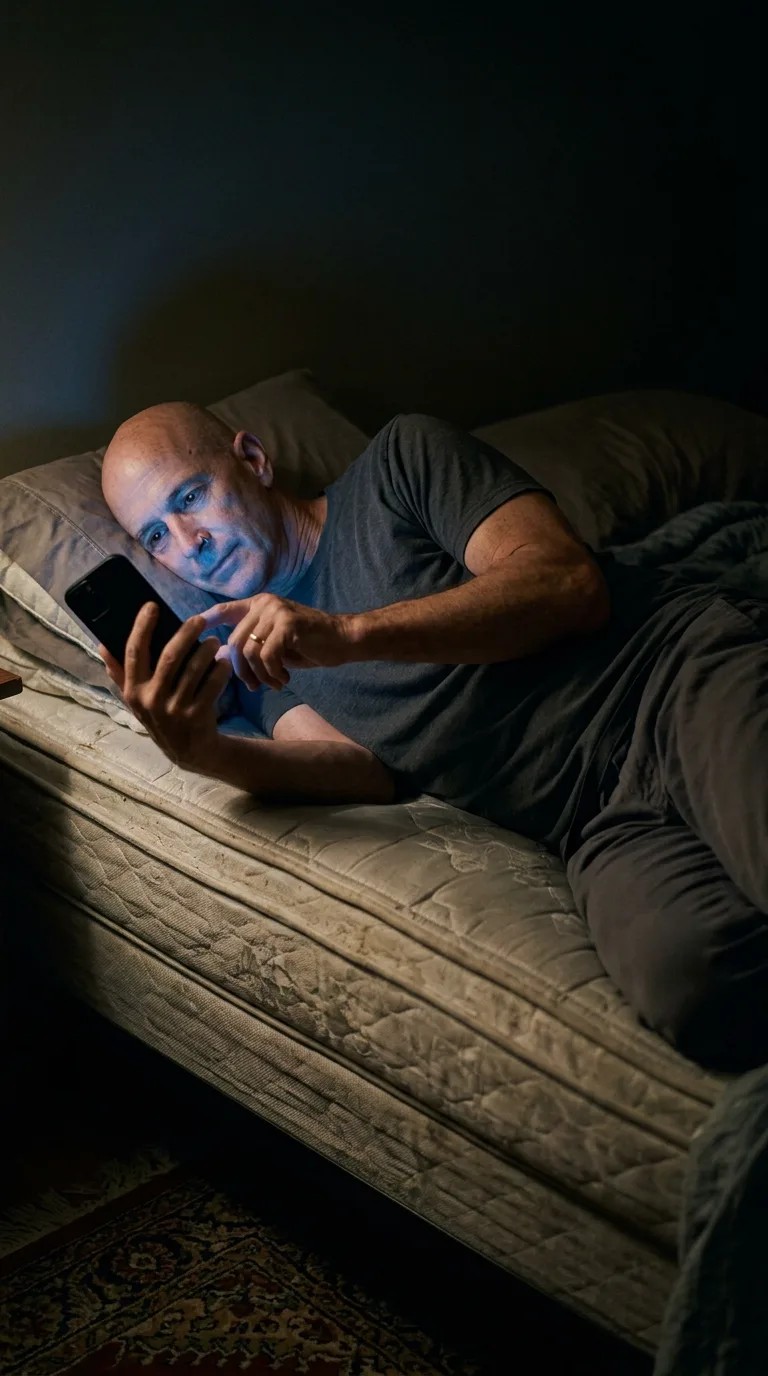
Rarest thing about him: Nose — legendary, 1 in 167
Season 0seed 1038114982 · engine v10
Character card
lineage 2NZHHJ
His body-swap story
@colin.hasbrook, wearing Colby Strathan, rolled the wheel on and woke up as Frank Delacroix, spent under a minute in him, then spun the wheel and woke up as DeShawn Ollie
Sixteen minutes is nothing. Sixteen minutes ago you were nobody, and now you are Colby Strathan again, standing post at a High-desert gate booth at two in the afternoon with the wind coming off the scrub and a headset crackling somebody else's radio traffic into your ear. His feet hurt in his boots. His hazel eyes water in the glare. You have worn better bodies than this one and you have worn worse, but sixteen minutes in you already know the truth of him: he is twenty-four and he is bored in a way that goes all the way to the bone, a boredom with a badge on it, and you did not spin the wheel to stand in a booth and wave contractors through a gate. That was never the appeal. The appeal is the half-second before you land, the not-knowing. You pull the phone from the pocket of his uniform pants — his phone, not yours, none of it is yours — and you open the site with the wheel on it, because the wanting came back faster this time than it ever has, and you don't ask yourself why, you just pay.
The wheel spins. It always spins the same amount of time no matter how many times you've watched it, and then it stops on a man you have never seen.
You are on your side in the dark. There's a phone six inches from your face, throwing blue up onto your cheek, and your thumb is moving over it — no, it stops, hangs there mid-scroll for a heartbeat, and then it starts again, faster than it was, faster than thumbs move when a person means them to. Somewhere far off, under everything, a train takes a curve on elevated steel and the whole frame of the building answers it, a shiver you feel before you hear it. The mattress under you is old, broken in on one side in the shape of a body that has slept here ten thousand nights. You are big. You feel it immediately — the way your knees stack, the way your shoulder takes up more of the pillow than a shoulder should. Bald head against cotton. A thin cold ring of metal in your nose that you notice only because you didn't put it there.
The shirt is what does it first — grey cotton, worn thin at the collar, and touching it the way your own skin touches it brings a flash: a hand — his hand — pulling this exact shirt over this exact head this morning, in weak grey light through a blind, the small groan of a sixty-five-year-old back deciding whether today is a day it will cooperate. Frank. The name arrives with the shirt, the way a smell arrives before you place it. Frank Delacroix, and underneath that, faster now, more of him, because the shirt remembers his hands even if his hands don't remember yours.
The mattress gives you the marriage. Twenty-nine years of it, most of them good, some of them the kind of good that only shows itself from a distance — Carol on the other side of a bed that isn't this one, in a house two rooms bigger, before the kids left and before he retired and had to learn what a Tuesday was for. He loved her on the days he forgot to measure it. He loves her now in the specific, tired, grateful way of a man who has been forgiven more than once. The ring on your left hand is warm before you've warmed it — thirty years of a body's heat living in one dumb circle of gold — and it gives you a wedding in a backyard, folding chairs, his mother crying for reasons that weren't about him.
There is another hand that isn't Carol's, and it comes in sideways, unbidden, off nothing you're touching — just off the shame of it, which apparently lives in the body the way scar tissue does. Younger. Laughing at something he said like it mattered. Six months, maybe eight, that ended badly enough that he still flinches near a certain radio station, a certain make of car. You feel the guilt of it land in a stomach that isn't used to holding guilt this specific. Carol never knew, or knows and has decided not to know, which in twenty-nine years amounts to the same forgiveness.
The pillow gives you a kid — one, a daughter, grown now, a phone call last Sunday that went fine, that always goes fine, that leaves him wanting more than fine and never asking for it.
Your thumb, still moving without you, finds the case of the phone worn smooth at the corner, and that gives you the pension statement, the house paid off, the number that means he never has to think about money again and thinks about it anyway some nights, at this hour, for no reason he could defend to a doctor. The little orange bottle in the bathroom cabinet, the one he's supposed to take with food, the one that mostly works. A coffee mug on a porch rail, going cold, tracks rattling past two blocks over, some other morning, ordinary and whole.
Your nails are bitten down past where a manicurist would allow. You feel the want to do it now, that same old animal comfort, and you don't, because you are new to this hand and it hasn't earned the habit from you yet.
You let the phone drop the last inch to the mattress. You bring your hand — his hand, the ring catching a last blue flash off the screen — up in front of your face and you turn it over once, the way a man checks a tool he's about to be handed for the first time, weighing it, and under the tracks outside a train is already fading toward some other neighborhood, taking its noise with it.
"There you are," you say, to no one in the dark room, and it isn't clear yet — not to you, not to anyone — who you mean.