Feliciano Nazario
Fictional. Generated by AI — not a real person, and no likeness of one is intended.
55, locksmith in New York · rolled by @marlon.etienne · card — no film
History
who has worn him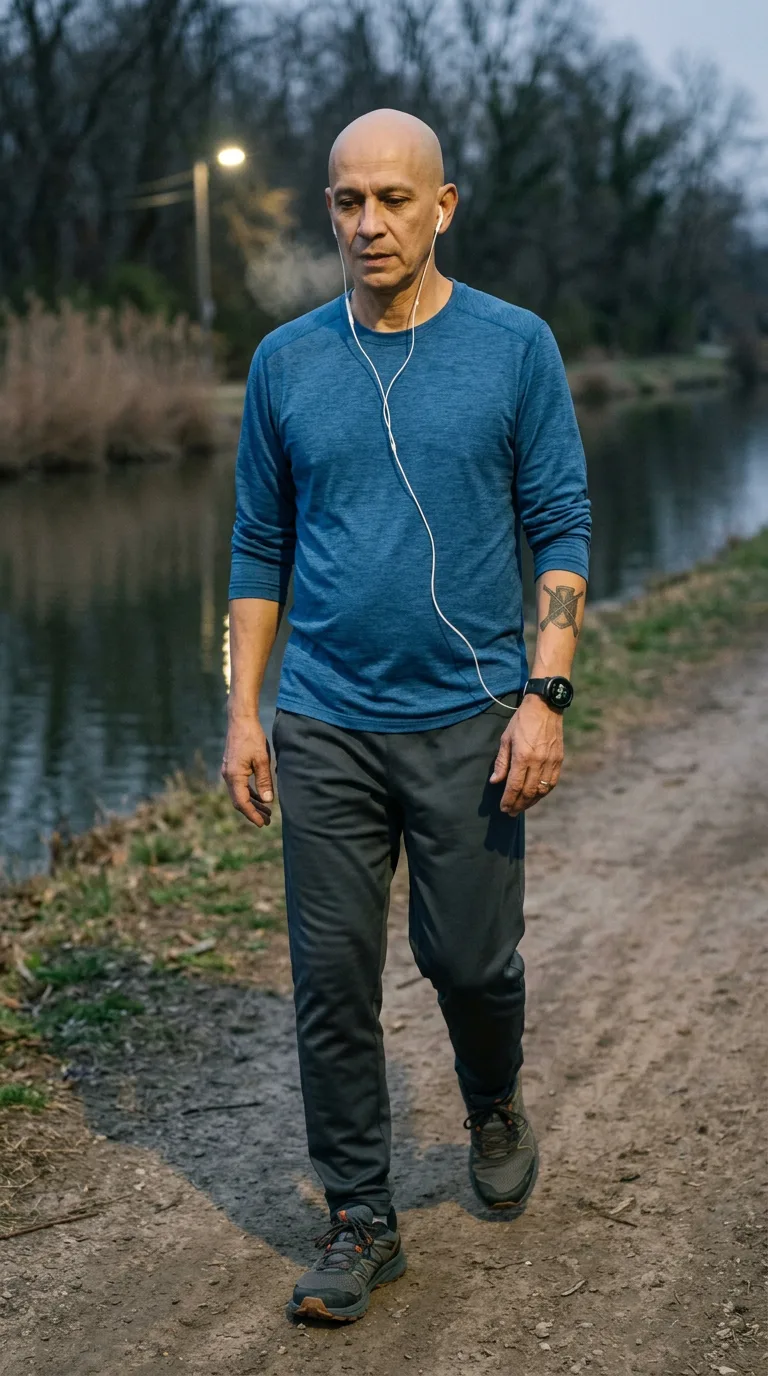
Rarest thing about him: One, forearm — rare, 1 in 19
Season 0seed 1571406635 · engine v10
Character card
lineage 6PRR5R
His body-swap story
@marlon.etienne, wearing Osiel Maldonado, rolled the wheel on and woke up as Feliciano Nazario, spent 3 minutes in him, then spun the wheel and woke up as Kaito Sugimoto
Osiel Maldonado's kitchen smells like bleach and last night's rum, and you have been him for five minutes, which is exactly long enough to know you don't want to be him for one more. The bar towel is still looped through the fridge handle where he left it Tuesday. His knees ache going down the hall. His wife's reading glasses are on the counter, folded, waiting, and something about the domestic patience of them — the sheer *quiet* of a life that just sits there being lived — makes you restless in a way you can't name and don't try to. You didn't come back to the wheel because Osiel did anything wrong. You came back because five minutes was enough to feel the shape of the rest of his day, and the rest of his day was going to happen whether you were in it or not, and that, more than anything, is the thing you cannot stand: a life that keeps going without asking you.
So before the coffee's even done dripping, standing in his socks on his cold tile, you pull the site back up on his phone, thumb slipping a little on the glass because his hands are not steady this early, and you spin.
The canal path arrives without asking permission of anyone. One stride is Osiel's uneven gait carrying no one anywhere. The next stride is a stumble that never lands, weight catching itself on a foot that knows exactly where the ground is, and then you are running — not stumbling, running — on legs that are thicker through the calf, heavier in the belly, older in the knees but somehow more certain of themselves. Earbuds hiss white noise into skull that is smooth and bald under a wool cap of cold air. A watch buzzes against a wrist that isn't yours, announcing a split for a mile you never ran. Breath comes out in a cloud in front of you, and for a half a second you are only that: breath, cold, motion, a body already moving before you got here, glad, in some wordless animal way, that the momentum did the work of not falling.
Then the shirt.
It's damp under the arms already, technical fabric snug across a gut that's soft the way a man's gets soft when the muscle underneath used to be there and mostly still is, just buried. And the shirt gives you a morning — not this one, an earlier one, folded on top of the dresser because Marisol likes things folded, because thirty-one years of marriage teaches you which battles are worth the thread count. Feliciano. The name comes up out of the shirt's collar like a scent. Feliciano Nazario, fifty-five, pulling this exact shirt over his head in a bedroom on a Brooklyn street two flights up from his shop, her back to him, already dressed, already annoyed at something one of the boys said last night at dinner — Danny, probably, Danny's always got an opinion about the business he doesn't want to run — and Feliciano zipping the sleeve down over his forearm, over the tattoo, the insignia inked there before any of his kids existed, before Marisol, when he was twenty and Fort Bragg was the whole of the world and he thought he knew what permanence meant.
The wedding band is next, worn smooth, and it opens wider than the shirt did — sixteen years since he shaved his head rather than watch it thin, the vanity of it almost funny to him now; the wedding itself, a backyard in Sunset Park, his mother crying into a paper napkin; three kids born in three different hospitals, each birth its own separate terror and relief; the shop, City Ret & Locks, that he bought off a Ukrainian named Petro who was retiring and tired, and how Feliciano's hands — these hands, thick-fingered, careful — learned a cylinder the way another man might learn an instrument, by feel, in the dark, one tumbler at a time. The high blood pressure that the doctor keeps mentioning like it's news. The rum-and-Cokes that turned into just rum somewhere in his forties. The cigarette he hasn't had in eleven years and still sometimes reaches for at 2 AM jobs, patting a pocket that isn't there.
The path under your feet — his feet — is packed dirt, familiar to an ankle that's rolled on this exact root before. The cold on your face is a cold he runs in on purpose, four mornings a week, because the cardiologist said *do something* and this was the something he picked, alone, before the shop opens, before anyone needs a lock picked or a bolt rekeyed, before he has to be anything to anyone. It is, you understand now, the only twenty minutes of his day that belong only to him. You are standing in the middle of the one private thing he does.
Your — his — fingers find each other, thumb dragging at the cuticle of the index finger without being told to, an old unconscious habit that started, the shirt says, around the time his oldest went to college and never quite stopped. You let it happen. You watch the hand do it like you're watching someone else's television.
You bring both hands up in front of your face, mid-stride, still moving because the legs don't know to stop, and you turn them over, palm up, palm down, looking at calluses that took decades to grow in and a ring that has never once come off.
"Hey," you say, out loud, to no one, breath fogging, watch buzzing again against the skin, "who the hell are you."