Faustino Reyes
Fictional. Generated by AI — not a real person, and no likeness of one is intended.
64, diesel mechanic in El Paso · rolled by @faustino.reyes · card — no film
History
who has worn him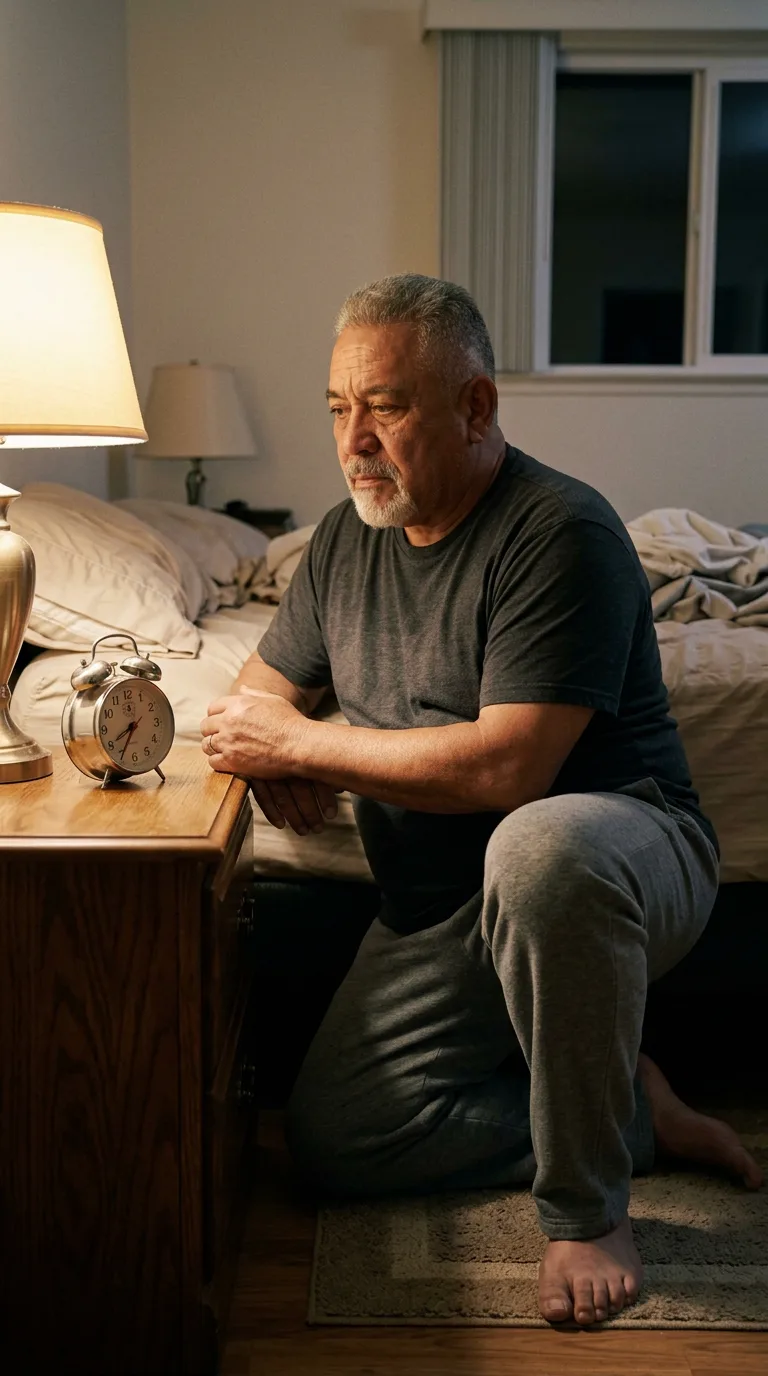
Rarest thing about him: Pacific Islander — common, 1 in 1,073
Season 1seed 1709089121 · engine v11
Character card
lineage N91LXL
His body-swap story
@faustino.reyes rolled the wheel on and woke up as Faustino Reyes — their first
It's a Friday morning wherever you are, which is nothing, which is nowhere worth naming. You've been scrolling since you woke, the blue light doing its usual work on you, and then the ad is just there again, the way it's been there for weeks: a wheel, plain as a raffle, vessel.cards, spin and become. You have wanted this since before you had the word for wanting it — every late movie about waking up in someone else's life, every forum thread at two in the morning where strangers argued about whether it would feel like sleep or like falling. Nobody could ever sell it to you before. Now someone can. You don't deliberate so much as notice that your thumb has already found the button. You pay. You spin. The wheel does what wheels do, and somewhere a man comes up.
You arrive already kneeling.
The carpet is rough through two knees that were not, a second ago, yours to have. There's a nightstand close enough to smell the lamp's heat off the shade, and a clock on it, brass-colored, ticking, hands at some hour that doesn't match the dark outside the window at all — his evening bleeding into your Friday noon, the two of you occupying the same tick of the same second from opposite ends of the clock. His body is heavy in a way that surprises you, low and solid, weight you'd have to learn to carry if there were time to learn anything. A t-shirt damp a little at the collar. Hands — his hands — loosely folded, going slack now that whatever was holding them together is you instead of him. He had gotten to amen early. He'd started to rise. You feel the half-laugh still sitting in the chest, unfinished, like a hiccup with nowhere to go, and then the knees fold back down on their own and the forehead goes to the bedspread and that's it. That's the whole violence of it. Nothing. A man coming back down onto his knees a half-second after he meant to stand.
And then the shirt against your back starts talking.
It's old cotton, washed soft, and it gives you a Sunday nineteen years gone — not this life, a before-life, the two kids small enough to still want to be carried, one on each hip, out in the yard behind the turquoise house with the chain-link fence throwing its shadow in bars across the dirt. Faustino. The name comes with the shirt, not from you, the way his own name would never need announcing to himself — it just arrives, already known, the way your own name used to. Faustino Reyes, and the shirt remembers him pulling it over his head this same evening, three, four hours ago by his clock, standing at the dresser in the room this is, smelling faintly of the shop even after the shower, because forty years of diesel doesn't wash all the way out of a man's skin anymore. The sleeves had stuck a little going on, the shoulders tight the way everything's gotten tight the last few years, and he'd caught himself in the mirror and thought, not unkindly, that he looked like his own father now, silver at the sides, the goatee gone the color of a nail. He'd almost smiled at it.
The nightstand under your folded hands gives you another year entirely — gives you the ring first, the plain band on the left hand, warmer than the air around it because it never comes off, not for work, not for sleep, not once in thirty-one years, and his wife's face arrives with it so suddenly and so whole that for a second you are not in his memory, you are in his missing her, except she is two rooms away right now, watching television with the sound low, and the missing is just a man's habit of loving someone through a wall. There were two kids. There is a company truck he's rebuilt the bay for twice. There is money that surprised him — more than a mechanic's son from the lower valley ever thought he'd hold, some land, some luck, some good years stacked on good years — and he never changed what he drove to work or what he ate for lunch because of it, because what would be the point of that.
The carpet under your knees gives you work: forty years of climbing up into raised cabs, the specific ache that lives now in both knees permanently, worse on the left, worse in cold weather, a thing he has stopped mentioning because mentioning it makes his wife look at him a certain way about retirement he doesn't want to see yet. The hands know torque without thinking about it — the exact feel of a bolt about to strip versus one still willing — hands that also, when nothing is in them, find their way to his mouth and bite, which he knows is a bad habit from childhood he was supposed to outgrow at nine and didn't at sixty-four. He craves a cigarette he isn't holding; the want for it sits at the base of his throat like something unfinished, a pack-a-day itch that has outlived two decades of him swearing off drink entirely with far less struggle than this. He prayed just now — not hard, not really believing anybody was on the other end keeping score, just the shape of it, habit more than faith, something he started doing again after a scare with the youngest that turned out fine, a private thing between himself and whatever's out there, if anything is.
The amen had almost made it out whole.
You lift up off the bedspread. The forehead comes up heavy, the neck stiff from the angle it was folded into. You look down at the hands still loosely together in front of you — his hands, wide, a nail bitten short on the thumb, the ring catching the lamp — and you turn one of them over slowly in the light like you're checking it's real, like it might not hold.
Then you lift your eyes to find whatever's watching, and you say, quiet, almost apologetic about it:
"—amen."