Father Michael Sarno
Fictional. Generated by AI — not a real person, and no likeness of one is intended.
42, priest in San Francisco · rolled by @father.michael.sarno · card — no film
History
who has worn him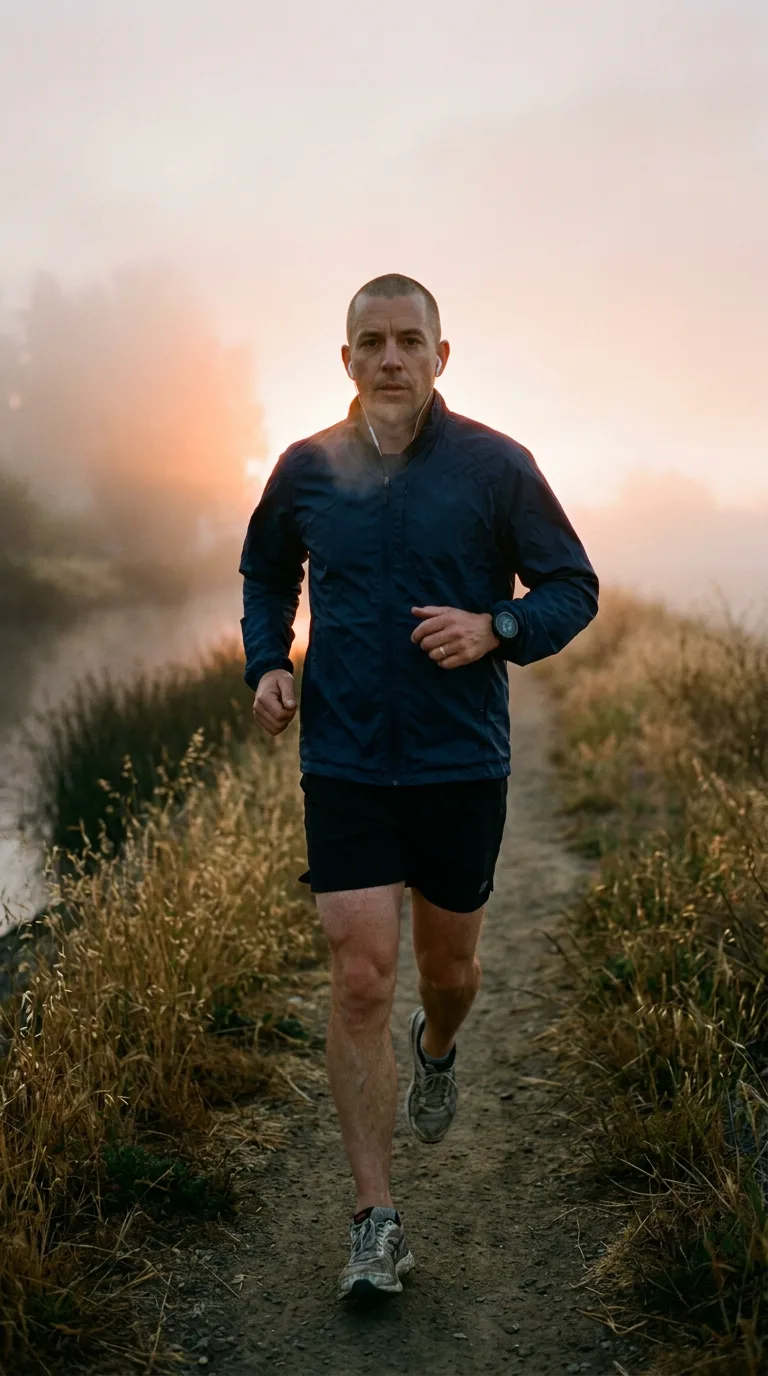
Rarest thing about him: Nose — legendary, 1 in 116
Season 0seed 813589983 · engine v10
Character card
lineage 3QHEEX
His body-swap story
@father.michael.sarno rolled the wheel on and woke up as Father Michael Sarno — their first
The evening is nothing much. It never is, on the nights that end up mattering. You've been scrolling long enough that your thumb has stopped deciding anything on its own, and somewhere in the fourth or fifth loop of the same tired feed the ad finds you again — vessel.cards, a wheel rendered in clean gray light, no promises spelled out because it doesn't need to spell them out, not to you. You have wanted this since before you had a word for it. Every story where someone wakes up behind a different face, every thread at two in the morning you told yourself you were reading for the writing. You have never once been able to buy it. Tonight, apparently, you can.
You do not think about it as long as you'll later pretend you did. You pay. You spin.
The wheel is still slowing when the canal path arrives around you — not as a picture, as weight. Cold air scrapes the inside of a throat that isn't yours yet but is about to be. There is a stride already committed to, a foot already leaving the ground, and you land in the middle of it with no seam at all: his pace breaks for two steps, a stumble that never quite reaches the dirt, and then the run just continues, arms a little lower than they were, on a foot that used to be the other one. A watch buzzes against a wrist, marking a split against a pace it has no memory of you setting. Fog over dark water. Grass gone gold and stiff with early light. Breath coming out in a shape you can see.
You are standing — no, running — inside a man, and the only proof you have that anything happened is that a second ago you were nowhere, and now you are here, mid-stride, at mile four of somebody's dawn.
He does not startle. There is nothing left in him to startle. But the body startles for both of you: lungs that pull a little tighter than they should, a familiar catch low in the chest that isn't panic yet, just a known narrowness, an old friend called asthma clearing its throat. The legs keep moving because legs that have run this canal five mornings a week for years do not need instruction. They know the camber of the path, the give of the dirt, the place forty yards ahead where a root pushes up through the gravel and has to be hopped without looking.
It's the shorts against your thighs that open first — not a whole memory, just heat, the specific chafe-warm feeling of fabric he's worn a hundred times, and under it, faint, a woman's voice — no, a man's — saying something about the tag itching, years ago, laughing about returning them and never doing it. Then the jacket. Navy, zipped to the sternum, and your arms remember pulling it on this morning in the dark of a garage that used to be somebody's parking space and is now a bedroom with a bay window's cold light falling through at a wrong, low angle because the house was built into a hill and this is what was left over. Sleeve, then sleeve. The zip catching once on itself the way it always does, the small practiced yank that frees it. This is Father Michael Sarno's morning, coming back to you through his own clothes: the vestment closet's cedar smell still somewhere behind it from last night, the collar hung on its peg white as a bone, black shirt with its two pressed pockets waiting for tomorrow's Mass, worn thin at the collarband from four years of the same motion.
More comes, unbidden, riding in on touch. The earbuds — a flash of the app open on the counter, a sermon podcast half-finished, switched off in favor of nothing but the sound of his own breath this morning, because some mornings the voices in his ear feel like one more person needing something from him. The watch — a gift, though not from anyone who gives him things anymore. A number on its face, four miles, the same four miles, the only part of the day that is only his.
The wedding band isn't there, but the ghost of it is — a paler ring of skin on the fourth finger that his thumb finds without meaning to, an old tic worn into muscle before it was worn into bone. Through it comes a kitchen in Noe Valley, a fight conducted in the specific quiet register of two people who both know the neighbors are thin-walled, a signature on a page at a downtown office with tall windows, David's hand — his name arrives with the memory, David, not Daniel, not Aaron — steady on the pen in a way his voice hadn't been in months. Divorced now three years. Nobody at the parish uses the word out loud, though they all did the math when the ring stopped showing up in photos.
The nose ring is there too, small, easy to forget until your fingers brush it adjusting a strap — a decision made after the divorce, a small defection from a life of collars and vestments, kept quiet from the bishop, worn like a secret that is really just a fact. He likes it. He is fond, in a complicated, guarded way, of the fact that he still surprises himself sometimes.
Underneath all of it, the body does its own honest reporting, plain and unromantic: forty-two years old, five-seven, a frame kept average and serviceable by exactly this, these dawn miles, nothing more ambitious than upkeep. A tightness behind the sternum that flares when the pace climbs, an inhaler he did not bring today and is already, distantly, regretting. Hands that are not doing anything demanding right now and so drift, even mid-stride, to worry at a cuticle on the right thumb, a habit so old it isn't even noticed anymore, just done. A mouth that tastes faintly of nothing, because there was no coffee yet, no vape yet either — that's for after, propped against the porch rail with the paper, a small ugly comfort he quit drinking to make room for. A scalp buzzed close enough to feel the morning air on it directly, no hair to soften the cold.
He was, an hour from now, going to think about the eight a.m. and whether the Ferretti reading was too long. He was going to think, as he does most mornings around mile three, about whether David still runs, and where.
He will not think about either of those things again.
The legs slow on their own, easing out of the pace as the canal path gives way in your attention to something nearer — your hand, swinging low with the rhythm of the stride, catching the corner of your eye. You lift it up in front of your face without deciding to, still moving, watch face flashing another number nobody asked for.
You turn the hand over once, study the thin pale line where a ring used to sit, the bitten edge of a thumbnail, like it belongs to somebody you're meeting for the first time. You are. Ahead of you the fog is starting to color at the edges where the sun's about to clear the ridge, and ahead of that is nothing you can see yet — not tonight, not tomorrow, not whatever comes after this.
You say it out loud, to no one, to the water, to the version of him that isn't listening because there isn't one anymore:
"Okay."