Fabián Otero
Fictional. Generated by AI — not a real person, and no likeness of one is intended.
48, teacher in New York · rolled by @fabian.otero · card — no film
History
who has worn him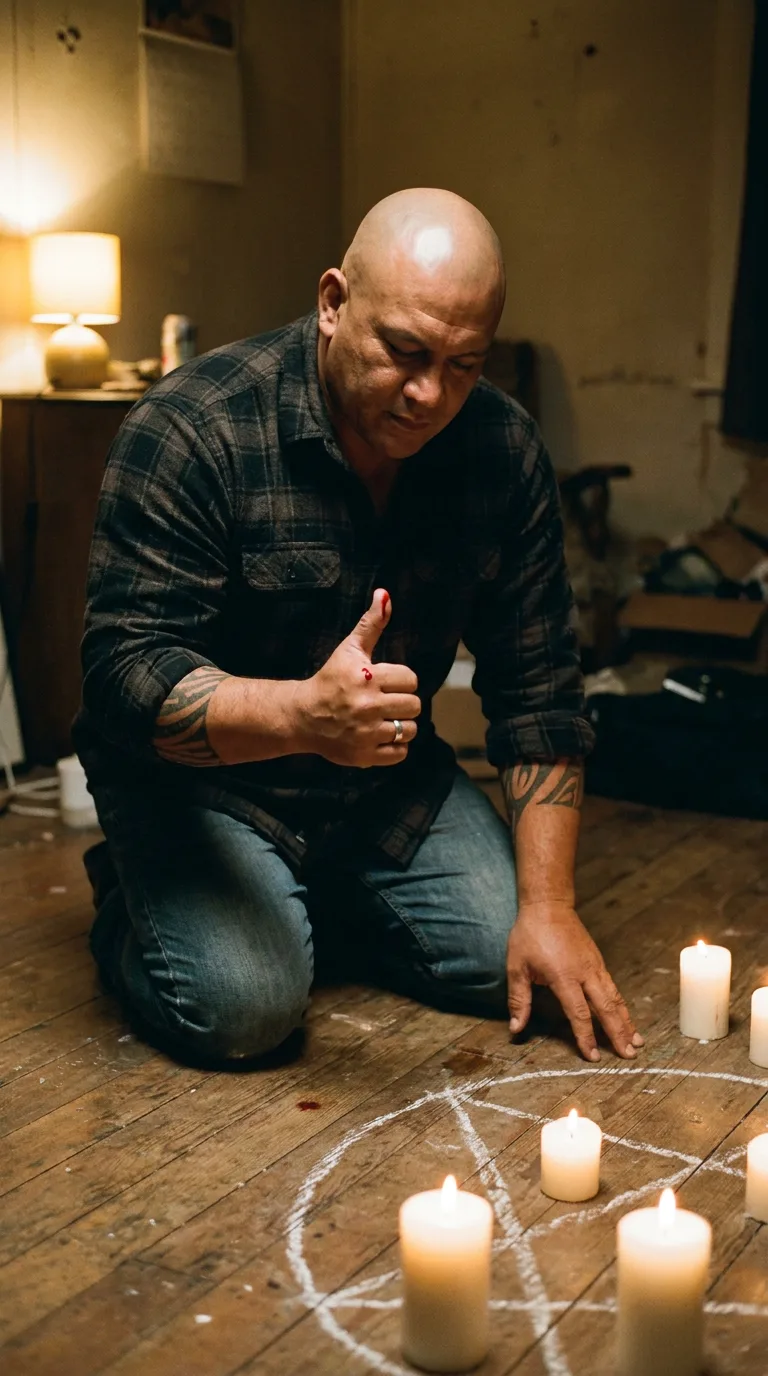
Rarest thing about him: A tremor in the hands — rare, 1 in 105
Legacyseed 64022120 · engine v8
Character card
His body-swap story
---
You shared a wall with him for eleven years.
Room 214 and Room 216, Global History and Earth Science, one cinderblock partition between you thin enough that you learned his whole teaching voice by heart without ever seeing him use it. The way he said *okay okay okay* to get them down. The way he laughed at his own jokes a half-second before the kids did, like he was giving them permission. You knew when he was hungover because he showed the film. You knew there were two kids at home because you heard their names in the hallway on the phone, *mira, papi's coming, papi's coming*, and you knew about the wife because of the band on his left hand and the way he touched it when he was thinking, turning it with his thumb, a nervous rosary of one bead.
You knew about the drinking because everybody knew. Nobody said. That's not the same as nobody knowing.
And you knew about the tremor because you sat across from him in a February faculty meeting, both of you holding paper cups of coffee from the machine in the main office, and his cup rippled and yours didn't, and he saw you see it and he put the cup down on the table and didn't pick it up again for forty minutes. He talked the whole time. He was funny. He was always funny. He had that thing certain men have where the joke is a door they hold open so you don't look in the window.
You died in June. Aneurysm, in the parking lot, between the car and the door, keys still in your hand. You want it on the record that you did not choose that, and you did not choose what came after it either — the long grey nothing, the pressure of it, the way it was not fire and not rest but a kind of *waiting room* with no chairs. You went where you went. You are not going to describe it. It is enough to say that you learned things there you would not have learned in a classroom, and one of the things you learned is how to lean on the thin place in a person, the way you once leaned on that cinderblock wall to hear his voice.
Fabián was the thin place. He had been cracking for years.
You did not put the book in his hands. He found it himself, or a man in a bar in Sunset Park sold it to him for forty dollars and a story, or it came down through his mother's people the way those things do, wrapped in a dish towel in the back of a closet with a laminated Sacred Heart. He is Catholic in the way that hurts — he still goes, he still stands, he still won't take communion, and after Mass he sits in the car in front of the brownstone under the sodium light with the wipers off and the rain coming down the windshield in orange threads and he doesn't go inside for twenty minutes.
He wants to be someone else. That is the whole of it. That's the whole reason a forty-eight-year-old man with a mortgage half paid and a pension and two kids and a wife who still puts her hand on the back of his neck at the sink ends up on his knees in the empty apartment upstairs that they've been renting out and haven't rented out this year, drawing a circle in chalk on the floor by lamplight. He does not want to die. He is very clear with himself about that. He tells God so, out loud, before he starts. *I don't want to die. I want out.*
He thinks those are two different sentences.
You watch him do it, from your side of the thin place. He's in the flannel, the good one, the one he wears on Saturdays. He's got the candles in a ring, dollar-store novenas without the saints on them, and he's got his phone face-down because he doesn't want to see the time. He pricks his thumb with a sewing needle from the tin his wife keeps in the kitchen drawer and he makes a small sound, not pain — surprise, the way men do — and the bead of blood comes up on the pad of his thumb, bright and round, and he looks at it for a long moment like it's proof of something.
His hand is shaking. Of course it is. It's been shaking since Thursday.
And here is what nobody would believe about him, what you got for free from eleven years of a shared wall: he is a good teacher. Not a decent one. A good one. Kids came back years later and stood in the doorway of 214 and said his name like a password. He taught them the Middle Passage and he did not flinch and he did not perform, and he made them draw the trade winds, and he told them *history is not the past, it's the arrangement of the furniture you were born into.* You heard that through the cinderblock in 2017 and you wrote it on a Post-it and stuck it inside your desk drawer.
He also, in April, told a boy named Denilson that he was wasting everyone's air. Denilson was fifteen. Fabián had had three at lunch. He apologized the next day, and meant it, and the boy said it's okay Mister and it was not okay, and Fabián knew it was not okay, and that is the night he opened the book.
There's an ex-girlfriend in it too, somewhere. Marisol, from before the wife, from before the license and the classroom and everything — the one who left for Miami in 1999 and still likes his posts, and whose face he has typed into a search bar at 2 a.m. more times than he'd say. Not because he wants her. Because she knew him before he was arranged. He's not trying to get her back. He's trying to get *that guy* back, the one she knew, the one who wasn't shaking.
You understand him. That's the ugly part. This isn't hunger — or it isn't only hunger. You want the wall gone. You want to be on the other side of it. You spent eleven years listening to a man be *alive* two feet away from you through concrete and then you died in a parking lot with your keys in your hand and no one to say *okay okay okay* to.
So when he bends down over the chalk, when he presses that bleeding thumb to the white line and moves his lips around the last word without any sound at all — no breath, just the shape of it, because he's ashamed and he's Catholic and he thinks saying it quietly makes it less — you are already there. You have been there since the first candle.
The flames all lean toward him at once. Every one. Bowing in like grass in wind.
He has one second and he uses it well. He does not scream. His head comes back and the light that comes out of him is not lamplight, it's the grey, it's the waiting room, it's everything you brought with you and can't put down, and he sees — you feel him see — the whole arrangement of the furniture he was born into, and he says, without a mouth, *oh*.
Not fear. Recognition. *Oh, that's what I was asking for.*
And then the flames straighten and so do you.
---
The first thing is weight. God, the weight of him. Two hundred and something on a five-eight frame, thick through the shoulders and the gut, the knees complaining on the boards, and under all of it the low burn behind the sternum that he's had since he was forty and calls *the acid* and treats with chalky tablets from a bottle in the glovebox. You take a breath and it goes down wrong and you cough and the cough turns into a laugh, because it's *lungs*, it's the mechanism, it's a body doing its filthy magnificent work.
Second thing: the shaking. It isn't nerves. It doesn't stop when you calm down. It's in the wiring now, it's the tab he's been paying on, and it will be yours to pay, and you knew that going in and you didn't understand it until this exact second on the floor of a rented apartment in Brooklyn with wax cooling on the boards.
You look at the hand. Wide, blunt-nailed, a nick on the thumb, black tribal ink running up the forearm in shapes he picked out in 1996 and can't remember the reason for. You turn it over. Palm, lines, the callus at the base of the fingers from the pull-up bar in the doorway that he uses in bursts of three weeks every February. The band on the fourth finger, silver-plain, warm from his skin.
There's a woman downstairs who is going to say *Fabi?* when you come through the door, and two kids asleep, and a mortgage, and a pension, and in September there's a room with thirty-two desks and a map of the trade winds and a boy named Denilson who deserves better than he got.
You have all of it. Forever. There is no clause and no exit and no way back, and you did not read the fine print because there wasn't any — that's the part nobody warns you about, that the door only swings the one way, and the man who opened it is not in the hallway, is not anywhere, is *finished*, and you are standing in his shoes with his acid in your throat and his tremor in your hands and eleven years of listening to him through a wall as your only instruction manual.
You get up off your knees. That part's easy. You've watched him do it a hundred times.
You blow out the candles one at a time, and you say — out loud, with the mouth, with air, because that's the whole point of having one — *okay. Okay. Okay.*
Then you go down and put the coffee on, and you don't take the bottle out from behind the cereal, and that's day one.