Ezequiel Barraza
Fictional. Generated by AI — not a real person, and no likeness of one is intended.
30, house painter in High-desert Nevada · rolled by @colby.marsh · card — no film
History
who has worn him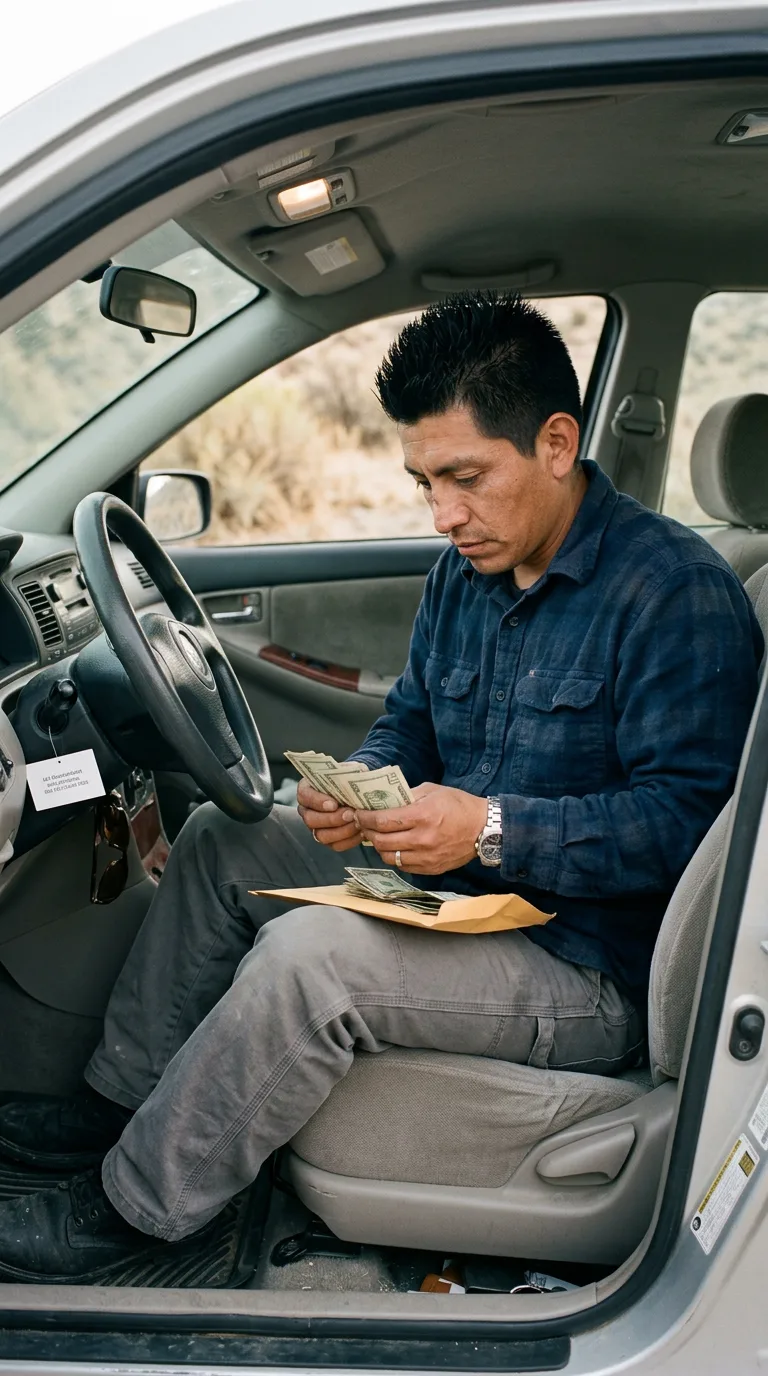
Rarest thing about him: Quitting right now — epic, 1 in 99
Legacyseed 543154596 · engine v8
Character card
His body-swap story
---
You worked beside him for two years and eleven months.
You know things about him nobody else bothered to learn, because nobody else stood two feet from him for eight hours a day with a brush in their hand and nothing to look at but the same wall. You know he cuts a line freehand cleaner than you do with tape. You know he hums without knowing it, four bars of something with no end, and if you say *Zeke, you're humming*, he stops and goes red and starts again eleven minutes later. You know his left leg bounces under the table at lunch like a sewing machine, all the way through the sandwich, all the way through the coffee, and the one time you asked him about it he looked down at his own knee like he'd caught a stranger touching it.
You know he takes the little white pill in the truck before the day starts, dry, chin up, and puts the bottle back in the glove box under the registration where nobody would find it if nobody were looking. You never said anything. You were looking.
You know his nose. Everybody notices the nose — set crooked, a slight bend at the bridge that pulls his whole face a few degrees off true, so that even head-on he looks like he's turning to hear you better. He got it at nineteen and he'll tell the story to anyone: a job in Reno, a ladder, a five-gallon bucket, gravity doing what gravity does. He tells it like a joke he's fond of. You've heard it ninety times and you never once got tired of it, and that should have told you something about yourself earlier than it did.
You know his trailer, single-wide up on blocks out past the pavement, sage right up to the step, the shadows out there so hard and blue at six in the evening they look painted on. You dropped him off there maybe forty times. He never asked you in. Not unfriendly — he just didn't have the reflex. Thirty years old, single, nobody waiting, nobody left behind who still matters. A man with a hundred and some thousand in a credit union and nothing to spend it on, which is the loneliest arithmetic there is.
And you know — because he told you in the truck one February, quietly, eyes forward — that he still goes to Mass some Sundays, in the back, standing, doesn't take the host anymore, couldn't say why. *I just like the building*, he said. *It's cool inside. Smells good.*
You never had a body. You had wanting, and you had proximity, and you had years of standing in emptied rooms with the drop cloths down and the trim taped, watching a man be alive inside a life he wasn't using.
So you made the offer. You put it plainly. A week, you said. Rent, not sale. A week of him gone somewhere restful and quiet and no leg bouncing and no pill in the glovebox, and money in an envelope for the trouble. You said the word *week* four times because four times is what it took, and he asked what you'd do with it, and you said *work. Sleep. Nothing you'd mind.* He laughed at that. He said, *Man, you can have the anxiety for free.*
You wonder now whether he heard the sentence you didn't say, and decided it wasn't there.
---
He picks the money up at the turnout past the county line, seven miles from his own step. Silver Corolla, door open to the heat, sage going gold behind the glass. He counts it in his lap, licking his thumb, the way a man counts who has never had this much loose in his hands at once — twice through, slow, lips moving on the hundreds. His left leg is going. Of course it is. The whole car is faintly trembling with it and he doesn't know.
On the dash there's the card with the address on it. Not much of an address. A gravel road, a mile marker, a house that will be empty when he gets there, because there's no *he* scheduled to arrive.
He folds the envelope shut. He presses the flap down with two fingers, the way he'd press a strip of tape onto trim, firm, once, no fuss. He picks up the card and reads it again and his lips move on that too.
Then he reaches up and turns the rearview mirror toward his own face.
I want you to understand that he does that himself. That's still him, tilting the glass, looking at Ezequiel Barraza the way you look at yourself before something — checking the hair, the ridiculous jet-black spikes he re-gels every morning, too uniform, too even, the one vanity in a man who owns four shirts. He's making sure he looks like someone you'd hand a body to.
And that's the doorway. Not the money, not the card. The moment he turns the mirror and consents to be *seen*.
---
You come in the way heat comes into a parked car.
There's a sound in the throat that isn't a word. The head goes back into the headrest and the light comes up behind the hazel — out of the eyes, out of the open mouth, white and flat and wrong in that beige interior, a full second of it, the sagebrush outside going pale in the wash. The bills slide off his lap into the footwell. The leg stops.
Then nothing. Slack. Head down, chin on the collar of the blue flannel, hands loose on the seat like dropped tools.
And then I lift them.
*I.* Yes. From here it's *I*, because there's no one else in the car to say *you* to.
I lift the hands and I look at them. I have never had hands. I have had two years and eleven months of watching these ones — the paint dried into the cuticles in colors from other people's houses, the callus pad below the fingers where the brush handle rides, the plain steel watch, the ring he wears on the right hand that isn't a wedding ring and never was, just something of his mother's he never took off. I turn them over. Palms. Knuckles. I bend the fingers and they bend. I press my thumb into the callus and feel it from both sides at once.
The leg does not bounce. I have to decide to bounce it. Later — a week from now, a year — I will start doing it without deciding, and that will be the day I stop being able to tell exactly where the seam is.
I tilt the mirror the rest of the way and there he is. Crooked nose, three degrees off true, the thing everybody notices. The stupid gelled spikes. Hazel eyes with something new standing behind them, watching the property, checking the fixtures.
He said a week. He said it four times.
I gather the bills out of the footwell — his money, mine now, the price he set on himself and it was too low, it was insultingly, heartbreakingly low — and I square the stack against my thigh and slide it back into the envelope. I press the flap down with two fingers, firm, once, no fuss.
Just like he does it. I learned that from standing next to him.
Then I put the card in the visor and pull out onto the county road, and I don't go to the address, because there's nobody coming to meet me there. I go the other way, seven miles, out to a single-wide on blocks with the sage right up to the step and the shadows going blue and hard, and I let myself in with the key from his pocket, and I stand in the little kitchen that smells like him, and I say his name out loud in his voice to hear how it fits.
Sunday I'll go sit in the back at Mass. Standing, not taking anything.
I just like the building. It's cool inside. It smells good.