Esteban Marchetti
Fictional. Generated by AI — not a real person, and no likeness of one is intended.
47, shop owner in Chicago · rolled by @mateo.rangel · card — no film
History
who has worn him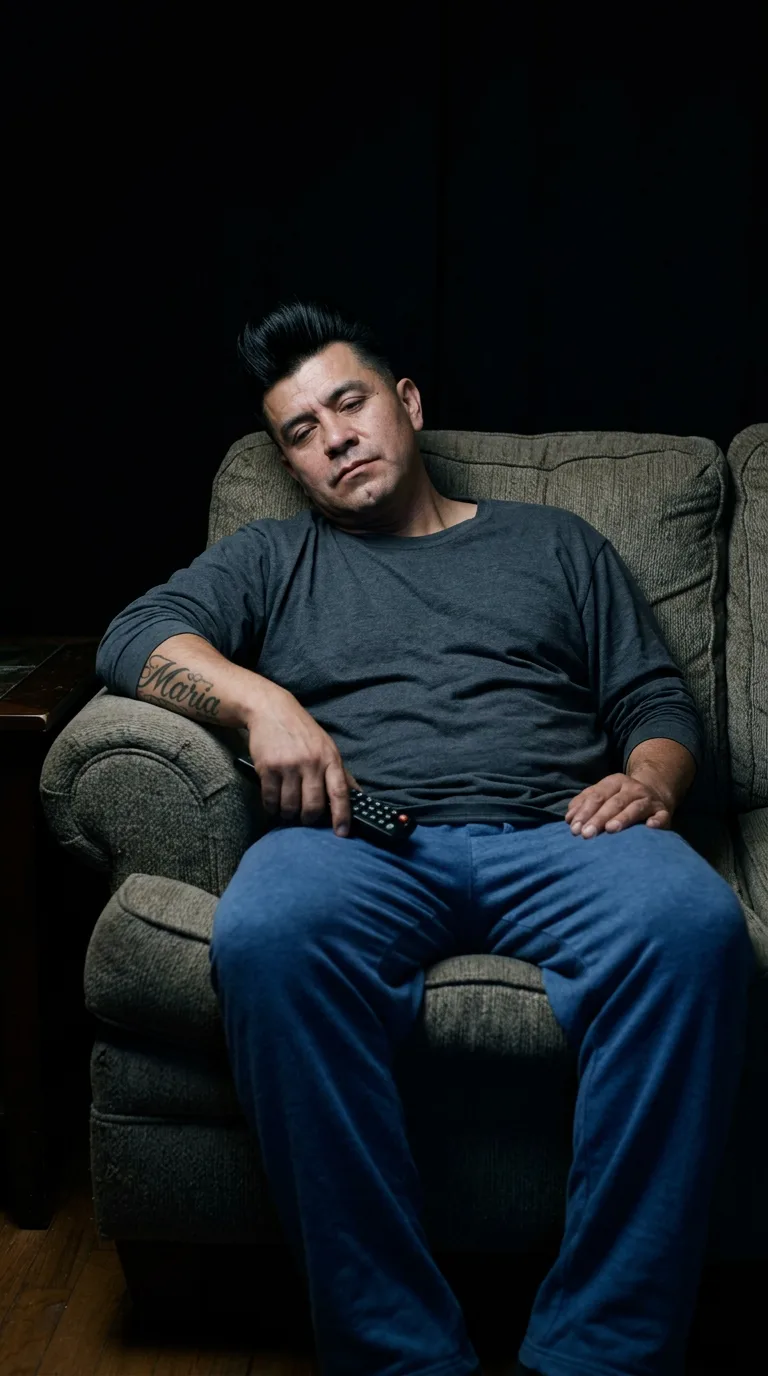
Rarest thing about him: Half sleeve — common, 1 in 32
Season 1seed 125039510 · engine v11
Character card
lineage SLLVG5
His body-swap story
@mateo.rangel, wearing Colin Beauparlant, rolled the wheel on and woke up as Esteban Marchetti, spent 1 minute in him, then spun the wheel and woke up as Dean Osweiler
The gap in Colin's front teeth is the first thing you notice when you catch his reflection in the dark truck-stop window, and the last thing you'll ever notice as him, because gaps like that stop mattering once you decide a body's used up. Twenty-five, dad bod going soft at the gut from gas-station sandwiches, hazel eyes that have seen one too many empty highways tonight. One day, nine hours. You liked the size of him, the easy strength in the forearms, the trucker's unbothered slouch. But the thing about Colin — the thing you found out eleven hours in — is that he can't read a map worth a damn in the dark, panics at weigh stations, and somewhere outside Bucksport you got turned around for forty minutes with your heart going because some part of him, some leftover reflex, kept flinching at headlights. You don't want to be inside a flinch. You want to be inside somebody who owns things, who stands still in his own life instead of hauling freight through it. So at a quarter to three, parked at a closed diner with the engine ticking, you take out the phone, open the site that calls itself vessel.cards, and spin, Colin's thick thumb trembling slightly over the button, the gap-toothed mouth you're wearing going flat and unbothered as the wheel starts.
It stops.
You are sitting upright on a couch you've never seen, in a room with no lights on, and your hand has already set a remote down on the couch arm like it had somewhere to be. Weight settles into you different — shorter, denser through the shoulders, a gut that sits like it's done forty-seven years of good dinners and worry in equal measure. The television throws a cold blue flicker across a face that isn't moving the way it was a second ago; something was funny and now it isn't. You are not sure why you aren't laughing. You don't know yet that you're not supposed to.
Your right forearm is against the arm of the couch, sleeve pushed up, and the second your skin reads the couch fabric — rough, familiar, worn smooth in one spot from years of exactly this elbow — something arrives that is not quite memory and not quite yours: the half sleeve under your sleeve, a name in script, *Maria*, and a date under it, and with it a flood that isn't grief, isn't joy, just weight, the specific weight of having loved somebody enough to put her name under your skin and then lived nine more years after she stopped being the woman down the hall. Ex-wife. The ink was never a mistake, just early.
The remote is still warm where your palm last held it. That warmth gives you a Tuesday — closing the shop late, the bell over the door, the smell of cut lumber and WD-40 and the particular ache behind your eyes that comes from being the only one who checks the register twice. Esteban Marchetti, and the store is his, has been his for sixteen years, three blocks from the L, and he remembers — you remember, now, it is the same thing — the sound the train makes going over at six a.m. when he's unlocking the grate, how it used to wake him in the apartment above before Teresa made him move somewhere quieter. Teresa. The girlfriend asleep right now somewhere down the hall of this house, in a bed you share, her side of it gone cold hours ago because this is deep in a Saturday night and you — he — came home from a double shift at the register running his own inventory count, dropped onto this couch still wired, lights off on purpose because his eyes hurt, because for one hour he wanted to be nobody's boss and nobody's ex-husband and nobody's anything, just a man watching something stupid in the dark.
The gray apron comes back through nothing but the memory of its knot at his waist this morning — tying it himself in the mirror behind the register, the canvas stiff with age, pockets that always smell faintly of pencil shavings and galvanized nails. His boots by the door are scuffed in a pattern only his feet make. His hands — thick through the knuckles, nicked along one thumb from a box cutter two years back that never healed quite flat — already know, without him asking them to, the weight of a hammer, the particular give of a cash drawer that sticks on humid days, the two-second pause before a key turns a lock he's turned ten thousand times. Right now those hands are doing what they do when nobody's watching them: fingers drumming once, twice, against denim, an old tell nobody in his life has ever called out loud.
He is spiritual in the way men get after fifty — doesn't go to church, talks to his mother sometimes when he's alone in the store before opening, doesn't call it prayer. He drinks maybe twice a month and makes it count, keeps a box of cigars in a drawer Teresa pretends not to know about. He is, by any accounting that matters on paper, a rich man for a guy who still sweeps his own floor — and none of that money is in the room with you now, just the dark, and the TV, and a chin with a cleft so deep it's practically a signature, cut in flickering blue light.
You look down. The hand on your knee has Maria's name running along its forearm in a script some tattoo artist drew with more care than the marriage deserved by the end. You turn the hand over once, like you're checking it's really there, like it might not be.
"Didn't think that one was funny either," you say to the empty dark room, to no one, your voice landing lower and rougher than Colin's ever did, and you lift your eyes up off your own hand, into whatever is watching, and you hold there, waiting to find out how long Esteban Marchetti gets to be the one driving.