Ernesto Villagrán
Fictional. Generated by AI — not a real person, and no likeness of one is intended.
56, tailor in Honolulu · rolled by @colin.hasbrook · card — no film
History
who has worn him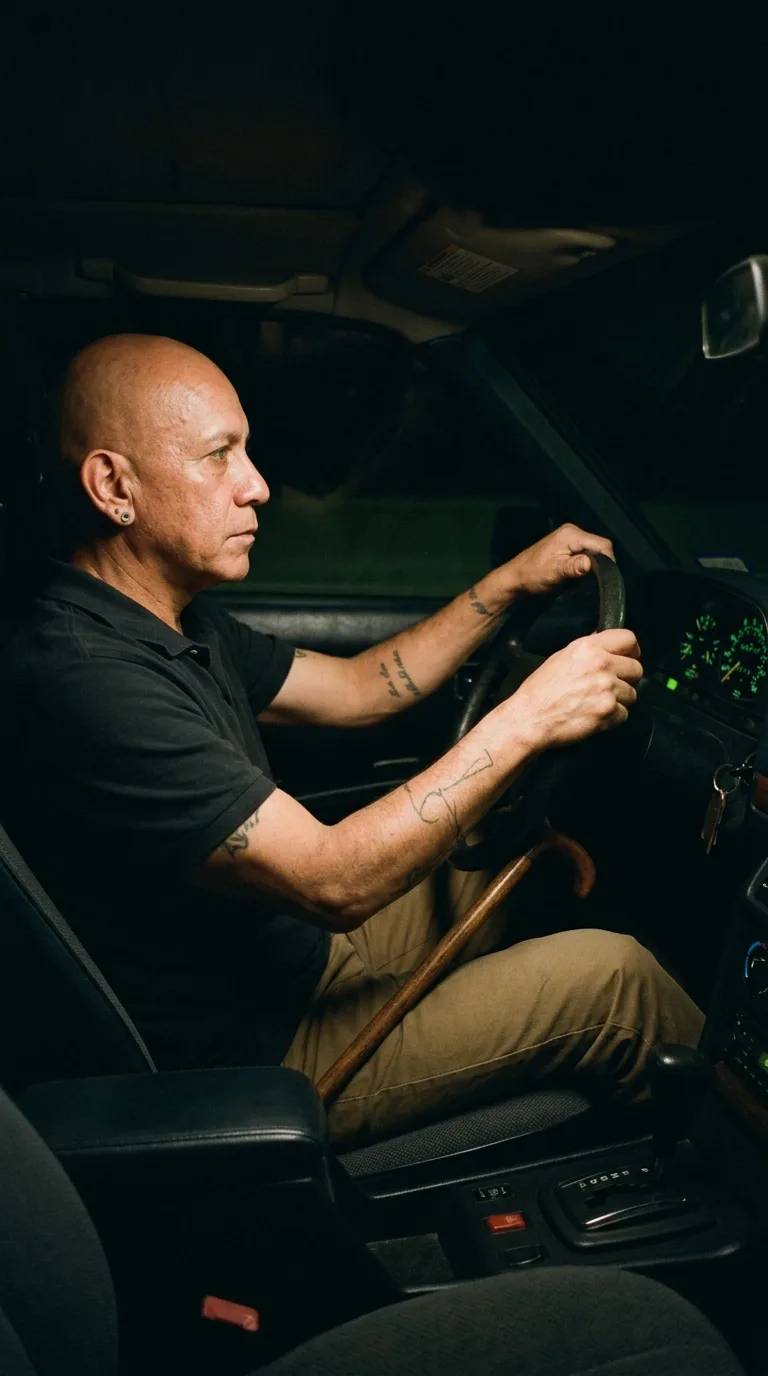
Rarest thing about him: A mobility limitation — epic, 1 in 157
Season 0seed 432368144 · engine v10
Character card
lineage 2NZHHJ
His body-swap story
@colin.hasbrook, wearing Marty Feingold, rolled the wheel on and woke up as Ernesto Villagrán, spent under a minute in him, then spun the wheel and woke up as Gordon Waskiewicz
Marty Feingold's office smells like toner and the coffee nobody refills. Marty — you, for now, for the last minute of him you'll ever be — just closed on the Comm Ave triplex, the one that stalled twice and finally didn't, and the buyer shook your hand too long and said *you're a magician* and you smiled the smile that isn't yours because Marty's face does it better than you do. You should feel it. The commission, the ego, the whole warm animal satisfaction of closing. You don't. You felt this exact thing five closings ago, in this exact body, and the feeling has gone thin as a coat worn too many winters. Marty is a good coat. Marty is a coat you are done with. You open the laptop, not the MLS tab, the other one, the one with the wheel on it, and you tell yourself it's just to look, the way you've told yourself six hundred and thirty-two times before.
It is a Monday afternoon in Boston and it is a Monday before dawn somewhere else, and the wheel does not care which.
The wheel stops and the office is gone and you are not standing, you are *sitting*, low and reclined, both hands leaving a wheel that isn't a mouse or a steering column you know — dash lights green on brown knuckles, a cane wedged upright against the console, and the car itself drifting easy back onto the white line like it was never off it. The turn signal is already ticking, orange pulse on the windshield glass, blinking for an exit three lights past where this body actually lives. Your hands — his hands — resettle on the wheel, lower, wider, at eight and four instead of ten and two, like they've done this correction ten thousand times without asking permission from the head above them.
The shirt sleeve is against your forearm first, cotton gone soft with washing, and it comes with the smell of starch and the cutting-room dust that never fully leaves it — and there's a whole morning in that smell, gray light through the shop window before the tourists are up, the half-made jacket waiting headless on the dummy where you left it yesterday, one sleeve basted in, needing the shoulder taken in a half-inch on the left because the client, Mr. Okamura, carries his left higher than his right and has for eleven years of fittings. Your hands know that measurement the way they know your own name — *Ernesto's* name, it comes with the tape measure looped cold around your neck in memory, chalk dust in the seams of your fingers, forty years of it, since you were fourteen and your tío put pins in your mouth and told you a mouth full of pins is a mouth that doesn't lie.
The cane against your leg gives you the hip — the left one, the ache that's lived there nine years since the ladder in the shop back room went sideways under you and something in the joint never came all the way back, and the doctor in his gentle merciless voice used the word *permanent* and you went home and didn't tell Rosa for three days because you didn't want to watch her face learn it. Rosa. The name arrives with the smell of her shampoo still faint on the passenger headrest, and behind it a marriage that ended without a slammed door — Teresa, patient for eleven years and then simply not anymore, no third party, no big cinematic wound, just two people who stopped reaching the same direction, and you signed the papers at a lawyer's cheap conference table and drove home alone in a silence that had no anger left in it, only tired relief, which frightened you more than anger would have. Rosa came four years after that, and she laughs at your jokes even the bad ones and doesn't ask you to be anything at the register you already have to be all day — steady, exact, patient with pins.
The steering wheel under your palms remembers a hundred nights like this one: the shop's back-room lamp switched off, the drive home down the dark highway with the ocean an unlit smell to your left, three miles left to the house on posts, the red dirt yard that turns to soup when it rains, the tin roof that ticks all night as it cools. Your hands know this road without your eyes needing to work at it — which is maybe why they drifted, why they came back so smooth nobody in this car, which is only you, noticed anything at all.
There's a stutter in there too, arriving sideways, unwelcome: your own voice cracking on a phone call to a supplier, on a toast you had to give at somebody's wedding once, holding up fine under a cutting table and falling apart the second a room turns to look at you and wait. Odd, for hands this steady with a blade, to fail so completely at a sentence. The body keeps its embarrassments filed separately from its skills.
A beer or two on a Saturday with Rosa's brother, a cigarette after the second one that you tell yourself doesn't count because it's only when you're drinking anyway. Sunday mass sometimes, more out of habit than conviction, the smell of candle wax as familiar as the shop's chalk dust. A house worth more than the tin roof suggests, because thirty years of exact work and no children to spend it on adds up quieter than people expect.
You look down. The dash light is green on your knuckles, on studs glinting small in earlobes you can feel now are yours, on the cane's worn brown handle leaning patient against your leg like it's used to waiting. You turn your hand over in the weak light like you're checking it's real, like it might not be.
"¿Qué—" you start, and it comes out thin, catching in the throat exactly the way his hands do under pressure, and you don't finish the word, and the turn signal keeps ticking toward a street that isn't his.