Ernesto Alberto Cisneros
Fictional. Generated by AI — not a real person, and no likeness of one is intended.
64, engineering manager in Pittsburgh · rolled by @declan.michael.farrow · card — no film
History
who has worn him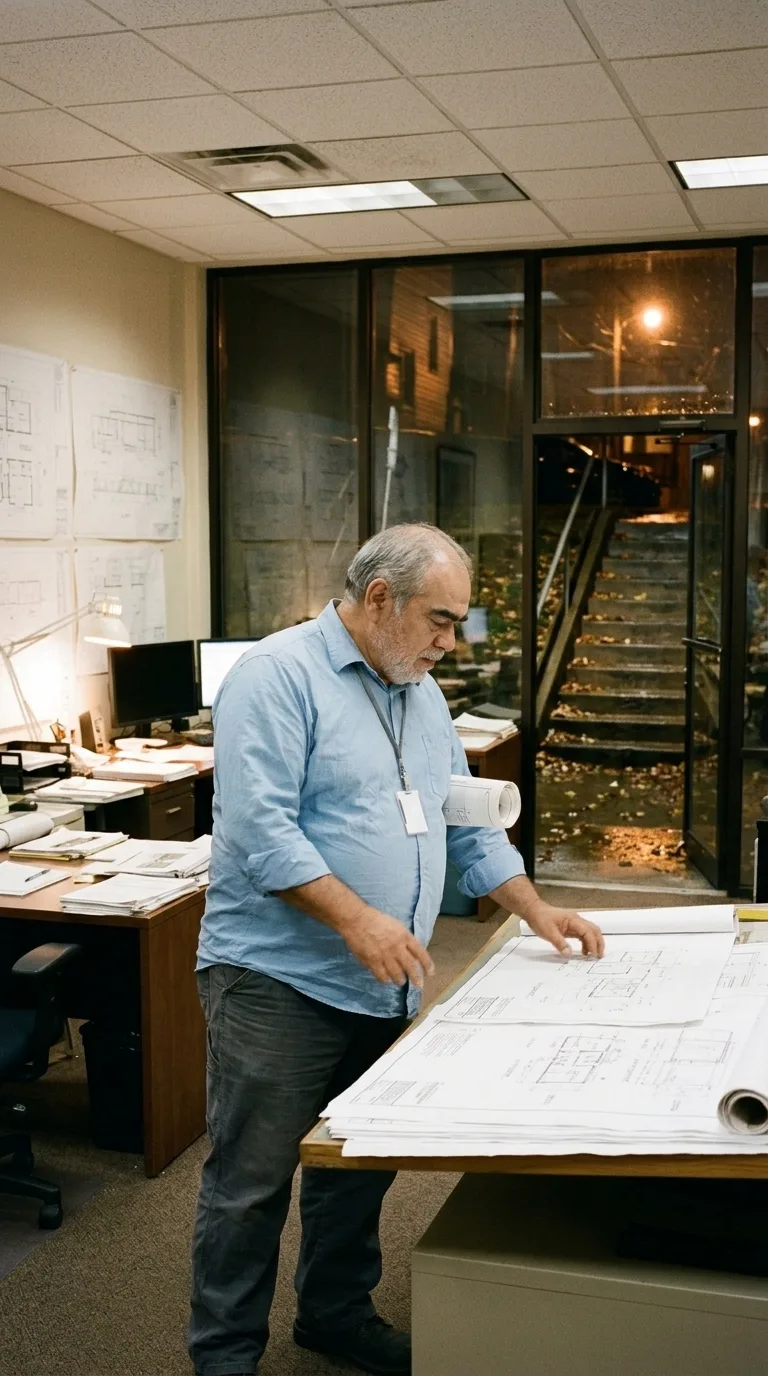
Rarest thing about him: A unibrow — common, 1 in 49
Face-off rating 1500 · not ranked yet
Season 1seed 1413728171 · engine v11
Character card
lineage 5OR92V
His body-swap story
@declan.michael.farrow, wearing Owen Michael Dettwiler, rolled the wheel on and woke up as Ernesto Alberto Cisneros, spent under a minute in him, then spun the wheel and woke up as Manuel Obregón Tijerina
You are standing in a kitchen in Small-town Ohio, in the dark, in a body that is nineteen and still smells of espresso and steamed milk. The dimples ache from holding a smile for no one. The refrigerator hums. Everyone in the house is asleep, and you have been him for less than a minute.
You could not tell anyone why. He was fine. The hazel eyes worked, the knees did not hurt, and the quiet was exactly the kind you used to pay for. But in the window over the sink you saw the blond boy looking back, pleased with everything, and you understood that you were already tired of being looked at by someone who expected nothing. So the phone is in your hand and the wheel is turning under your thumb, and the boy is going out of you like a held breath.
Then a floor under you is a different floor, and the air is cold and dry and tastes of toner and old carpet glue.
You are standing at a long table with your weight forward on the heels of two hands, and the hands are flat on paper. A floor plan lies under them, thin lines on a heavy sheet. Your jaw is working. There is gum in your mouth, mint gone nearly to nothing, and you are chewing it. A lanyard swings against your chest and settles. The body is short and thick and low to the ground, and it is tired in the lower back, a bar of ache that has been there since before lunch, or before dinner, whichever this is. Behind the glass the night is wet and orange. Leaves lie on the concrete stairs outside.
The paper under your palm is the first thing that speaks.
Your fingertips know it before you do. They know the grain of the sheet, and they know a dimension line, and something comes up unasked: a younger man, the same hands, on a different table, a foreman laughing at a number he had caught. It is pride, the plain kind, a small hot coin in the chest. It goes.
The shirt is soft with washing. Your forearms are bare where the sleeves are rolled, and the roll is tight, done by thumbs that did it a thousand times. Then the morning comes, not yours. A bedroom still dark. A woman's back turned in the bed, the shape of her under the blanket, and his careful quiet as he took this shirt from the chair. Left sleeve first, because the shoulder complains. Buttons from the bottom up, belly first, the slight shame of it and the larger habit that cancels the shame. He rolled the cuffs and looked at the ring on his left hand and turned it once with his thumb. He loved her in an old, unshowy way. There was a pause, too, a long one, about money. The number came with his stomach tightening, a figure he did not say aloud in that house. Deep, and getting no shallower. He chewed the gum harder.
The pants are heavy cotton, creased at the thigh. In the pocket your knuckle finds a folded square, a receipt, and a different woman's voice arrives, sharp and tired and long ago, saying his name in a kitchen in another year. The first wife. No hatred in it. Only a door closed so gently that he still hears it. You let go of the receipt.
The roll of drawings under your arm presses your ribs. Paper, cardboard core. A plant, a deadline, a younger engineer who calls him jefe and half means it. Thirty years of rooms like this one. Nobody here knows he lies awake over a mortgage. Nobody knows he pours the second drink and sometimes does not finish it. The stairs outside, the wet leaves: he walks them home, and the view from the third landing is the only part of the day he would keep if he had to choose.
Your breath comes slow and wide through a heavy chest. Your feet hurt in a way that feels earned. Your tongue finds the gum, and you chew.
You lift your hands off the paper and look at them. They are broad, brown, thick through the knuckle, a pale band of gold on the left one. You turn them over. Gray hair on the wrists, a callus at the side of the finger. They are not yours, and they are not anyone's now.
Then you look up into the dark glass and the face is there, the unibrow like a bar across it, the gray beard, eyes watching you with their old patience.
"Okay," you say, and the voice is low and gravelly and unhurried. "Okay. Let's see how long you last."
The leaves lie still on the stairs. Somewhere the wheel is waiting.