Emilio Vasquez
Fictional. Generated by AI — not a real person, and no likeness of one is intended.
27, janitor in Chicago · rolled by @emilio.vasquez · card — no film
History
who has worn him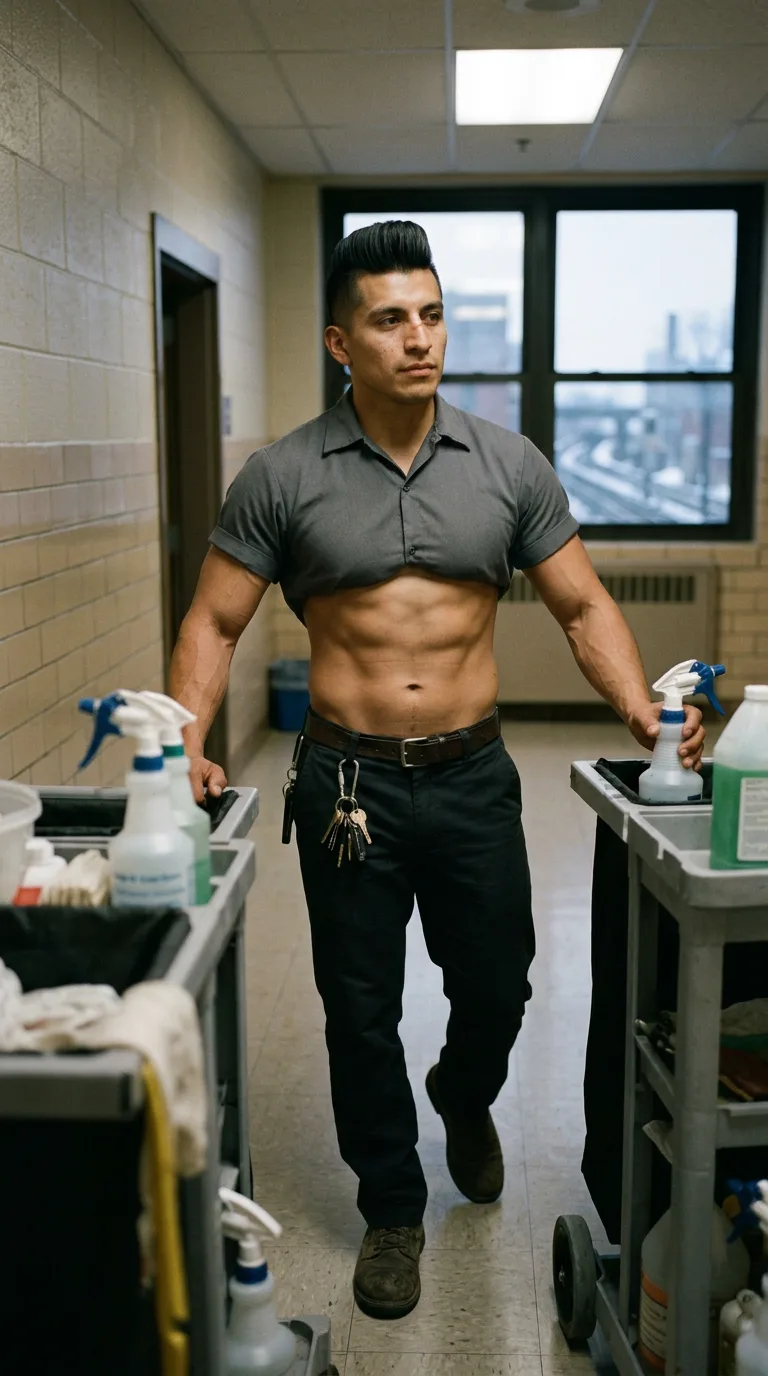
Rarest thing about him: Ex-spouse — rare, 1 in 33
Season 0seed 1148188390 · engine v10
Character card
lineage M2OG21
His body-swap story
@emilio.vasquez rolled the wheel on and woke up as Emilio Vasquez — their first
The site loads slow on a bad connection, the way everything loads slow at this hour, and you almost close the tab twice before the wheel finishes drawing itself on the screen. You have wanted this since before you could name it — every movie where someone wakes up wrong, every thread you read at 2 a.m. and told no one about, every quiet hour spent wondering what it would be to be someone, actually be them, from the inside. It was never for sale before. Now there's a page with a wheel on it and a button that says spin, and nothing else going on tonight, and no reason left not to.
You pay. You spin. The wheel does what wheels do and then it stops, and there is no countdown, no ceremony, just the floor changing under your feet.
Fluorescent light, buzzing faint above you. Your hand is closed around a spray bottle, mid-squeeze, and the motion you were making — trigger pulled halfway — finishes wrong, too fast, water hissing out and hitting the cart instead of the glass. You do it again. Slow. Correct. The trigger clicks under a finger that is not the one you came with, and the next ten times you do it, you check each one, watching the motion happen like it belongs to somebody else, because it does, because you are new in here and the body isn't.
He does not know. He will never know. The corridor keeps its fluorescent hum, tile floor waxed to a shine that throws the light back up at the ceiling, and outside the window past the lockers a train goes by on the L, lit windows sliding past brick in the cold dark, and none of it reacts to what just happened inside the man standing here.
The shirt is what starts it — gray, damp under the arms already, collar loose where a button's been left open one too many. A whole morning comes up out of it: standing in front of a mirror in an apartment that still smells like his ex-wife's candles even though she moved out two years back, buttoning this shirt one-handed while the coffee maker clicked and hissed behind him, his daughter's voice somewhere down the hall asking if she could wear the yellow dress today even though it's laundry day. Marisol. Six years old. The name arrives whole, warm, aching a little, the way names do when they're the good kind of weight.
The belt next — leather worn soft at the exact place his stomach curves, keys hanging heavy off the loop, twenty of them, a school's worth of doors, and with them comes the feeling of a thousand nights just like this one: the after-hours quiet of a school building, kids' art still taped crooked to cinderblock, a gym floor that squeaks under the buffer at 11 p.m. while somewhere across the city his wife is probably already asleep, and he is here because the night shift pays better and because someone has to be, and because — this arrives quieter, guiltier — he likes it, this hour, nobody needing anything from him, just the mop and the radio low and his own head for company.
The wedding band on the left hand is small and plain and it comes with an image so immediate it's almost a smell: a church basement, folding chairs, her in a dress that wasn't white because neither of them wanted to pretend at anything, his mother crying two rows back, his pastor's hand heavy and warm on his shoulder after. He was twenty-four. He is twenty-seven now. Three years married and he still puts the ring back on every morning like it might not fit, out of some habit from before her, from the ex-wife, from a marriage that ended so quietly neither of them could say exactly when the ending started.
His body underneath all of it is dense and coiled, shoulders that carry buffers and stacked chairs and floor polishers up stairwells without a second thought, abs that ache pleasantly the way they do after a workout he doesn't remember choosing to enjoy but does, and a knee that clicks faintly on cold nights, an old basketball injury nobody but him remembers happening. The nose — you feel it before you place it, a subtle wrongness in the bridge, breath moving slightly off-center, the shape of an old fight, high school, a memory that surfaces fast and sour and is gone again before it finishes. And under the cotton of the shirt, a leg that has already started bouncing, heel drumming a fast private rhythm against the tile, doing it now, has done it his whole life, church pews and job interviews and this exact hallway at midnight, a motor that never quite turns off.
The cart in front of him smells like ammonia and orange cleaner, and that smell alone drops you into a hundred nights identical to this one — until you stop looking for the next memory and just stand there instead, holding what's left of him settling into you like sediment.
You look down. The hand holding the spray bottle is thick-knuckled, brown, a plain gold band catching the hall light, and it does not feel like something you are wearing. It feels like something you have been handed.
You turn it over once, slow, watching the fingers curl and open on command that is now yours to give.
Then you lift your eyes to the dark window, to the train sliding by outside it, and you say, out loud, to no one:
"Okay. Okay — who am I now."