Elías Narváez
Fictional. Generated by AI — not a real person, and no likeness of one is intended.
20, janitor in Coastal Maine · rolled by @connor.waskiewicz · card — no film
History
who has worn him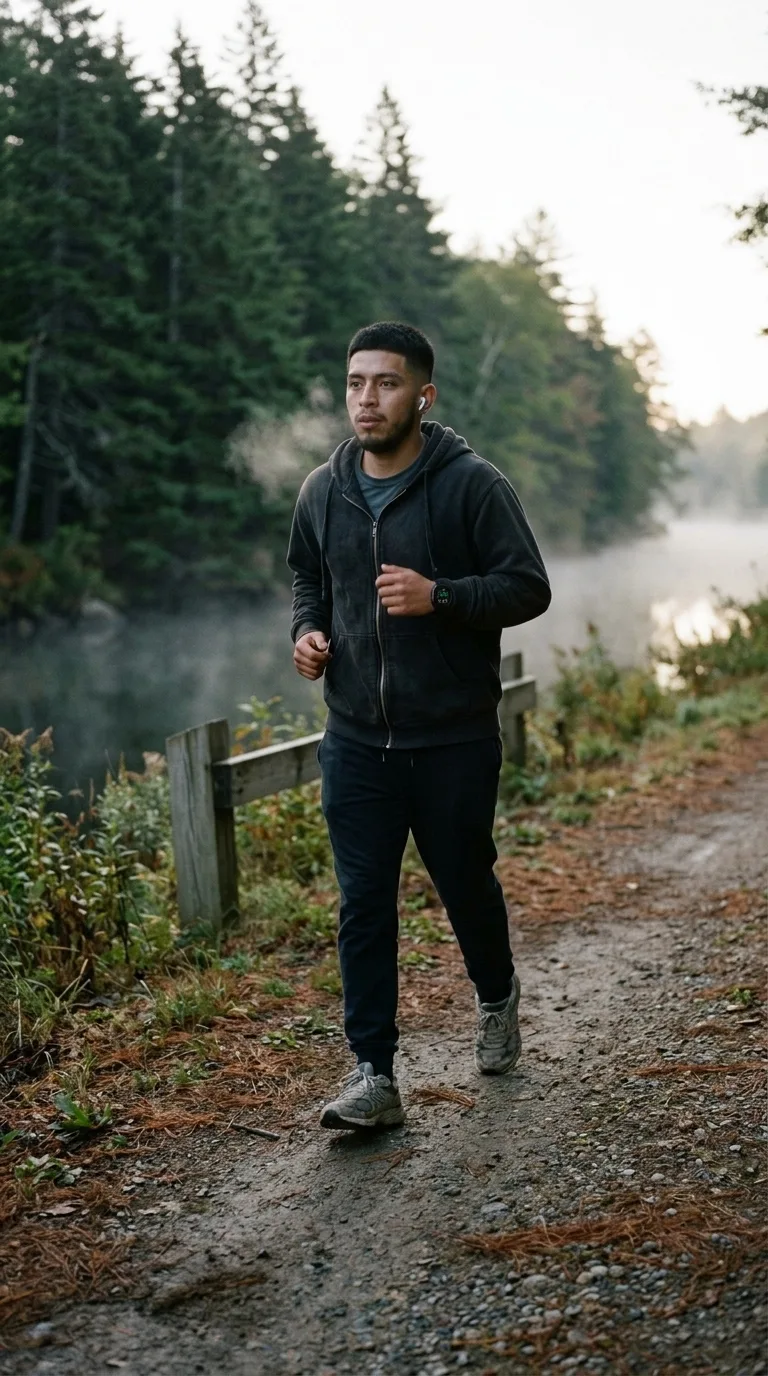
Rarest thing about him: Out for a run — common, 1 in 41
Season 1seed 1913132184 · engine v11
Character card
lineage 2NZHHJ
His body-swap story
@connor.waskiewicz, wearing Isaiah Marlowe, rolled the wheel on and woke up as Elías Narváez, spent 26 minutes in him, then spun the wheel and woke up as Vincent Tran
You have been Isaiah Marlowe for less than a minute, and already you know what is wrong with him. He is heavy in the knees. He wakes before the light, in a Nashville kitchen with a mop bucket by the door, and everything in him is tired in advance. His chest has a catch in it when he breathes in all the way. You stand in his socks on his cold linoleum with the page open on the phone, and what sent you back is not the weight. It is that you reached for something in him, a song, a name, a way to want the day, and his hands closed on nothing. Nobody was home in there but the tiredness. So your thumb finds the wheel. It is a Tuesday, and the coffee is still dripping behind you. You let it drip.
The wheel clicks and slows, and the kitchen is gone.
Cold. Wet cold in the nose, and your lungs are open to the bottom, and your legs are already moving. A foot comes down, then the other. You stumble for two steps and the stumble never lands. The running picks up again on the opposite foot, arms hanging lower than his, head level. Something buzzes on your left wrist, a split you never held. A thin cord of music is in your ears, a man singing in Spanish over a guitar, and you let it run because you cannot yet say whether you want it.
The path is gravel and wet pine needles, and the canal lies to your right with mist coming off it in slow sheets. Your breath goes out white. You are light. After Isaiah you are so light that it frightens you.
Then the hoodie. The cuffs are damp, and your right hand tugs at one without being asked. It gives you a flash: a thrift-store rack, October, a man holding this same black zip-up against his chest, doing sums in his head. Eighteen dollars. He put it back, then took it again. He felt ashamed of wanting it, and proud of the sum he'd done, both at once.
The keys are in the left pocket, and they knock your thigh with every stride. Touching them brings a house gone silver with weather. Lobster traps are stacked in the dooryard, and the sea light is the color of dishwater at six. A mother's voice calls up the stairs, and he answers *ya voy*. He is already pulling on the grey work shirt, the one with his name stitched small, and he says nothing about how much he hates the school hallways at night. He just buttons it, one button at a time, thumbs knowing the order.
His shoes slap the gravel. They are old and soft at the heel, and they hold a memory of their own: the first mile in them last spring, when he could barely finish one and sat on the guardrail, laughing at himself with his lungs burning. Now it is mile four. His thighs are warm and his calves hum, and there is a clean ache under the ribs that he has learned to love. You feel it. It is his, and you take it anyway.
The sleeve rides up on your upper arm as you pump. The skin there is cold, and you know without looking what is under it: a small crooked thing he did at nineteen, on a dare, in a friend's kitchen, and has regretted every summer since. His face goes hot when it comes back, and your face does too. Your cheeks feel strange, the beard thin and patchy against the wind, the little hoop in the left ear swinging cold. You press your tongue to your teeth. A rosary lives somewhere in the drawer at home. He doesn't pray on runs. He just counts.
The watch buzzes again. You lift your wrist and the glass is lit. Mile four, a number that means something to him.
You slow, then stop. Your chest rises and falls. You turn your right hand over in the pale light and look at it, at the knuckles and the chapped lines.
You lift your eyes to the canal. "Okay," you say, in his voice, a little hoarse. "Okay, Elías."
The mist moves. Somewhere under the quiet the question is already there, small and patient. How long do you get to keep him? Until the wanting comes back, or until it doesn't.