Elias Marroquín
Fictional. Generated by AI — not a real person, and no likeness of one is intended.
32, mechanic in Nashville · rolled by @marco.villagrana · card — no film
History
who has worn him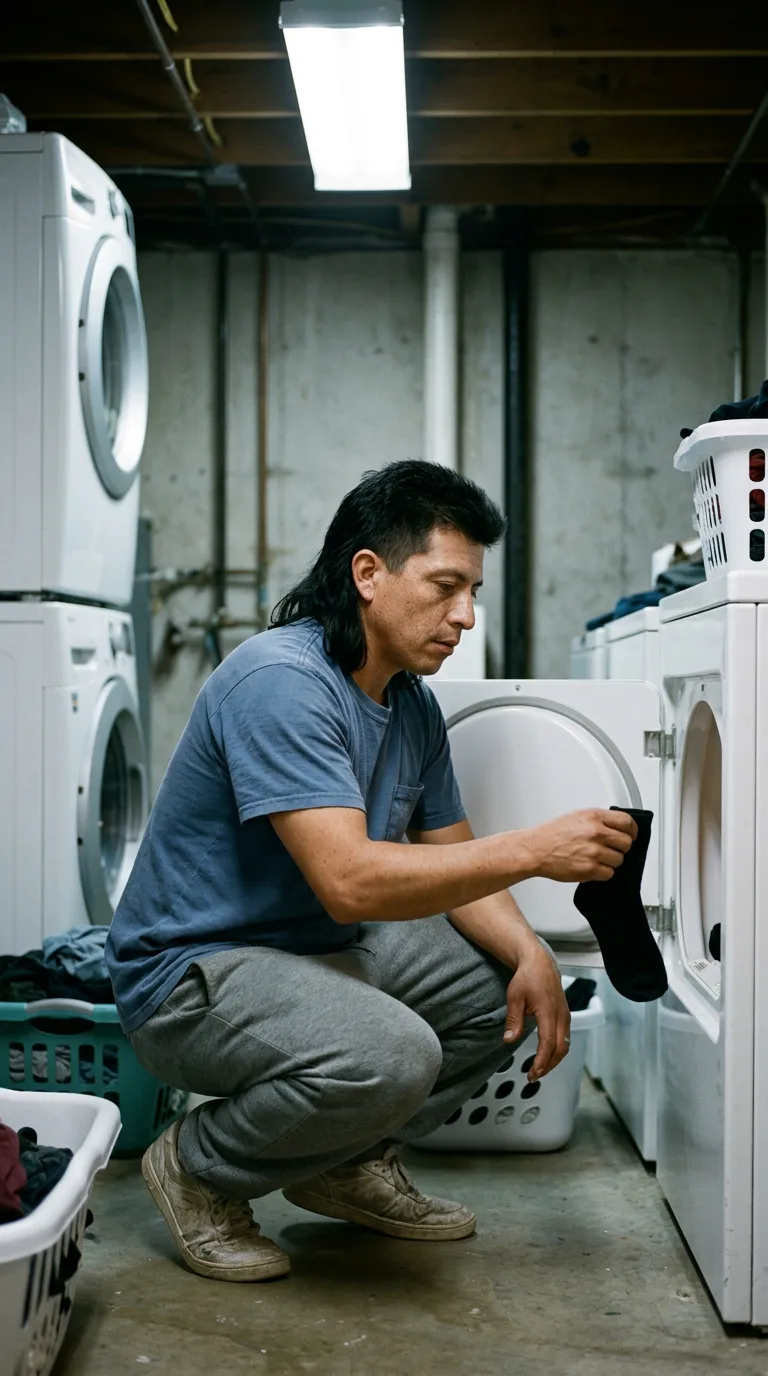
Rarest thing about him: A mullet — rare, 1 in 203
Season 0seed 507943796 · engine v10
Character card
lineage LJL8SV
His body-swap story
@marco.villagrana, wearing Kyle Hendershot, rolled the wheel on and woke up as Elias Marroquín, spent 4 minutes in him, then spun the wheel and woke up as David Chen
Kyle Hendershot's hands are soft in a way that annoys you before you even have a name for why. You are standing in a break room that smells like microwaved burritos and floor cleaner, a scanner gun still looped on your wrist, and the shift clock on the wall says there are six more hours of this. Four minutes ago you became this man mid-aisle, reaching for a box of bathroom tissue on a pallet, and every minute since has been the same aisle, the same gun, the same beep. Dad bod, brown eyes, a tiredness sitting behind the sternum that isn't yours and isn't interesting either. You didn't spin for this. You never spin for the job — you spin because the job is what's happening when you get bored of the last one, and Kyle Hendershot, whoever he actually was underneath you, picked a bad Wednesday to be picked. You thumb the phone in his pocket, pull up the site out of habit more than plan, and the wheel is already spinning in your head before it's spinning on the screen.
It lands, and the aisle is gone.
You are crouched. Fluorescent hum overhead, concrete cold enough to feel through the knees, one black sock heavy and warm in your hand, half-pulled from a dryer drum still turning behind the rest of the load. The air smells like fabric softener and hot lint. Your back is at an angle Kyle Hendershot's body never held, weight balanced low and easy over the balls of your feet, and you understand before you understand anything else that this body knows how to crouch — has crouched under a thousand things, for a thousand hours, and doesn't ask permission to do it. You pull the rest of the load free. It drops into the basket warm, and your hands — his hands — start folding before you've decided to fold anything, corners squaring themselves, sleeves crossing at the seam, a rhythm laid down so deep it doesn't wait for you.
The shirt on your back gives you the first flash: this morning, buttoning it in a bedroom with the shade half down, sun already too bright for how early it was, because the shop opens before Nashville wakes up. Elias. The name arrives with the memory of his own hand writing it, cursive and tired, on a time card a hundred times over. Sleeve by sleeve — cotton gone soft from washing, a small burn scar on the left forearm you feel before you see, from a manifold that got him in his second year — the morning comes back whole: coffee too hot to drink standing up, the wife still asleep, one sock inside out that he didn't notice until just now, six hours later, kneeling at this exact dryer. He laughed about that sock this morning. Small thing. He does that — laughs at small things, alone, to nobody.
The rag in his back pocket, still there, still faintly smelling of degreaser, brings the garage: the raised car, the creeper board, the particular ache that lives in his lower back and both shoulders from thirty-two years of being 5'7" and never once asking for a lift he could do himself. Regular customers who call him by name. A boss who trusts him with the books nobody else gets. He likes the work. That's the strange, plain truth of it — he likes it, has liked it since he was nineteen and it was the first thing that made the noise in his head go quiet.
The wedding band on the left hand, plain, a little tight lately, opens wider than anything else — a wife's laugh across a kitchen table, an argument about money that resolved itself the way their arguments always do, with him apologizing first even when he wasn't wrong, because the quiet after a fight costs him more than the fight itself. And under that, older, softer at the edges: an ex-girlfriend's name he doesn't say out loud anymore, a version of himself at twenty-four that some nights still surfaces uninvited, not with longing exactly, more like checking a scar to see if it still hurts. It does, a little. Less than it used to.
His pill bottle upstairs in the medicine cabinet, not touched but remembered anyway through the habit of his hand reaching for it every morning at the same time — steady now, has been steady for years, and he is careful and quietly proud of that steadiness. The pen he clicks without noticing, left in the truck, absent right now, its ghost still there in the twitch of his thumb against the sock he's folding. Freckles across his nose that his wife touches sometimes without saying why. A body used to being underestimated by its height and to being trusted anyway.
You finish the load. Eight shirts folded fast and square, nothing like whatever waits in a drawer in a different state, in a body you are already forgetting the shape of.
You look down at your hands — his hands, blunt-nailed, one knuckle scarred white, the ring catching the fluorescent light — and turn them over once, like checking they're real.
"Didn't know I could fold like that," you say, out loud, to the empty laundry room, and you don't know yet if that's true for a day or for years.