Eddie Marchetti
Fictional. Generated by AI — not a real person, and no likeness of one is intended.
47, manager (mid-level) in Philadelphia · rolled by @colin.hasbrook · card — no film
History
who has worn him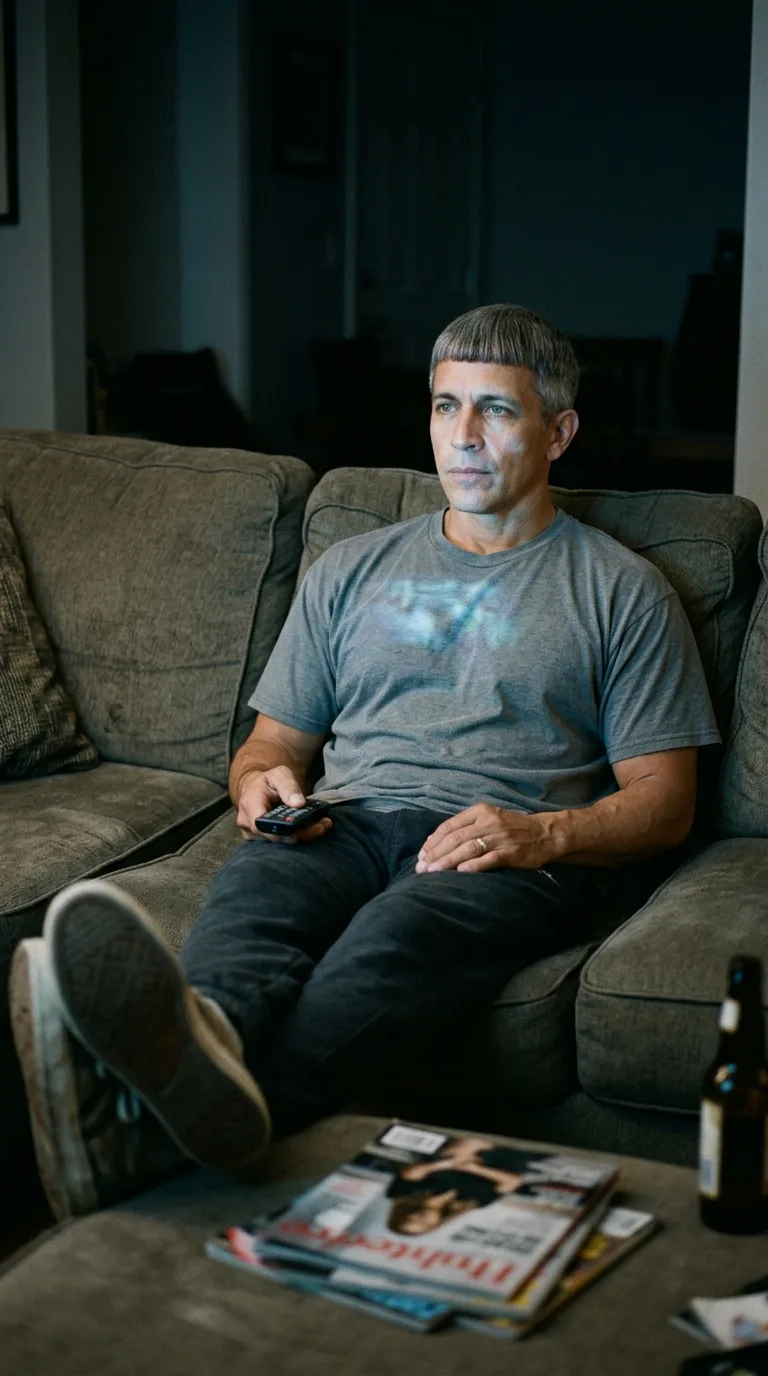
Rarest thing about him: A caesar — rare, 1 in 74
Season 0seed 1256951126 · engine v10
Character card
lineage 2NZHHJ
His body-swap story
@colin.hasbrook, wearing Tom Halvorsen, rolled the wheel on and woke up as Eddie Marchetti, spent under a minute in him, then spun the wheel and woke up as an unnamed body
You are behind the bar you have poured a thousand shifts at, except you are not, not really — you are wearing the memory of it, the body the wheel handed you last time: light brown hair, blue eyes, a man of average build who tends bar in this same city, who has been you for less than an hour. The lunch rush at the place he doesn't even work at anymore is dead. Your phone is out under the bar, thumb already on the bookmark, because you noticed something in the mirror behind the bottles a minute ago — the way this face creases when it laughs, a little lopsided, a stranger's tell you've been wearing without asking for it. It isn't dislike. It's just that it's not yours, and there's a page that will trade it for another one, and you have done this three times now and the fourth costs nothing to want. You spin because you can, because the wheel doesn't care that it's a Monday, because somewhere out there it is also a Monday and a man is doing nothing in particular, and that is exactly the kind of moment you're hungry for — not drama, just a door.
The screen turns. The couch turns with it.
You are sitting up straight before you mean to, spine snapping to a posture this body didn't choose, and the remote is already down on the arm of the couch though you don't remember your hand doing it. The television is loud and bright and telling a joke you were laughing at four seconds ago in a life that is no longer yours to finish. You don't laugh now. The room is dim, curtains pulled against an afternoon that has no business being this dark behind them, and you understand dimly that wherever this man works, he is not there — he is here, off, mid-week, at an hour a manager shouldn't be home, and that fact sits at the edge of the new mind like a thread waiting to be pulled.
The shirt is against your back first — soft, a gray tee gone thin at the shoulders from washing — and it gives you a Tuesday from some other week, him pulling it over his head at six a.m. before catching himself, checking the closet, no, off today, back down, this one instead, comfortable, doesn't matter who sees it because no one's supposed to. There's a flicker of a doctor's office, a hand flat on a lower back, a wince he covered fast because his father never once complained about anything and he'd learned that the hard way, at a kitchen table, at eleven years old, told to walk it off. The pain is still there now, low and familiar, a dull coal banked along the spine and one hip, worse when he's been sitting, which he has.
The remote in your hand — his hand — brings the whole living room forward: two kids' school pictures on the mantel, a girl's braces, a boy's cowlick, the two of them at ages that feel both close and long past, a spelling bee trophy nobody dusts, his wife's voice from another room asking if he wants the good end of the couch tonight, decades of that particular fondness folded into four words. The wedding band on the left hand is warm from his skin and it opens a church basement, a folding chair, a woman in a blue dress who prayed before she agreed to marry him and prayed again the morning of, and how he had cried at that, quietly, embarrassed, grateful.
The khakis are the office ghosting through — glass walls, a door he leaves open on purpose so people can see him and not feel like they're interrupting, a lanyard badge clipped and re-clipped a hundred times a day out of habit more than need, spreadsheets that bore him in a way he'd never say out loud in a Sunday small group where boredom with a steady paycheck sounds like ingratitude. He tithes without being asked twice. He has never smoked and doesn't miss it, has a beer most nights standing at the counter half-listening to his wife talk about her day, bites his nails during conference calls until his knuckles go pink and he catches himself and sits on his hands like a kid in trouble.
His name comes last, folded into all of it rather than announced — Eddie, said by his wife in the tone she uses when she wants him to actually look at her, said by his kids in the flat teenage way that means nothing's wrong, said by a coworker at the door of his office like a small friendly tax he pays forty times a day. Forty-seven years in this body and none of them dramatic, and something in the memory of him is almost peaceful about that, which feels, from inside, like something you are trespassing on.
You look down. The hand is broad, tanned, a nail bitten close on the thumb, the ring catching what little light the muted television throws now that the show has moved on without him. You turn it over once, feeling the ache seated deep in the wrist that isn't from anything you did.
"Where was I," you say, to the empty room, to no one, and it comes out in his voice, and underneath it, already, quiet as the coal in his back, is the wondering how long you'll let this one keep asking that question before you spin again.