Dylan Matthew Kostecki
Fictional. Generated by AI — not a real person, and no likeness of one is intended.
22, between jobs in Detroit · rolled by @wyatt.lindholm · card — no film
History
who has worn him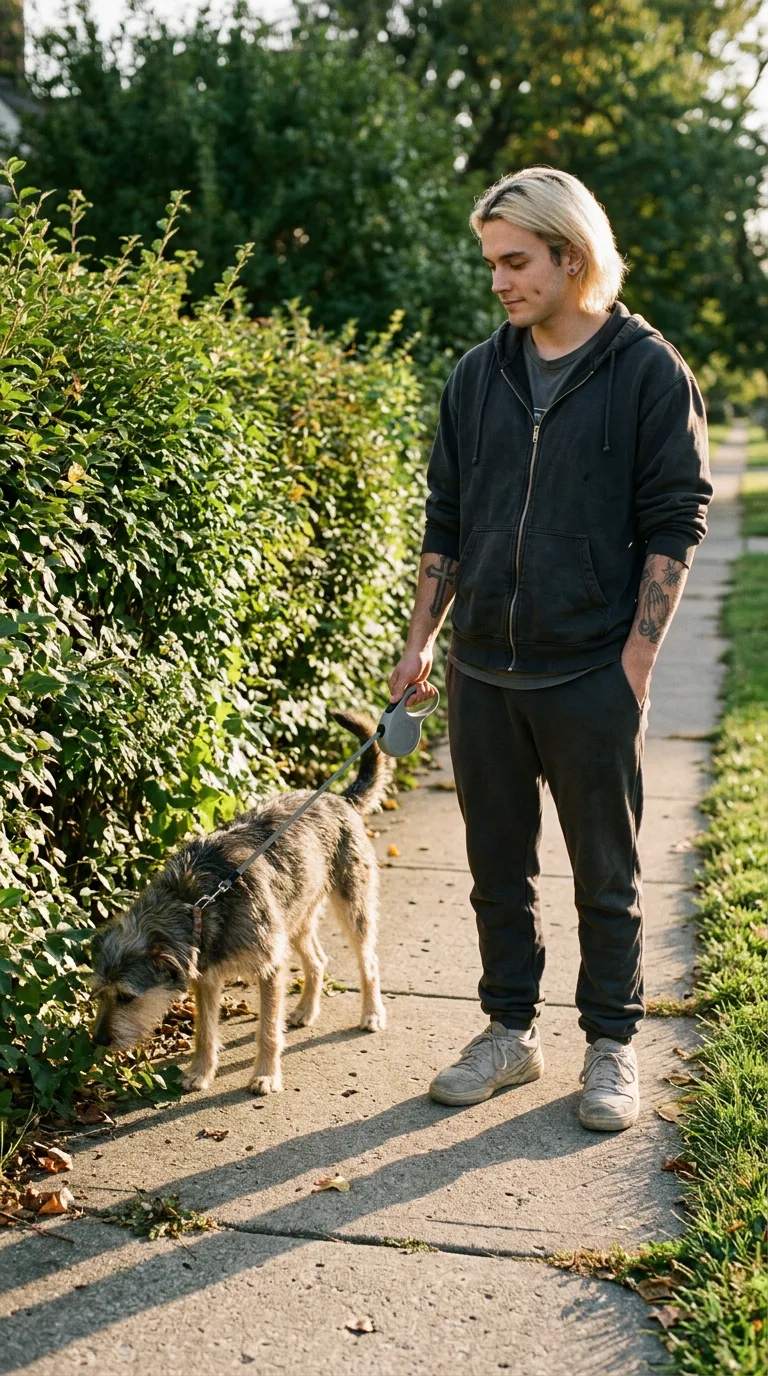
Rarest thing about him: Bleached blond — common, 1 in 54
Face-off rating 1500 · not ranked yet
Season 1seed 635716272 · engine v11
Character card
lineage K4WKNZ
His body-swap story
@wyatt.lindholm, wearing Terrance Odell Whitfield, rolled the wheel on and woke up as Dylan Matthew Kostecki, spent 3 minutes in him, then spun the wheel and woke up as Imran Sayeed Qureshi
You are Terrance Odell Whitfield, and you have been him for four hours and eleven minutes. It is the middle of a Wednesday in Honolulu. You are standing at his kitchen counter with the window open and the trade wind moving the blinds. His second monitor is still lit in the next room. The job pays well and the code compiles. He has a good chair, a good knee, and a mother who texts him at lunch.
None of it is the matter. You came back to the site because you reached for the thing you wanted, and it was not there. You have felt that before, and you know how long it takes to come on. Today it was a bowl of rice going cold in front of you while you waited to be hungry. You paid. You spun. You put the stubble and the good chair down like a coat on a hook.
The wheel stops.
Gold light, low and sideways, and the smell of cut hedge and wet leaves. A sidewalk runs under his sneakers. His right hand holds a plastic handle. The leash runs out to a dog with its nose in the leaves, and you are standing in this man in the middle of a breath, at the end of the line, waiting.
His leg is bouncing. You did not tell it to. The heel lifts and drops, lifts and drops, in a shoe that is a little too loose.
Then the hoodie. The cotton against your back is worn soft and smells of someone else's detergent, and it gives you the morning he put it on. He pulled it off the chair because it was nearest. The zipper caught halfway, and he swore at it quietly and did not try again. The gray shirt underneath had been slept in. He stood at a kitchen table with a laptop open to a page of listings and read the same line five times. The number in his head was a debt, the size of a car he no longer owned, and he did not say it aloud.
The leash handle is warm and ridged under your thumb, and it gives you the dog. He is called Biscuit, and he is not a good dog. He was a gift from a girlfriend who laughed when he tried to say no, and the laugh is in your chest as warmth you did not earn. Under the warmth is a different woman, farther back, who walked out of a doorway in a yellow coat. He still checks his phone for her on Sundays and tells himself it is not that.
The cross on his arm pulls where the sleeve rides up. The praying hands are under the cuff. A kitchen floor comes with them, and a needle, and his grandmother's rosary in a drawer he never opens. After that comes something quieter, a cushion and a bell and ten minutes before dark, a habit he keeps badly. He drinks a glass or two most evenings so the quiet will hold.
Your cheeks move when you breathe in. The dimples are there even when you are not smiling, and he has been told his whole life that he looks happy.
He is twenty-two. His shoulders ache from the laptop. His stomach is empty and his legs are light. Hair that is not yours drags across your ears and settles on the collar.
You lift your right hand off the handle and turn it over. The knuckles are fine-boned, the nails bitten, the palm pale, a stranger's hand. Biscuit has stopped sniffing. He is looking up at you past the hedge with his ears flat.
You wind the leash twice around your fist.
"Come on," you say, in a voice that is still too high. "Let's see what you've got."
You do not know how long this one holds, or whether the wanting is already starting to come back.