Dwayne Pruitt
Fictional. Generated by AI — not a real person, and no likeness of one is intended.
42, warehouse picker in Atlanta · rolled by @owen.prescott · card — no film
History
who has worn him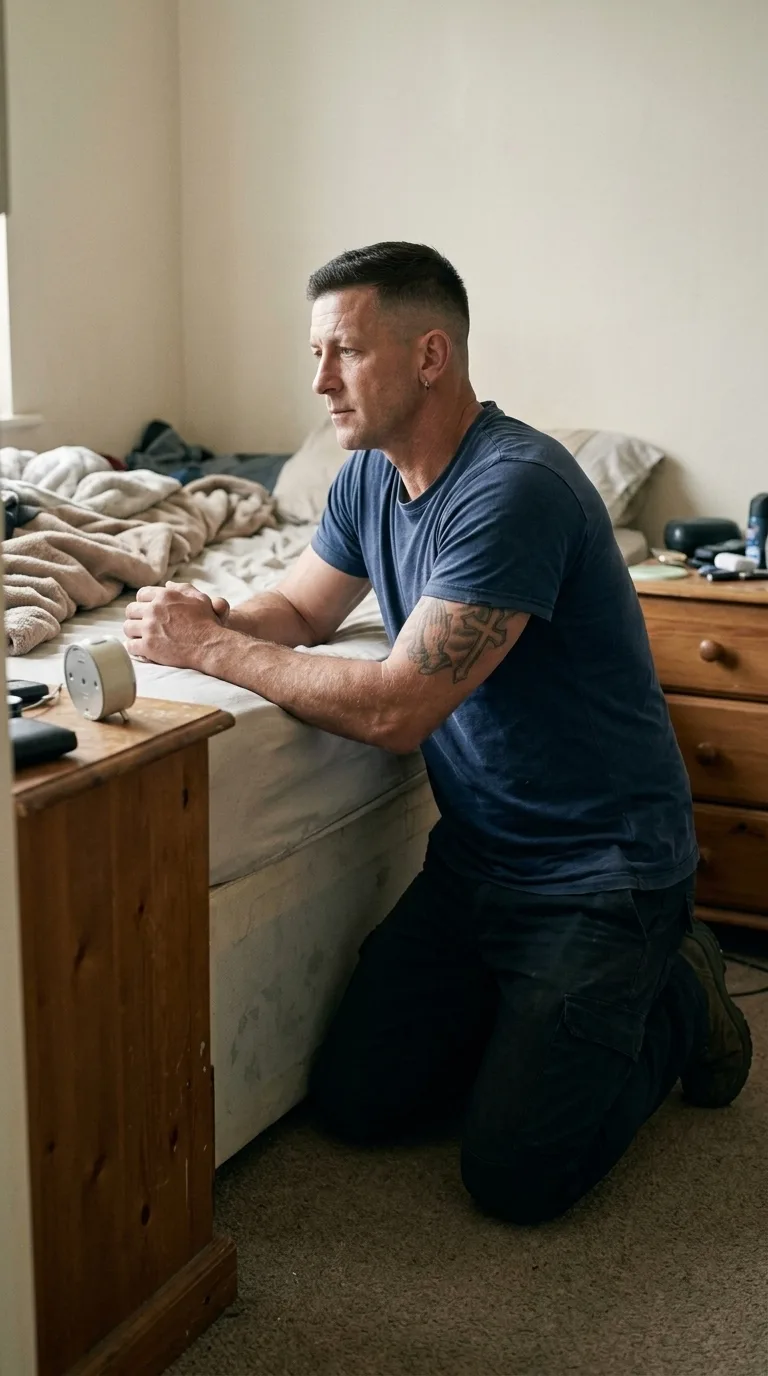
Rarest thing about him: Praying, not very seriously — common, 1 in 44
Season 1seed 2048850502 · engine v11
Character card
lineage 5OR92V
His body-swap story
@owen.prescott, wearing Ruben Salazar Ortega, rolled the wheel on and woke up as Dwayne Pruitt, spent 1 minute in him, then spun the wheel and woke up as Efraín Maldonado
You are standing at a kitchen window in High-desert Nevada, in a dead man's good knees, watching the light come up gray over the sage. The body you have worn for under a minute is sixty-three and has a bad left hip and a beard that itches. You came to the window to look at the morning, and the morning is only a morning. That is the trouble. Ruben's coffee is made, his dog is asleep, and nothing in this house needs you. You thought the wanting would stay quiet for a day, and it has lasted as long as it took to fill a cup. So you go back to the page with the wheel on it, and your thumb is already moving.
Then you are kneeling.
The bedspread is under your forearms and the carpet bites through the knees of your work pants. You are halfway through a laugh. It was his laugh and the joke was his, and it dies in your chest while the breath for it is still going out. Your forehead is against the cotton. Your heart is going hard, like a man who stood up too fast, except you didn't stand. Something small and silver sits at the edge of the nightstand, a round clock with its face turned toward you. The hours are right there and you don't read them.
Your fingers are drumming on the spread, a quick restless run from little finger to first. You didn't tell them to. They know the rhythm.
The bedspread is rough and a little damp from the heat. It is the first thing you touch, and it gives you a Sunday. A woman's church, a long pew, a hymnal with a cracked spine. A boy is told to kneel and told that kneeling is not the same as meaning it. He has been doing it half-meant for thirty years, and it is the most honest half-meaning he owns.
The t-shirt is soft and thin at the collar from washing. You feel this morning's dressing through it, in his hands. He pulls it from the second drawer, the shirt he always takes because it has stopped being new. His arm goes through the left sleeve and snags on the tattoo, which is old enough that he never feels it anymore. Then the cargo pants, the heavy right pocket, the boots by the door, the laces yanked tight. The vest is on the hook downstairs for later. The clock says he has time. He has always had a little time, and it is why he prays at all.
Your right hand drifts to your ear and finds the small hoop. Memory comes with it: a bar, a bad year, a friend laughing, a dare. After that, nothing for a long while. There was drinking. It was a decade of it, and then he put it down with no ceremony and never picked it back up. His knuckles remember a glass, and they remember how it felt to stop holding one.
Your thumb finds the scar through your eyebrow. A pallet jack, a long time ago, and blood in his eye in an aisle. A younger man's voice says he's fine, he's fine, and a forklift beeps somewhere far off, and the beeping stays.
The body is strong. The shoulders are heavy from lifting, the thighs burn from kneeling, and the lower back has an old ache that says forty-two. It is a body with a good deal of use in it, and it is entirely yours.
You lift your head. You turn your right hand over in front of the clock. The palm is callused, the fingers are thick, and they are still drumming. You stop them.
You look up, past the nightstand, at nothing, and you say, low, "Amen."
It sounds like a man trying out a door. You do not know how long it opens. You wonder whether you will still be here at the next knock, or whether the wanting will be back before the knees have finished hurting.