Dwayne Pettigrew
Fictional. Generated by AI — not a real person, and no likeness of one is intended.
45, bus driver in Rural Texas · rolled by @colby.marsh · card — no film
History
who has worn him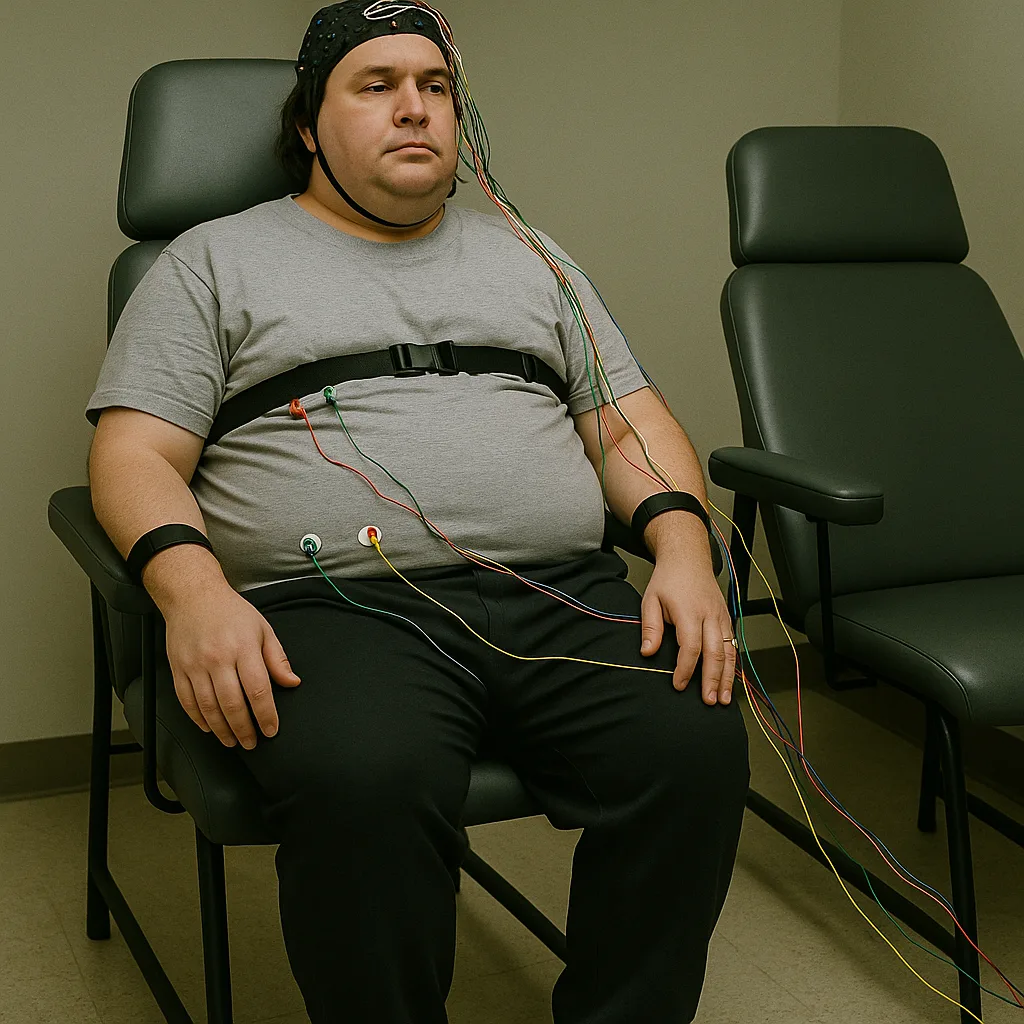
Rarest thing about him: Covers the gray — epic, 1 in 42
Legacyseed 194539645 · engine v8
Character card
His body-swap story
---
You are the older one. You were always the older one, by nineteen months, and you spent all of them going first — first bike, first truck, first fistfight behind the feed store, first diagnosis. He followed you into everything except that.
He drives the school route out of Kestrel, Texas. Twenty-two miles of gravel and barbed wire and a water tower on the horizon that says KESTREL in letters that have been repainted three times since you were kids. He parks at the end of the run and sits there with the engine ticking down and the door folded open and he smokes, one after another, elbow out the window, twenty a day and every one of them a small conversation with himself. You know because you rode with him. Last spring, when the walking got bad, he'd come get you and you'd sit in the seat behind the yellow line like a kid and he'd talk about Marisol, the one from the co-op, the one he wasn't married to and shouldn't have been anywhere near, and then he'd stop talking about her and touch his own face — jaw, mouth, temple — the way he's done since he was nine, checking that it was all still where he left it.
He never drank. Not once, not at Daddy's funeral, not the night his first was born. He said he'd seen enough of it. He tithed on twenty-eight thousand a year and meant it. He was, and this is the part you can't get past, a genuinely good man with a genuinely ordinary face — nothing about him that anyone would ever pick out of a crowd, no scar, no mark, nothing but a wedding band worn thin on the left hand and hair he dyes flat dark brown so the gray only shows at the temples and the part down the middle. He is vain about exactly one thing and it is that. You used to tease him for it. He'd say, *Some of us still have hair to worry about.*
The study was your idea. You want that on the record, in whatever record this is. Fourteen months out from the thing in your spine that wasn't going to stop, a lab in Lubbock, a consent form the length of a lease, two chairs and a cap of electrodes and a doctor who said *mapping* every time he meant *moving*. Non-invasive. Read-only. You believed him because I wanted to. Because a man with a date on him will believe a chair.
And Dwayne said yes. Not to be saved — nobody told him anybody could be saved. He said yes because I asked, and because they were paying eight hundred dollars, and because the transmission on the Ranger was going, and because he has never in forty-five years found a way to tell me no.
He didn't ask what it was for. That's the thing I keep turning over. He sat down in the chair with his hands flat on his thighs and his knees apart and let a stranger buckle a strap across his chest and put a cap on the hair he cares about, and when they asked if he had questions he said, *Y'all just tell me when.* Then he looked over at the empty chair with me in it and he winked. He winked at me. Because he thought I was scared.
You are the older one. You went first.
The electrodes lit one by one — you felt them go, a row of little bright coins across the crown — and the room slid sideways, and there was no dark, no tunnel, no long fall, just a hard shove of *elsewhere* and then weight. So much weight. Six foot three of it. A chest that pulls when it fills. Knees that ache in a completely different language. His hands gripped the armrests without being asked, his head pressed back into the vinyl, his eyes rolled up past the ceiling —
— and settled.
Level. Calm. Brown. Yours now.
The first thing you taste is cigarettes, forty-five years of them, tar and menthol and Sunday coffee. The first thing you feel is the band on the left ring finger, and it's snug, it's been there twenty-one years, and you understand in one long airless second that you cannot take it off and you cannot keep wearing it and there is no third option because there is no way back. No term on it. Nobody drew up a way back because nobody was supposed to leave.
You look at the other chair. The empty one beside you, dark green vinyl, still warm somewhere under the wires. It's empty the way a room is empty after someone stands up and walks out — that particular emptiness, with a shape in it. You wait for the shape to say something. To say, *Well. That was somethin'.* To say, *You owe me eight hundred dollars.*
It doesn't. He isn't anywhere. He went where I was going and there was nothing there to catch him.
Your hand comes up off the armrest. You didn't send it. It goes to the face — jaw, mouth, temple — checking that it's all still where he left it. His hands know their way home even with a stranger driving.
Down the hall, in an hour, a wife you have never touched will call this phone. In the fall, a bus with twenty-two miles of gravel in front of it. Somewhere a woman named Marisol who is owed an apology you are not entitled to give. Two kids who will hug this body at the door and never once wonder.
Nineteen months. That's all I ever had on him. And I spent them like a man spends money he thinks he'll earn back.
You lower the hand and look at the empty chair a while longer. Then you turn it over, palm up, palm down, the band catching the fluorescent light, and you say the only true thing left in the room.
*I'm sorry, Dwayne.*