Douglas Ferriter
Fictional. Generated by AI — not a real person, and no likeness of one is intended.
62, finance director in San Francisco · rolled by @bryce.kellerman · card — no film
History
who has worn him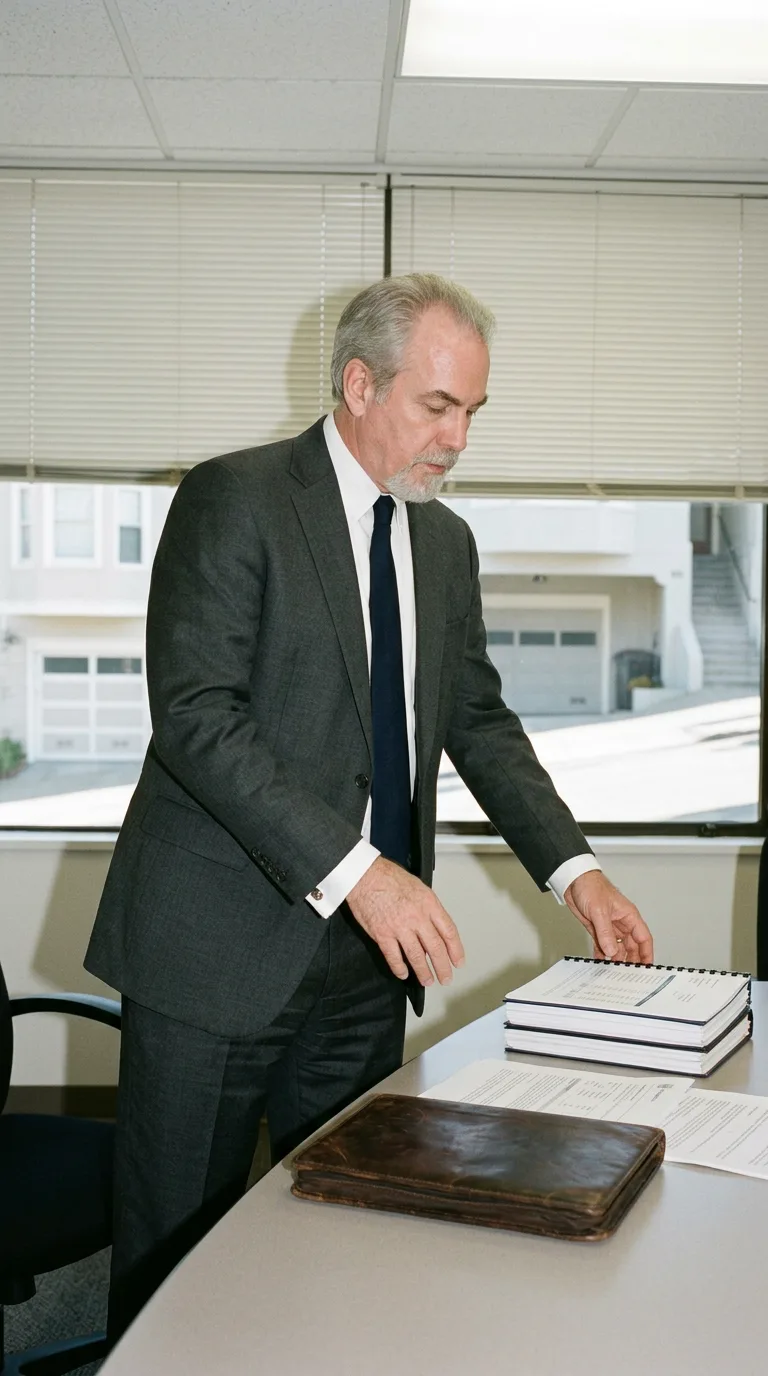
Rarest thing about him: Gay — common, 1 in 32
Season 1seed 1240740341 · engine v11
Character card
lineage 9IC4OB
His body-swap story
@bryce.kellerman, wearing Gordon Streicher, rolled the wheel on and woke up as Douglas Ferriter, spent 3 minutes in him, then spun the wheel and woke up as Roy Combess
You are Gordon Streicher for exactly one hundred and twenty seconds, and every one of them is wrong. The cauliflower ear throbs faintly against the AC vent behind the desk chair. The skinny fat body sits soft where it should be firm, and the office chair under it creaks Houston-cheap, and the blue eyes you're borrowing are already sliding back to the laptop, back to the wheel, because two minutes was enough to know this was a mistake — not a bad body, just the wrong appetite. You didn't spin for a data scientist. You spun for the doing of it. Gordon's hand, thick-fingered, keys in the card number from memory, because you made him memorize it three spins ago. The site loads the way it always loads: patient, clean, a wheel that doesn't need to hurry because it already has you. You spin without deciding to. That's the tell, forty-two times over — your thumb does it before the rest of you agrees.
The stack of bound reports is warm from the copier, and your hand — his hand — is already reaching for the third one down when the motion goes wrong. You set it a half-inch left of where it should sit, correct, and set it again, slow, deliberate, like a man relearning where the table is. The next ten reports come down checked. Corner squared to corner. Every single one, on a job that has not needed checking in nineteen years.
Behind you the blinds are half-lowered against a white afternoon, and through the slats a garage door and a steep driveway sit across the street looking almost like home, if home ever had teeth this cold. The room smells like toner and the particular dust of conference-room carpet. Your shirt cuff is turned back one fold, exactly as it was folded this morning, and that fold is the first thing that opens.
The morning comes back sleeve by sleeve. Standing at the closet, the tie already chosen — navy, always navy, Marcus laid three out on the bed the night before like he does every Sunday for the week, a habit twenty-six years old now and neither of them remembers whose idea it was first. The shirt going on cold, warming with the body, the collar button that always sits a half-size tight against a neck that has, over sixty-two years, thickened almost without him noticing. The wedding band clicking once against the edge of the dresser as he picked up his watch, a sound he has heard ten thousand mornings and stopped hearing at all. Marcus's voice from the bathroom, toothbrush still in his mouth, asking if he wanted the good coffee or the fast coffee, and the answer — fast, always fast, there's a nine a.m. — being the whole shape of a marriage in four words, comfortable enough that neither of them minds being predictable to the other anymore.
The leather portfolio under your left arm gives you its own year: a gift, the leather already softening at the corners the way he likes things worn rather than new, bought the week he made director and Marcus told him he finally looked like what he'd always been. Your feet in these black shoes know this floor without looking — sixteen years in this building, this exact carpet, this exact hallway to this exact room with the blinds that never quite go all the way down because the cord frayed two years ago and nobody's fixed it. Your knees know the particular ache of standing too long in board meetings. Your lower back knows the chair. Your hands, dry at the knuckles the way older hands get, know the weight of a stapler, the give of a legal pad, know how to lay ten reports on a table so precisely it isn't thought anymore, just muscle answering muscle.
There is a Friday clarity to the light, church-quiet, the kind of afternoon he associates with almost being done — with going home to Marcus, with the low-key thing they were going to do this weekend, dinner somewhere they'd been forty times, a bottle they liked. Somewhere in there is a whole self you are only touching the surface of: the mother who took longer than his father to come around to Marcus, and then came around all the way, brought a casserole to their anniversary like she'd have done for a daughter-in-law; the smoking he quit the year his doctor used the word *arrhythmia* out loud; the drink at the holiday party he still allows himself, one, because he likes who he is at one and dislikes who other men become at three. None of it is dramatic. That's the whole of him — a life built to not need checking either, until today.
You set the last report down square, and your own hand stops you before you can pick up an eleventh that isn't there.
You look at it. Not Gordon's hand — softer, older, a plain gold band worn thin at the bottom from twenty-six years of never being taken off. You turn it over once, like you're checking it came with fingerprints.
"Okay," you say, to the empty boardroom, to the blinds, to nobody. "Let's see how long you last."