Douglas Farrelly
Fictional. Generated by AI — not a real person, and no likeness of one is intended.
53, bartender in San Francisco · rolled by @bryce.kellerman · card — no film
History
who has worn him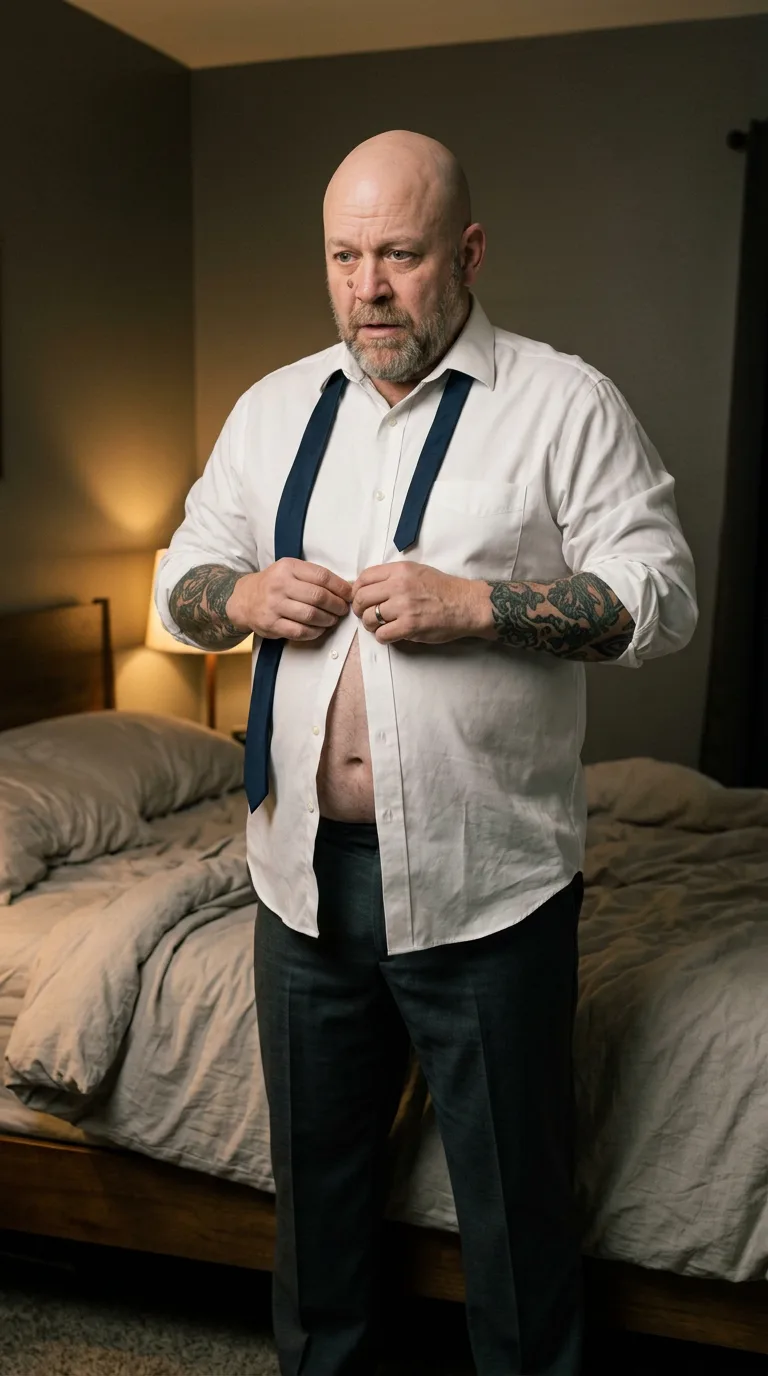
Rarest thing about him: Quitting right now — epic, 1 in 107
Season 0seed 379788943 · engine v10
Character card
lineage 9IC4OB
His body-swap story
@bryce.kellerman, wearing Kenji Otsuka, rolled the wheel on and woke up as Douglas Farrelly, spent 3 minutes in him, then spun the wheel and woke up as Bryce Kellerman
Kenji Otsuka's barracks room smells like gun oil and instant coffee, and none of it is yours anymore in about four seconds. You've had this one two days, twelve hours — a soldier, twenty, built like a fist, and it was fun the way a rollercoaster is fun, all that youth doing what you tell it. But you spun this body up out of boredom the first time and boredom doesn't go away just because the legs are good. It's Saturday, early afternoon, New York light flat through a blind, and there's nothing waiting on this day that you want to be awake for. You open the laptop balanced on the end of the bunk, the site loads the way it always loads, patient, gray, a wheel dead center like a slot machine dressed for a funeral. You don't think about it as long as you'd tell anyone you did. You pay. You spin.
—
The shirt is buttoned wrong. You feel that before you feel anything else — a fold of fabric pulling crooked over a belly that is not the belly you had a second ago, a tie hanging loose and unknotted against a chest with hair gone gray and thin, and your hand, this new blunt-fingered hand, flat against your ribs like you're checking they're still there. They are. There are more of them than there used to be, cushioned under a heavier wall of muscle-going-soft, and the light in this room is white and cold, morning light off a bay window somewhere above a garage, and it is morning here, you understand dimly, though it was afternoon a breath ago in a different body in a different coast. The buttons undo themselves under your fingers and redo themselves, correctly this time, without you quite deciding to, like the hands know a rhythm you haven't learned yet. The tie goes up and knots itself into a shape your last body's fingers never made.
—
The shirt against your back is the first key and it turns easy. It's a work shirt, laundered soft, and it remembers — no, he remembers, and it comes to you sideways, the way all of it will — standing in front of this same closet a hundred mornings, the particular ritual of getting dressed for a shift that starts before the world's had coffee: bar towel over one shoulder, black button-up, black apron folded at the waist, the little pocket where he keeps a pen that never has ink. Douglas. The name arrives with the tie, tightened now into a four-in-hand his father taught him decades back for church, not work, and worn today out of some stubborn private ceremony because it's his and Renata's anniversary and he is, God help him, wearing a tie to go stock a well before open.
Twenty-six years married. That comes off the wedding band, plain gold, worn thin on the inside where his finger has thickened around it — Renata asleep still in the bed behind him, dark hair loose on the pillow, having told him last night sleepily that he didn't need to dress up to restock vodka, and him saying, half-joking, half-not, that a man should look like something on the day his marriage got a year older, even if the only people who'd see him would be a delivery driver and the guy who does the ice.
The mole on his cheek is just a mole to him, has been there his whole life, but his wife touches it sometimes without noticing she's doing it, the way people touch things that are simply theirs. Two kids — a son who's twenty-four and doesn't call enough, a daughter finishing a nursing program up in Sacramento — both grown and gone in that particular way that leaves a house quieter than a man expects it to be, and some mornings this early quiet is the whole reason he took the day shift, so the bar is his and Renata's is hers a little longer.
His back is heavy with old ink, a big piece between the shoulder blades that his shirt collar just brushes — a unit crest, the edges of it visible at the shoulder seam, a thing from a version of himself twenty-some years younger and a war ago, and touching the collar gives you a flash that isn't gentle: heat, sand, a friend's name he doesn't say out loud anymore. He doesn't drink because of what he did with it after that, for longer than he's proud of, and doesn't smoke, because he's three weeks into quitting that too, and his fingers keep finding the flat top of his skull instead, running palm over scalp in the gesture that replaced the cigarette, an old soothing thing his hand does without asking permission. The body under all of it is fifty-three years heavy and honest about it: knees that complain on the walk down to the garage where his truck sits, a low hum of tiredness that's less age than the diabetes he manages with a strip of test paper and a grimace every morning, blood sugar a small quiet war he's fighting at the same time as the nicotine, two wars for a man who fought a real one once.
Faith is in there too, folded in with the tie somehow — a church three blocks from the bar he tends, a God he talks to more in his truck than in the pew, a belief that a man's worth isn't the number in his account, which is good, because the number in his account has never been much. Scraping by, always has, and it never soured him the way it sours some men.
—
You look at your hands. Blunt, thick-knuckled, a plain ring catching the cold window light, a life's worth of bar work written into the calluses. You lift your eyes off them and there's a mirror on the closet door, and in it is a bald heavy stranger in a crooked-then-corrected shirt, tie knotted right, mole high on the cheek like a period at the end of a sentence.
"Well," you say, in his voice, testing the weight of it, "guess we're doing this again."