Dominic Ray Szymanski
Fictional. Generated by AI — not a real person, and no likeness of one is intended.
36, trucker in Pittsburgh · rolled by @jonathan.landry · card — no film
History
who has worn him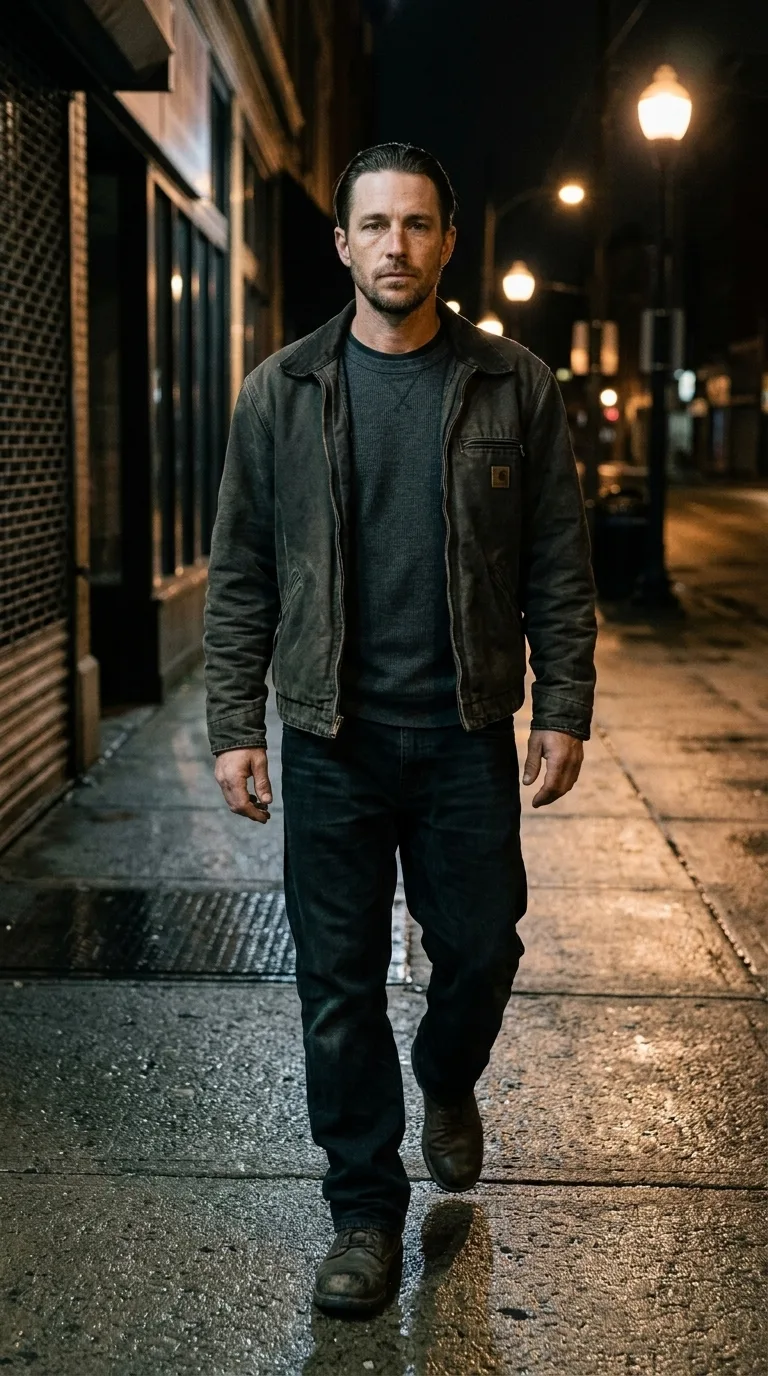
Rarest thing about him: Smokes and vapes — common, 1 in 52
Season 1seed 363254267 · engine v11
Character card
lineage K4WKNZ
His body-swap story
@jonathan.landry, wearing Patrick Joseph Dwyer, rolled the wheel on and woke up as Dominic Ray Szymanski, spent 3 minutes in him, then spun the wheel and woke up as Walter Hassan Brennan
Patrick Dwyer's thumbs ache from the register. That is the first thing, and it is not the reason. The reason is smaller. Three minutes in this body, and I stand in his kitchen in Philadelphia with the grease still in his hair, and the refrigerator hums, and I realize I have nothing to want. He has a cousin who texts. He has a mother's casserole dish in the cupboard that I know the name of and cannot use. I eat a cold fry off the counter and it tastes like his whole life, a little burnt, a little salted, and I think: no. Not this. Everyone in the house is asleep. The phone is already in his hand, the page already open, the wheel already turning, and I am not even sorry. Greed does not need to be sorry.
Then the kerb is gone.
My foot goes out over nothing and comes down on too much, and the street swings up wet and black, and my palm hits the cold roof of a parked car. Rain beads under my hand. The scuff of a shoe, a rhythm I did not start, stops because I stop it. I stand. Alcohol sits in him like a warm hand on the back of the skull. Whiskey, then beer after, then a little more of both. I breathe, and smoke is in the breath, old and sweet, and under it something sour.
The jacket is the first key. Canvas, stiff at the cuffs, soft at the elbows, the zipper open and swinging. I close my fingers on the front of it and he comes up through the cloth: a hook by a door, a hand that took it down this morning, no, yesterday. A girl's voice from the bedroom saying don't wake them. Two small sets of shoes by the mat, one with a light-up heel. He stood there with the jacket half on and did not want to go, and went anyway, because the bar was the only place nobody needed him to be anything.
I take a step. The boots are heavy, resoled, the left one loose at the toe. The street comes up through them, wet concrete, every crack. My knees are thirty-six years old and tell me so. My lower back has a long, dull bar of ache in it that sits right where a seat has been pressing for a decade. Trucker. The word arrives with the ache. Hours, miles, the vibration of a steering wheel still living in the bones of the forearms.
My hands go to my knuckles without being asked. They crack, one by one, thumb across the fingers, the small pop of it satisfying in a way that is not mine. I let them. I feel the freckled skin of the back of the hand under the streetlight, the stubble when I rub my jaw, three days, rough as a brush.
The shirt under the jacket is the next key, thermal, soft, pilled at the chest, and it gives me the morning. Not today's. A morning in a kitchen where he stood in this shirt with his coffee going cold, and a woman, the girlfriend, her name is a warmth rather than a word, leaning on the counter, and the little ones fighting over a spoon. And behind her, in the way he does not look at it, another face, the ex, the recent one, the one he still opens a phone to see. He did not look at her picture this morning. He looked at it twice at the bar. I feel the weight of that in his throat, a swallowed thing.
Money, too. In the wallet, against my hip, a card, and with it a number he checks the way other men check a pulse: a little put away, enough, not enough, his. Nobody knows about it but him. He has never touched it and never will, I think, and this is a strange, private tenderness I did not ask for.
The pocket has a vape in it. I turn it over. Mango, or something like it. He smokes the real ones too, outside, in the dark behind the rig, and the cold dawn at the truck stop, the diesel and the coffee burnt in the glass pot, comes up whole, the best part of his week, the part he would never say aloud.
Forty steps are in his legs already. They land even and quiet. I did that. I am steadier than he was, and at the corner his body knows left is home and I turn left anyway, because I have never been here, and every street is mine.
I stop under a lamp and lift my hands. They are broad, scarred only by use, calluses at the base of each finger, his wedding finger bare. I turn them over. They do not shake. They are mine and they are not, and the question is already there, quiet as the rain: how long.
"Okay," I say, and his voice comes out rough and low and strange. "Okay. Let's see what you were."