Desmond Oriakhi
Fictional. Generated by AI — not a real person, and no likeness of one is intended.
41, landscaper in Miami · rolled by @desmond.oriakhi · card — no film
History
who has worn him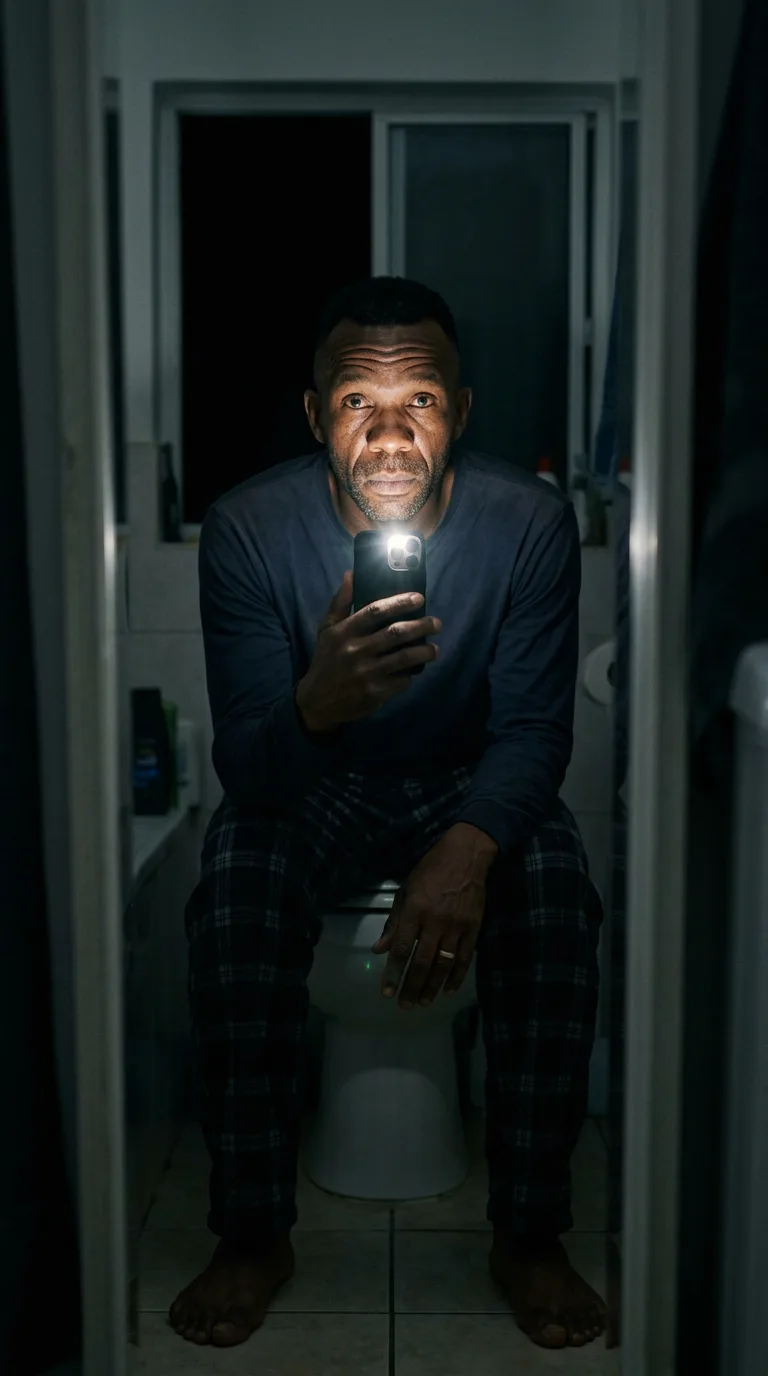
Rarest thing about him: Reading something he was not meant to — uncommon, 1 in 148
Season 1seed 40368068 · engine v11
Character card
lineage G4NPIL
His body-swap story
@desmond.oriakhi rolled the wheel on and woke up as Desmond Oriakhi — their first
The site loads slow on purpose, like it wants you to have time to back out. You don't. It's late, it's nothing-night, the kind where the apartment hums and the feed has shown you everything twice already and none of it was for you. You have wanted this since before you knew to call it wanting — every story where someone wakes up behind a stranger's eyes, every late thread of people swearing it could be real if you only paid enough. Nobody ever sold it before. Now there's a wheel on a page called vessel.cards, and a button that says SPIN, and your thumb is already there.
You pay. You spin. The wheel does what wheels do and then it stops, and there isn't a drumroll, there's just a man's face loading in, ordinary, caught in bad light, and then there's no you anywhere at all to watch it finish loading.
There is a mirror and a torch-white rectangle of a phone and a face in the glass that is not a face you have ever worn, because you have never worn one. His weight drops onto you all at once — not heavy, wiry, a frame built out of lifting things that aren't terribly heavy a few thousand times. You are sitting. The lid is cool and hard under the backs of your — his — thighs through thin pajama cloth. His mouth is open on a number, sixty-two, sixty-three, and it keeps going a beat after it should have stopped meaning anything, like a tape running past the label. The phone light doesn't waver. His eyes — your eyes now — are the ones in the mirror, and for a second nobody is running them at all.
The toothpick is there first, because his tongue finds it out of nothing, tucked at the back molars, worn soft, and it comes with a flash: a truck cab, a two-lane road outside Homestead, chewing the splinter down to nothing while a radio preacher works himself up about something you can't make yourself care about at seven in the morning, sun already ugly on the windshield. That's Desmond, you learn without being told the name yet — it arrives a half-second later off the embroidery on a shirt you haven't put on in this moment but have put on a hundred mornings, DESMOND stitched small over a breast pocket that smells permanently of cut grass and gas-can fumes no matter how many times it's washed.
The plaid pajama pants against your calves give you a bed, a wife who isn't in it anymore — Renée, three years gone from the room though the divorce itself is older, finalized on a gray Tuesday with lawyers who used words like equitable while he sat with his hands flat on his knees like a man at a sentencing. The ring finger under your right hand finds its own pale stripe of skin, lighter than the rest, a line worn in by eleven years of a band that isn't there, and that touch opens wider than the others: a wedding in his mother's church, her choir going full voice on something with four parts of harmony, Renée's hand shaking in his because she was more scared than he was, and him thinking, god help me, I am going to get this right. He didn't. Nobody says it was only him. Three kids came out of those years anyway, a fourth almost, and he loves them with an intensity that has nowhere left to be useful at 3 a.m. except in texts he drafts and doesn't send.
The headphones aren't on his neck now but your hands know their weight anyway, slung there every morning over a blue long-sleeve already gone soft and ghost-pale at the shoulders from sun and sweat and a hundred washes, and under that memory is the whole ritual of 6 a.m.: pulling the shirt on sleeve first, right then left, old habit from a mother who said do it that way, mija, so you don't forget your manners even putting on clothes, except he's not her mija, he's her boy, and it stuck anyway. Boots next, broken in so completely they go on without a hand to guide them. The hat with the floppy brim that keeps him from looking much older than he is by noon. The trailer hitched behind the truck, mowers chained in a row like patient animals, a route of six lawns memorized by muscle before thought — the Hendersons' slope that always catches the mower blade wrong, Mrs. Абрамс' dog that likes him and nobody else.
Church comes in through nothing you're touching, just the stillness of the small bathroom itself, tile cool under bare feet — a feeling more than a memory, a Sunday discipline older than the marriage and outlasting it, a God he still talks to on the drive to work with the radio off, flatly, like giving a report. Somewhere in the same quiet is the shape of what he used to drink and doesn't anymore, no particular story attached, just an absence worn smooth, and under that, further down, the specific ache of a lower back that has bent over a thousand flower beds, forty-one years old and feeling every one of them in the knees when he kneels to pull a weed by hand because the client likes to see him do it that way.
The phone light hasn't moved. His thumb — your thumb — is still over the screen, over whatever he opened at three in the morning that he wasn't supposed to go looking for, something with her name in it, something that made him come in here instead of lying next to it in the dark. You don't go looking either. There isn't time, and some part of this body doesn't want you to.
You look down. The hand on the phone is thin-fingered, nicked along one knuckle with an old white scar you don't ask about, pale stripe still faint on the ring finger like a line left by a tide that went out years ago and never came back in.
You lift your eyes to the glass.
"There you are," you say, in his voice, to no one who is him anymore.
Somewhere behind that, already, impatient, waiting on nothing in particular — the wheel.