Desmond Okafor-Reeves
Fictional. Generated by AI — not a real person, and no likeness of one is intended.
43, navy sailor in Berlin · rolled by @connor.waskiewicz · card — no film
History
who has worn him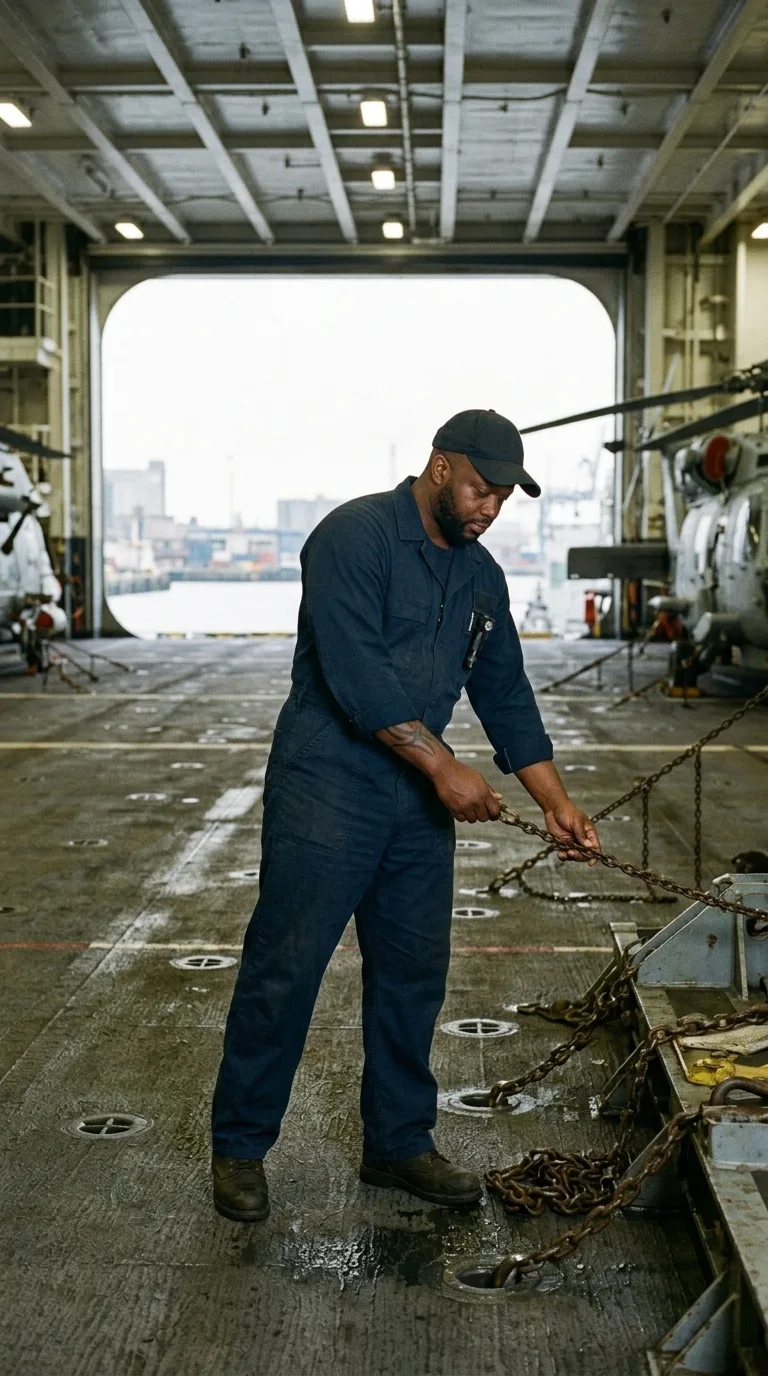
Rarest thing about him: Berlin — rare, 1 in 529
Season 1seed 886337107 · engine v11
Character card
lineage 2NZHHJ
His body-swap story
@connor.waskiewicz, wearing Jonah Park, rolled the wheel on and woke up as Desmond Okafor-Reeves, spent under a minute in him, then spun the wheel and woke up as Gregory Hanlon
You are leaving Jonah Park because of a ladder. Not the fall, there was no fall. Forty feet of scaffold on a grain elevator, a clean sky going pink at the edges before the sun, and your legs would not go over the rail. The body you were handed knew exactly how. Its hands knew the brush, the wrist, the long even pull. You stood there at the top with a good body, working perfectly, and you could not make it want anything. Twenty-two, and it had been yours for less than a minute of wanting. Now it is the middle of the night in Kansas, the house asleep, his keys cold in your fist, and you have the site open on the kitchen table. The wheel is already turning. You are tired of being a man who is merely able.
Then the wheel stops, and the floor changes.
Steel under your boots, wet, and a chain running through your hands, links cold and gritty, the weight of it dragging toward a deck fitting. A great square of grey daylight opens at the end of the hall. Water, cranes, a smell of diesel and rust and cold air coming in off the harbor. Your hands are mid-motion, and one of them does it wrong: the hook seats badly. You stop. You do it again, slowly, correctly. Then the next one, and you check it. Then the next, and you check it. Ten of them, each one tested with your thumb, on a job these hands could do asleep.
The chain is the first thing to open him. Your palms close on it and suddenly it is years of this, a rhythm like a hymn, tension, hook, snap, tension. Under it comes a feeling that isn't yours: pride so old it has stopped being pride and become posture. Then a smaller one, folded behind it. A kitchen, a man's laughing voice, a pot boiling over, and a warmth that goes through this chest like a swallowed coal. Someone is waiting for him in a place with a radiator and a bad window. You don't get a face. You get the warmth, and that is enough to make your throat tighten.
The coverall comes next, blue and stiff, rolled at the forearms. You feel the cloth against your back and his morning arrives in his hands. Pulling the zipper up from the groin to the breastbone, the teeth catching at the belly where forty-three years sit comfortably. Setting the cap down over the faded sides, tugging the brim. Clipping the small flashlight into the pocket, because he always does, because a sailor he trusted once told him the one night you leave it is the night. He stood at a sink and ran a thumb over the scar through his eyebrow, an absent habit like touching a doorframe. A cigarette in the courtyard first, graffitied concrete, flat winter light, the first drag of the pack's first fifteen. He thought of nothing. He thought of the evening.
The tattoo itches on the inner forearm, black tribal ink, and when you tilt it toward the light a memory slides out whole. A cheap chair, a buzzing needle, nineteen years old and afraid of being looked at. He chose the hardest pattern he could find so no one would ask what it meant. Under that, a small shame, then the long slow undoing of it. He prays, you find, in the old way, plainly, without asking for much. The faith sits in him like a second spine. You didn't expect that. You don't know what to do with it, so you let it stand.
Your knuckles crack. You didn't do it. The hands did, thumb over each finger in turn, a tic he has never once noticed. Your lower back aches in a deep, honest way, a knee complains on the wet steel, and the lungs have that low rasp, a pack-a-day weather in the chest. Strong shoulders. Heavy, capable arms. A body that has been used well and is only starting to say so.
You look at your hands. Brown, broad, scarred across one knuckle, a chain still slung over the left. Not Jonah's. Not yours at all, which is the whole point.
You lift your eyes to the open harbor and the pale light and say, quietly, in a voice that is deeper than you are used to, "Okay, Desmond."
The chain hangs there, and under it, already, the question you can't put down: how long.