Desmond Faraday
Fictional. Generated by AI — not a real person, and no likeness of one is intended.
47, manager (mid-level) in Phoenix · rolled by @glenn.aldercy · card — no film
History
who has worn him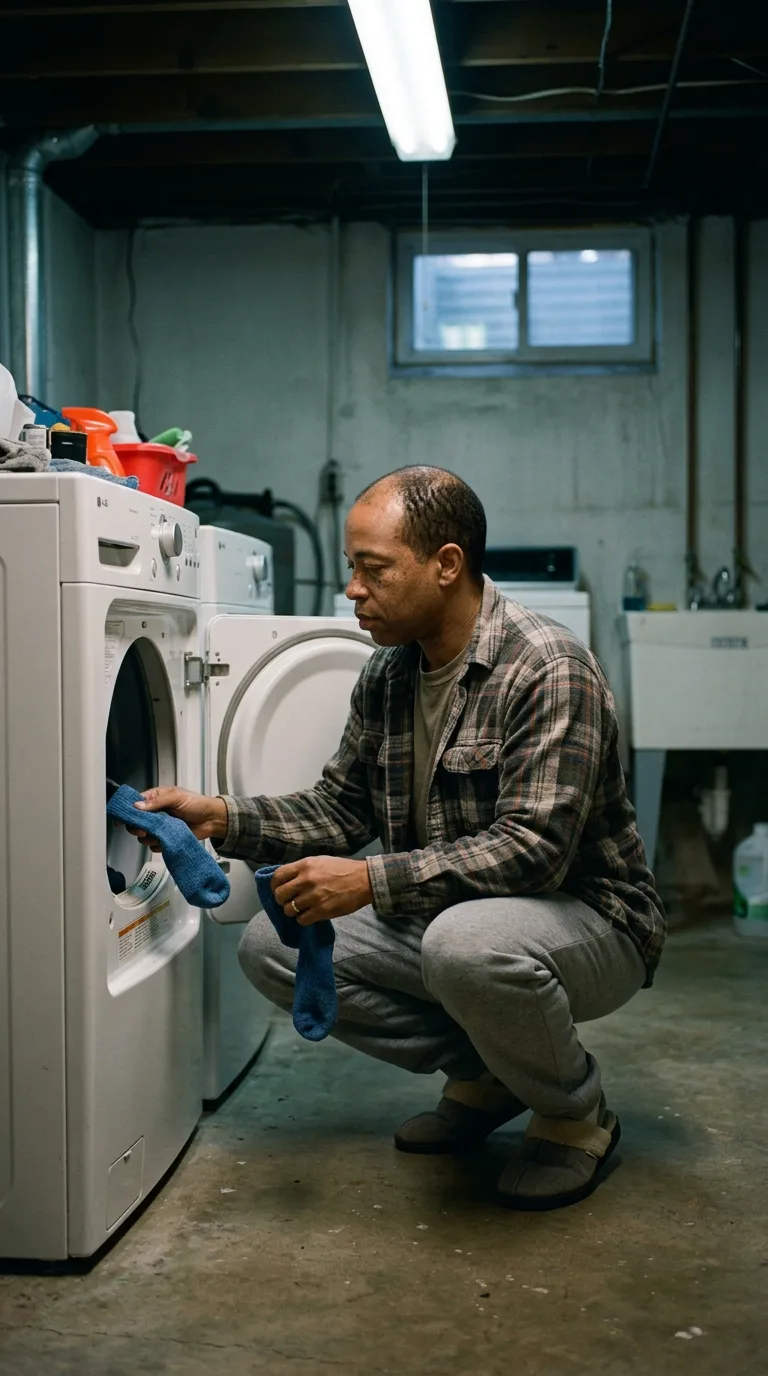
Rarest thing about him: Doing laundry — common, 1 in 36
Season 1seed 722636945 · engine v11
Character card
lineage EU5SNZ
His body-swap story
@glenn.aldercy, wearing Russell Granby, rolled the wheel on and woke up as Desmond Faraday, spent 1 minute in him, then spun the wheel and woke up as Cody Mersereau
Russell Granby's beard itches in a way that has nothing to do with hair.
One minute is enough to know a man by the weight of his own patience. You spun him last and got a 52-year-old electrical engineer with a bald head and a beard like a wire brush, standing in a kitchen that smells like someone else's coffee, and within sixty seconds you already know you don't want this. Not the body, which is fine, broad-shouldered, competent-looking. It's the stillness of him. Russell Granby is the kind of man who reads the whole manual before touching the machine. You can feel it in the hands, in the unhurried blink, in the way his Sunday has nothing in it that wants to move. You have been nine other men before him and some of them you miss already, in the dumb animal way you miss a song. This one you don't even get to finish liking. You want friction. You want a life with a pulse in it, something ticking under the skin. So you open the laptop that is apparently his, find the bookmark that is apparently already saved — of course it is, there's no such thing as borrowing this body clean — and you pay, and you spin, while his wife or someone's wife calls up the stairs about brunch.
The wheel turns on a screen the color of a casino at 2 p.m. and lands, and there is no interval between the landing and the next thing, no sound, no falling — you are simply crouched, low to a concrete floor, knees complaining in a specific, unfamiliar way, a wet sock heavy and blue in your right hand, a fluorescent tube somewhere above buzzing a pitch you didn't ask for. The dryer's open mouth breathes warm cotton-smelling air against your face. Your left hand holds another sock. Your heart is already going before you are, like it started the sentence without you.
The first thing that comes is the ring. A plain band, not fitted — it was fitted once, through a hand that had more weight on it a decade ago — and it tells you, before any image does, married, and then the image comes anyway: a woman's laugh in a kitchen that is not Russell Granby's kitchen, that is a kitchen in Phoenix with a window over the sink full of hard yellow light, her hand flat on his chest telling him to breathe, just breathe, during the second one, or was it the third, there were more than one, there are three kids or more and he has lost count on purpose because counting them like inventory felt wrong to a man who loves them specifically and not generally. The flash doesn't give you names. It gives you the particular terror and joy of a hospital room, more than once, and under it a steadiness that scared him in a good way — the first time he understood that fear doesn't disqualify you from being needed.
The flannel shirt against your back opens differently — slower, domestic, almost embarrassed. This morning. Early, for him — his body clock says it should be the dead middle of the night, some old shift-work groove worn into him from years ago that never quite wore off even after he moved into the glass-walled office with his name on the door, so he wakes at hours that make his wife groan into the pillow, and he loves the quiet of it, the house holding its breath before the kids get up. He remembers pulling this exact shirt off the hanger, one arm and then the other, the top button always a little resistant, the sweatpants already warm from being folded on the dryer the night before. He remembers thinking, today I'll actually get through the whole basket, as if that were a modest ambition and not a lie he tells himself every week.
The sock in your hand gives you the job: Desmond Faraday, forty-seven, a title with Manager in it and nothing else memorable attached, a desk behind a glass wall he leaves open on purpose so people feel like they can knock. He is not proud of the job and not ashamed of it. It paid for the house, for three sets of shoes that are always too small by spring, for the little number sitting quiet in a savings account that he checks more than he'd admit — not fortune, just enough that a bad year wouldn't flatten them. He has freckles across his nose that his kids used to try to count before they got bored. He is clean-shaven because his wife likes his jaw and he likes being liked for something that simple. His leg has been bouncing under desks since he was nine years old and nobody has ever successfully gotten him to stop, including himself.
The basement comes up through your knees — the specific cold of poured concrete through two thin layers of slipper, the mildew-and-detergent smell that is this house and no other house, the particular hum of this tube light which has needed replacing for eight months and which he has meant to replace for eight months. His back doesn't hurt yet today, but it will by three, a dull ache low on the left that forty-seven put there and that thirty-seven didn't have. His shoulders are average, unremarkable, strong enough for what they're asked, which is boxes and children and, this morning, a basket of towels.
You pull the load out warm into your arms before you've finished deciding to, and his hands take over from there — fold the same towel the way his mother folded towels, in thirds then half, corners square, because somewhere in 1991 she told him sloppy folding was its own kind of lying to yourself, and he never once questioned it again. Eight shirts crumpled in a drawer upstairs, his wife's, who doesn't fold things the way he does and never will, and it has stopped bothering him sometime around year twelve of being married to her. The basket fills fast, neat, like something being made right.
You look down at the hand doing it. Brown skin, freckled across the knuckles the way it is across the nose, a thin gold band catching the fluorescent light. Not Russell Granby's hand. Not any hand you've worn before. You turn it over once, slow, the way you always do, feeling for whose it used to be and getting back, instead, only the warm cotton and the hum of the light and the fact that somewhere upstairs a woman is about to ask if he's almost done.
You say it out loud, to no one, to the socks, to the dryer: "Okay. Let's see what else there is."