Derek Vollmer
Fictional. Generated by AI — not a real person, and no likeness of one is intended.
48, wrestling coach in Los Angeles · rolled by @colin.hasbrook · card — no film
History
who has worn him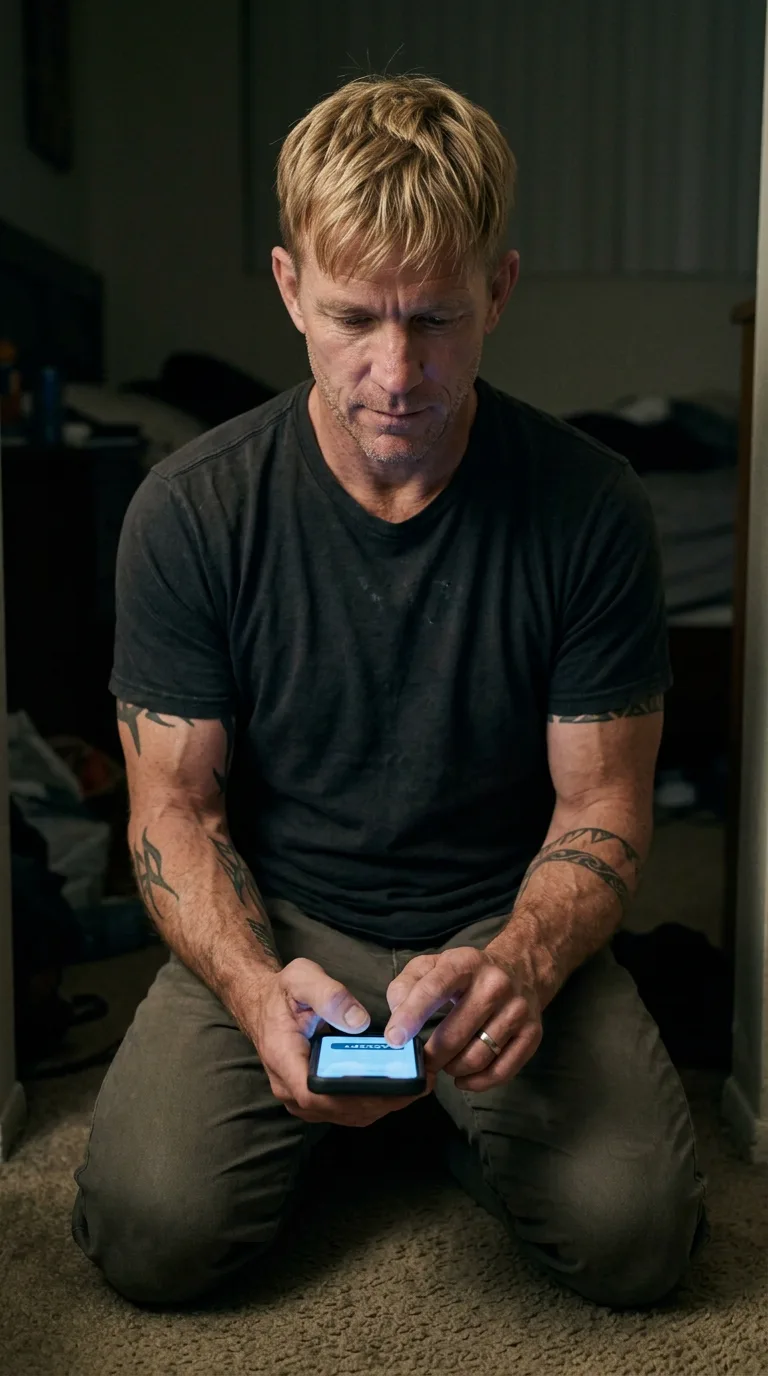
Rarest thing about him: Textured crop — rare, 1 in 68
Season 0seed 653207464 · engine v10
Character card
lineage 2NZHHJ
His body-swap story
@colin.hasbrook, wearing Grant Novosel, rolled the wheel on and woke up as Derek Vollmer, spent under a minute in him, then spun the wheel and woke up as Amit Cherian
You have been Grant Novosel for three minutes and already you know you made a bad trade.
You're standing in a break room in Phoenix, fluorescent light buzzing, a badge clipped to scrubs that smell like someone else's fabric softener, and your — his — hands are small and strange, a white streak of hair falling into gray eyes when you catch the reflection in the vending machine glass. You paid for muscle and got it, but on a frame that tops out at 5'4", and the last spin's excitement has already curdled into the obvious: everyone here is going to keep talking to you like you're a nurse, because you are one, and there is a med pass in eleven minutes that this body knows how to do and you do not, not really, not yet, the memory of it sitting behind Grant's eyes like a language you almost speak. It's not fear. It's impatience. You did not come to the wheel to chart vitals. You came to feel different sizes of the world, and this one is small and it is Monday and it is going to ask something of you before you've even finished being curious about it.
So you find the phone, his phone, in the pocket of scrubs still creased from a drawer, and you thumb to the site out of nothing but the itch, the same itch that has moved you through thirty-one men already — a boredom that arrives faster now, that doesn't wait for the bad parts to actually start. You spin. You do not decide to keep him and you do not decide to leave him; you just want the wheel to turn, the way some men want a cigarette they didn't finish the last one to justify.
—
The light is a hallway door opening onto noon, except it isn't noon, it's coming through a gap in vertical blinds at an hour that doesn't match anything you were just standing in, and you are on your knees on a carpet that smells like dryer sheets and a dog that doesn't live here anymore. A phone is warm in your hand — his hand, wide-knuckled, a tan line where a watch usually sits — and the screen is dark now, gone to sleep under your thumb, and the thumb hovers there a half second like it's waiting for the light to come back on and explain itself.
It does not explain itself. Nothing does. You are just here now, mid-kneel, weight balanced through a thigh that has run ten thousand miles more than the last one, a t-shirt damp at the collar, and the room around you says morning even though your body says something else — a body that got up at this hour on purpose, that is used to being awake when other men are asleep, and you will understand why in a second, when his life starts arriving.
—
It comes in through the shirt first — plain black cotton, worn thin under the arms — and it comes as a Tuesday practice that ran late, him pulling this same shirt over his head afterward in the coaches' office, chalk dust and the smell of the mat room, a whistle still looped around his neck out of habit even off the clock. Derek Vollmer. The name arrives with the shirt, the way his own name always does, unglamorous and exact, the way he'd say it into a phone — this is Coach Vollmer — a hundred times a season.
The carpet under your knees gives you the apartment: a stucco courtyard two floors down, dry palms clattering against each other in a wind nobody in LA calls wind, a wife three time zones out of the room right now because she took the kids to her sister's for the week and he stayed behind for a tournament he has to run Wednesday, and that's the answer to the hour — he's not up early, he never went down; he was up half the night watching film of a heavyweight from Torrance who cross-faces wrong, and the tiredness sits behind your eyes like sand, familiar to him, foreign and heavy to you.
The wedding band gives you her. Carol. Nineteen years, the ring plain because he never let himself care what it looked like, only that it stayed on, through practices, through the year they almost didn't make it — the year he won't look at directly even now, a name that isn't Carol's sitting just behind it, an old girlfriend from before all this, Denise, who he still thinks of on specific unimportant days, a song, a smell of citrus, nothing he'd ever chase, just a window he doesn't close. Two kids come with the ring too — a daughter's laugh at something not funny, a son's grip tightening during a fireman's carry drill, small hands that once fit into these same tattooed forearms when they were small enough to be carried themselves.
The tattoos on the arms — tribal black, done cheap and young, redone once when the first ones blurred — bring back a version of him at twenty-two who thought they meant something fierce, and now they're just his arms, the joke his own wrestlers make every October about Coach's ink being older than some of them.
The knees against the carpet ache in a way that is entirely his, not yours: cartilage worn down from a sport he loved enough to keep doing to his body long after his body sent him the invoice. Your chest — his chest — pulls thin at the exact wrong moment, a familiar tightness climbing up from the sternum, and his hand, without you asking it to, is already patting the shirt pocket for an inhaler that isn't there because he's kneeling in his own bedroom doorway, not at practice, and the panic under the tightness is old and managed, a thing he's had since he was nine and has never once let stop him from doing this job on a mat with forty teenagers breathing hard around him.
The phone in your palm was warm a second ago from the app someone sent him — Marcus, one of his assistant coaches, some link with a promise attached to it that Derek clicked mostly out of boredom on a slow morning, the kind of thing he'd forget by lunch. His thumb remembers reaching for ACCEPT with no more weight behind it than reaching for a remote.
And under all of it, steady as a metronome, his hands want to crack their own knuckles — an old tic, dugout habit, sideline habit, something they do without him when he's thinking too hard about a match or not thinking about anything at all.
—
You look down at the hand holding the phone — his hand, blunt-fingered, a thin white scar across one knuckle from some forgotten whistle-lanyard accident, the wedding band catching the hallway light — and you turn it over slowly, watching it not be yours.
Then you look up, into whatever's in front of you, and you say, out loud, to no one:
"Okay. Who else wants this life."