Dennis Okafor-Reid
Fictional. Generated by AI — not a real person, and no likeness of one is intended.
40, field archaeologist in Western Kansas · rolled by @colin.hasbrook · card — no film
History
who has worn him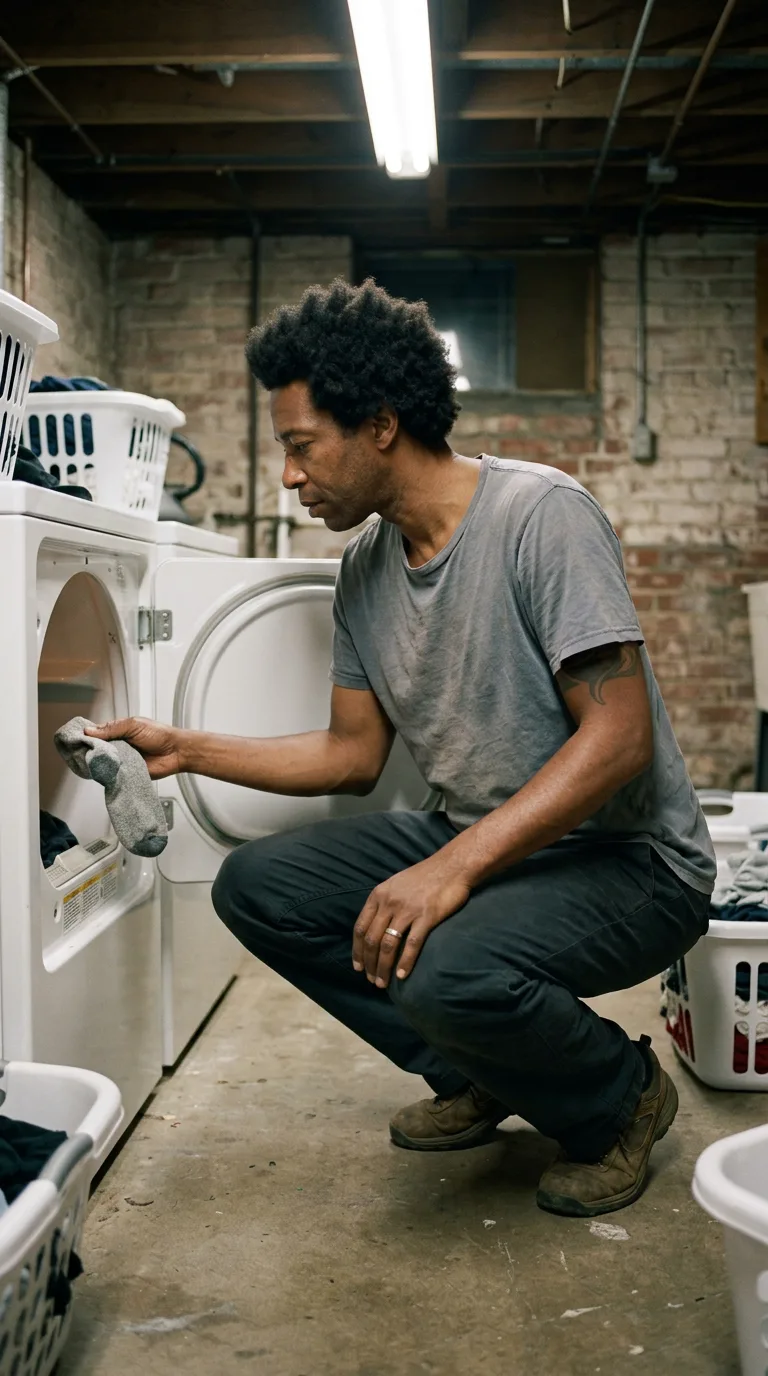
Rarest thing about him: Field archaeologist — uncommon, 1 in 163
Season 0seed 1501334105 · engine v10
Character card
lineage 2NZHHJ
His body-swap story
@colin.hasbrook, wearing Marcus Odom, rolled the wheel on and woke up as Dennis Okafor-Reid, spent under a minute in him, then spun the wheel and woke up as Gary Kowalski
---
The machinist's hands ache when you wake them, every night around three, and the ache is not yours to keep. It comes from thirty years of a body doing the same twist on a lathe, and Marcus Odom is asleep somewhere behind you in a Miami apartment with the AC rattling, and you are the one standing in his kitchen in his boxers, not sleeping, running a thumb along the countertop like the grain of it might tell you something. You have had him less than a minute of his own life and forty years of somebody else's. That is the trouble with a good body: it stops being interesting exactly when it stops being new. You spun him and felt him for four seconds — the muscle, the freckles, Miami's wet heat coming through a cracked window — and then you were already thinking about the next one. That is not boredom exactly. It is the thing under boredom, the thing you don't say to anyone, not even yourself in so many words: you don't want to be someone. You want to have been everyone. Five hundred and fifty-six men and the number itself has become the appetite. You go back to the site because stopping would mean deciding this was enough, and you have never once decided that.
You spin.
You are crouched. Concrete under your knees, cold through denim, a fluorescent tube somewhere above buzzing at a pitch that finds the fillings in teeth you don't have yet. A dryer door is open in front of your face, warm air rolling out of it, and there is a sock in your hand — one gray sock, damp-warm, unremarkable — and your other hand is braced on your own knee, and the knee complains. That's the first thing: the complaining. A deep-down grinding ache in both knees and low across the back, the specific complaint of a body that spends its working life kneeling in dirt. You pull the sock free, and your hands — smaller than the hands you just had, narrower, the knuckles a little swollen — drop it into the basket without being told to. They know the motion. You are only riding along behind it.
The shirt is against your back already, and it opens first. Not a picture — a temperature. Sun, real sun, the kind that sits on the back of the neck like a hand. You are kneeling in a trench with string lines pulled taut over it in a perfect grid, six a.m. and already hot, and somewhere behind you a supervisor is saying something about the thunderhead stacking up black on the horizon and how they've got maybe three hours before it comes down and ruins two weeks of stratigraphy. This shirt — this exact tan shirt, the one you buttoned this morning, sleeve rolled to the elbow over the tattoo you got at twenty-two and have half-regretted since — you remember putting it on. Standing in the bedroom before the kids were up, threading the buttons one-handed because the other hand was holding a coffee mug your wife had already refilled twice, and she said something from the bathroom doorway about the school pickup schedule and you said mm without really hearing it, the way you do every morning, the way that has never once caused a real fight in fourteen years of marriage because she knows you're already halfway into the trench in your head before your boots are on.
The trowel. Not in your hand now, but your palm still remembers its shape — the exact worn place on the wooden handle where your grip has polished it smooth, a shape no other hand could have made. Thousands of hours. A worked point you pulled out of gray Kansas clay eleven years ago that made the department fly you out for a talk nobody came to. A field season in Belize before the kids, sleeping in a tent with a woman who was not your wife — Renata, you have not said her name in your head for months and there it is anyway, arriving with the smell of dryer sheets for some reason your body understands and you don't — and how you still think of her sometimes not with guilt exactly, more like an ache in a joint that only flares in certain weather. You never told your wife about the flare. You didn't need to. It passed, the way the back pain never does.
Three kids upstairs, maybe four now — you're not sure this second, the memory comes in pieces — and a wife who does not fold laundry the way you do, corners squared, because you told her once without meaning to sound like a smart-ass that you'd trained your hands on collapsed structures where a centimeter off-square meant you'd misread a wall, and she'd laughed and said fine, you do the laundry then, and so you do, four in the morning some nights when the site keeps you wired and sleep won't come and there's the small mercy of a basement, a hum, something with a right answer.
No cigarette in thirty years, though the hand still checks a shirt pocket sometimes out of old habit. No drink, ever — a grandmother's church, a rule that outlived the reason for it and became just who you are. A toothpick somewhere, in a truck cupholder eight hundred miles from here, worn down to a splinter, chewed without thought the way another man might drum a steering wheel. And under all of it, holding all of it up: the low, permanent, unglamorous pain of a body that kneels for a living, that will keep kneeling tomorrow whether or not anyone is driving it home tonight.
You straighten. Everything in the back protests, familiar, almost comforting in how familiar it is — you've had it four seconds and it already knows how to hurt.
You look at your hands — smaller, darker, a plain wedding band catching the fluorescent light, a sock still creased into the palm from having just been held.
You turn them over once, like counting fingers that might not be yours.
"Okay," you say, to the empty laundry room, to no one. "Let's see what you're carrying."