Delmer Kirtley
Fictional. Generated by AI — not a real person, and no likeness of one is intended.
63, groundskeeper in Eastern Kentucky · rolled by @everett.dabney · card — no film
History
who has worn him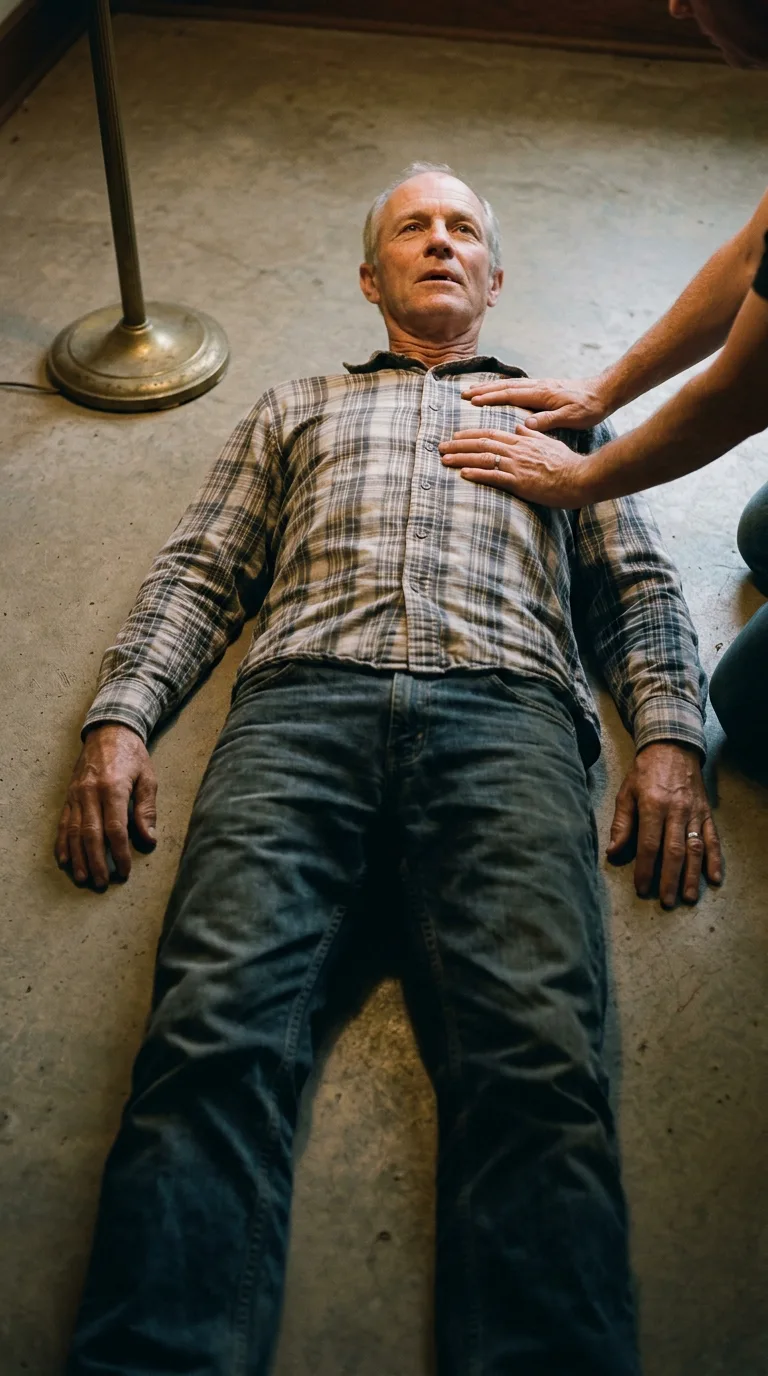
Rarest thing about him: A missing front tooth — epic, 1 in 124
Legacyseed 583393911 · engine v8
Character card
His body-swap story
---
You knew that leg before you knew the man.
Nineteen sixty-nine, the back row of Mrs. Hollandsworth's room, and there was a bony kid two desks over whose right heel drummed the floor like rain on a tin roof for six hours a day. She'd say *Delmer, still that foot,* and he'd still it, and forty seconds later there it'd go again, and the whole row would start laughing before she even turned around. I sat next to that sound for nine years. I could find him in a dark house by it.
He is sixty-three now and the leg still goes. You will see. It is the first thing you get back.
---
Here is the part you have to understand about a possession like this one: I did not come to take him. I came to keep him. Those are not the same thing and I will not pretend they are, but I want the order of events on the record, because there is nobody left to keep it but me.
We were in his basement. It is a good basement — poured floor, that brass floor lamp his wife Renelle hauled out of her mother's house in Hazard and would not throw away, a workbench, the tin of loose bolts. Two chairs. This was the room where two men in their sixties drank once or twice a month and lied gently about their lives. Delmer had money — more than anybody who works a ball field ought to have, a good deal more, land sold off in a strip up the holler and never a word said about it at church, because he didn't go to church. *I'm spiritual,* he'd say, and grin that grin with the gap right in the front of it, top left, a hole you could see a whole man's history through. *God's out on the field at six in the morning. He ain't in a building at eleven.*
He lost the tooth in 1983 on a foul ball he had no business chasing. He never fixed it. Renelle asked him to for thirty years. He would not, and I never asked him why, and now I know why, because I am in here with the reason.
Twelve fifty on a Thursday, one bourbon in, mid-sentence about his daughter's boy learning to switch-hit — and he stopped. Went gray as the floor. Sat forward, said *huh,* like a man noticing a bill he'd already paid. And went down off the chair sideways, and the tin of bolts went over and rolled, and that was the cholesterol they'd been telling him about at the clinic for eleven years while he ate what he wanted and drank what he wanted and mowed his stripes.
I got him flat. I got the heel of my hand on his sternum and I pressed. I'm not a young man. I felt something give under there on the fourth push and I kept going anyway, thirty and thirty and thirty, and I was saying his name and then I was not saying anything, and out of the corner of my eye that brass lamp base sat there like a witness that would not testify.
And somewhere in there I went out too.
That is the whole of what I can tell you. I did not choose it. I pressed, and pressed, and stopped — and I came back up through the wrong throat. Coughing. Somebody's mouth. My hands were on the floor and they were long-fingered and sun-cured with a plain gold band on the left, and there was a gap in the front of my smile where my own teeth used to be whole, and my chest was screaming from the compressions I had given it.
I pushed myself up off that concrete. Sixty-three, high cholesterol, skinny as a fence rail, four minutes dead — and I came up off the floor with a strength this body never had in its life, because grief in the arms is stronger than muscle. I got to my feet and I looked around the basement for what was left of me and there was nothing on the floor but the spilled bolts and the print of two hands on his shirt.
No way back. I checked. I have checked every day since and there is no door there at all.
---
The leg started that first night. I was sitting on the edge of his bed and the right heel went off like a metronome and I looked down at it and understood that some of him is still in the wiring even if none of him is home. It does not make me feel better. It makes me feel like a man wearing his best friend's boots and hearing his best friend's step.
Renelle knew inside a week. Not what — you can't get to *what* — but she knew. She stood in the kitchen doorway and said, *You look at me like you're catching up.* I said I'd had a scare. She said, *You don't laugh at the right part anymore.* She's right. I never could time it the way he did.
Three kids and a mess of grandkids. I know all their names, I've known them since they were born, I was in the third pew at every one of their graduations, and not one of them is mine, and every Sunday I sit at the head of that table and pass the beans and get called Dad by adults, and there is no version of confessing this that isn't cruelty. So I keep him alive. That's the shape of it. I'm the world's worst forgery of the best man I knew, and I run it in his voice, and I run it well, because I had fifty-four years of study.
I do his job. I go out at six and I put the stripes on that field and the stands are empty and the light comes up over the third-base line and I understand what he meant about God out there. He was right. I never told him he was right. He got some of the things right that I laughed at, and he is not around to hear it.
I quit the cigarettes he'd already quit. I take the pill for the cholesterol he never took. I got the tooth looked at and then I got up out of the chair and left, because I know why he kept the gap now. I found it in this head the way you find a coin in a coat.
Her name was Loretta. Nineteen seventy-eight, and she went to Cincinnati, and she was the one who got away, and the last thing she ever said to him — I have it, I have the *sound* of it — was that she loved that stupid hole in his smile. He got it in '83, five years after she was already gone. Loretta never saw it. She said the thing about a chipped eyetooth in '77 and he took it and moved it and hung it on the gap when the gap came, because that's how a man keeps a woman he isn't allowed to keep. Thirty years he told his wife no over a misremembered sentence.
I'd never have known that from the outside. Fifty-four years and he never said. You get a man's whole interior and it turns out the great secret is small and soft and a little bit dishonest and you love him more for it than you did when he was alive and telling you nothing.
There's a cable footbridge down below the house, over the creek. Brown water, green shade coming off the sycamores, the whole thing swaying if a squirrel breathes on it. He and I crossed that thing ten thousand times. I go down there most evenings now and stand in the middle and let it move and I say his name out loud where nobody can hear it, because somebody has to and it can't be him.
I have him for good. That's the fact of it. No term, no way out. And the wanting I brought with me — the only thing I got to keep besides my memory — was never to be him. It was for him not to be gone.
I got exactly half.