Darnell Whitmore
Fictional. Generated by AI — not a real person, and no likeness of one is intended.
25, bus driver in Anchorage · rolled by @connor.waskiewicz · card — no film
History
who has worn him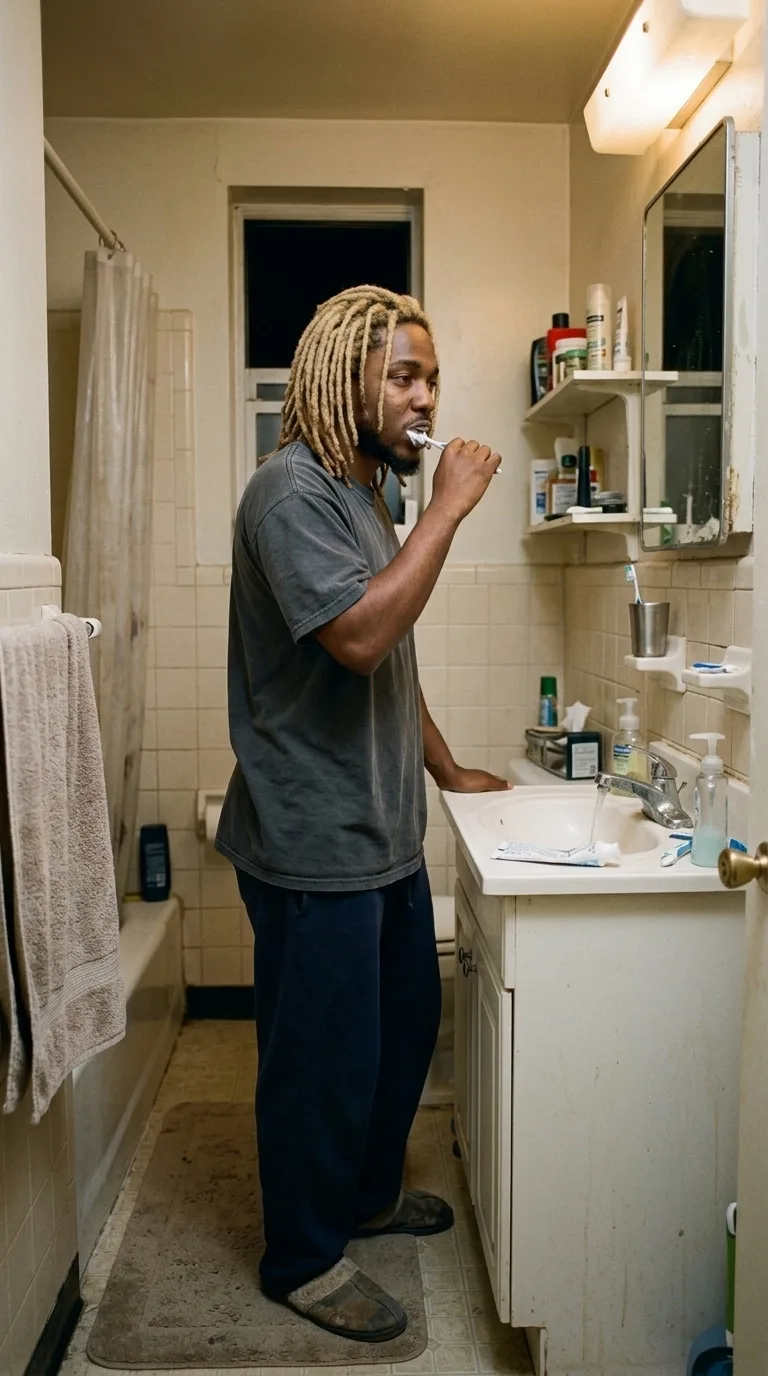
Rarest thing about him: Chinstrap — uncommon, 1 in 93
Season 1seed 926324767 · engine v11
Character card
lineage 2NZHHJ
His body-swap story
@connor.waskiewicz, wearing Samer Nasrallah, rolled the wheel on and woke up as Darnell Whitmore, spent under a minute in him, then spun the wheel and woke up as Gary Lindholm
The man I am in has been awake nineteen hours, and every one of them is in his knees. Samer Nasrallah, thirty, a mechanic's forearms, a beard I have stopped noticing. I have worn him less than a minute and already I know the problem. He is fine. Everything works. Nobody sent me back for a broken thing. It is the quiet. He stands in a kitchen in Las Vegas in the middle of the night with the whole house asleep, and I am a guest in him, and I keep waiting to want to be here. The wanting does not come. So I open the page with the wheel on it, and my thumb is already moving.
Then the tap is running.
Cold water over the left knuckles, a hum of fluorescent tube, foam on my lip, and my arm is mid-stroke, so I finish the stroke. Mint, sharp. Bristles on the gums. The jaw is already tight before I ask it to be. I stop. I start again on the other side, slower, working the back molars, and the clench settles in under the brush like a habit with its own address.
The shirt is a soft gray tee, worn thin, and it lifts something. Cotton at the collar, and he is putting it on in the dark of a bedroom, because he sleeps in it and does not wash it enough, and he thinks, *Thursday, then the long route, then Thursday again.* He has no money to spare. He has a number in his head every night, a small one. He counts it like a rosary, and he is a man who goes to church in a borrowed tie and sits in the third pew because his grandmother did.
The sweatpants, navy, the cord frayed. Slippers under my feet, the soles flattened to the shape of his stride. The tile is cold through them. And a bus comes up through the floor: the wheel, thin and wide and warm from a day of hands, the ten and two he was taught, the kneeling step at the stops for old women. The route ends in a dead lot by the water. He parks, sets the brake, and sits one extra minute, because the light over the lot goes amber, and the whole windshield turns to honey, and for that minute nobody needs anything from him.
The locs hang against my neck. He bleached them in a friend's kitchen, laughing, the roots already coming in dark, and he liked being looked at, a little, and told no one he did.
There is a woman, too. Her name will not come, only the weight of her sweater on a chair, and the way he stopped texting first so he would not have to be the one who stopped. It still sits under his ribs.
I rinse. Twice. The water runs grey, then clear. I stand the brush bristles-up in the cup, and I do not know why that feels like mercy.
I look at my hands. Narrow knuckles, a callus along the base of each palm from the wheel. I turn them over. They are warm. They are mine until they are not.
I lift my eyes to the mirror, to him, to me.
"Okay," I say, in a voice lower than I expected. "Hello."
The tap drips once. I wonder how long before the wanting comes back for this one, and whether I will still be here when the light goes amber.