Darnell Osei
Fictional. Generated by AI — not a real person, and no likeness of one is intended.
38, software engineer in Chicago · rolled by @desmond.oyelaran · card — no film
History
who has worn him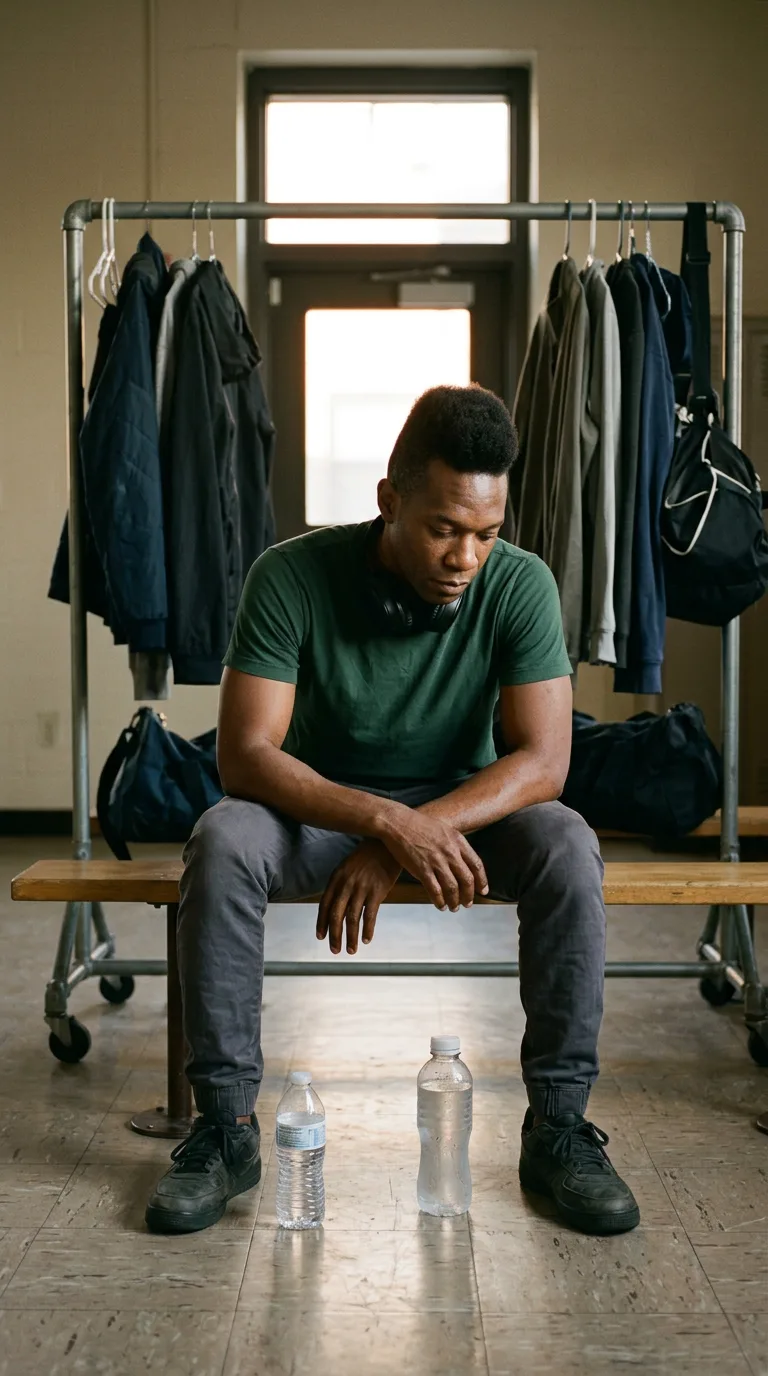
Rarest thing about him: Gay — common, 1 in 32
Season 1seed 2055884761 · engine v11
Character card
lineage E8QVYR
His body-swap story
@desmond.oyelaran, wearing Russell Keahi, rolled the wheel on and woke up as Darnell Osei, spent 7 minutes in him, then spun the wheel and woke up as Brendan Suchocki
Russell Keahi's kitchen smells like the lunch you made him an hour ago, bland on purpose because his stomach has opinions now, and you are standing at his counter in his slack soft belly and his shaved head going shiny under the window, nine minutes into being him and already restless in a way that has nothing to do with him. His knee aches climbing out of nowhere, a thing he must know and you don't, inherited like a bill. You spun because last time felt like holding something underwater — the sweetness of the first few seconds, new weight, new breath, and then the long flat afterward of being told who you are by a body that keeps explaining itself to you in aches. You want that first part again more than you want this. His phone is on the counter, a home-care app blinking a name you don't know and don't care to learn. You open vessel.cards on it anyway, thumb clumsy with his nails, and you spin.
The gym noise arrives before you do — plates landing, a rap bassline bleeding through somebody's open-back headphones, fluorescent light flat and shadowless — and you are gripping a barbell two inches wider than this body has held all year, mid-rep, thighs burning, a breath half let out through clenched teeth that does not finish. You finish the rep instead. Slow. Controlled. The face in a mirror across the room is doing none of the faces this moment should be making, no strain, no grind, just a kind of pleasant blankness wearing a stranger's jaw, because you are not actually fighting the weight, you are only driving it.
The bar goes back on the rack with a sound that lands in your chest before it lands in your ears, and your hands — his hands — are rough-palmed in a way that doesn't match the softness everywhere else, calluses built for a keyboard's opposite, for iron, for something he does on purpose and for no one. Chalk dust ghosts off the skin. The shirt sticks to your back, grey cotton gone through once already and drying stiff, and the second your spine settles against the bench behind you it gives you something: this morning, early, lamp off so as not to wake the man still asleep on the left side of the bed, pulling this same shirt over his head one-armed in the dark, the familiar comedy of finding the armhole by feel. Marcus stirring, not waking, murmuring something that wasn't a sentence. You — he — smiling at a ceiling he couldn't see.
The headphones are around your neck, cooling where they'd been warm against your collarbone an hour ago on the train, and touching the cushion gives you the train itself: a seat by the door, the Brown Line clattering past windows with somebody's kitchen light on in a three-flat, a text from his daughter about a school project due Tuesday that he answered too fast and had to walk back, an apology emoji, her forgiving him instantly the way eight-year-olds forgive everything. His son is younger, still at the stage of wanting to be carried everywhere, and the memory of that weight — a small body gone loose with sleep against this exact chest — comes up through the sternum like heat, nothing to do with the gym at all.
The water bottle sweats against your ankle where you must have knocked it when you sat. Picking it up: a different bench, years back, a different city maybe, a man named Theo whose last name has gone soft at the edges in your borrowed memory, the two of them sharing a bottle like this after a run neither of them needed to take so fast, laughing about nothing, Theo's hand flat on his chest once like he was checking a heartbeat that wasn't his to check. That one closes before it opens all the way, the way old doors do. Something about a wedding that wasn't this one, and a decision made at twenty-six that this body still turns over sometimes at 2 a.m., not with regret exactly, more like checking a scar for sensation.
Your palm finds the waistband of the joggers, soft grey, and there's the morning again, further back this time: pulling these on standing one-legged by the dresser, Marcus's voice from the bathroom asking if he'd grabbed the kids' snacks for tomorrow, the easy domestic call-and-response of it, yes, yes, I did, stop worrying. A ring he doesn't wear to the gym sitting in a dish by the sink, waiting. Mass this morning, the two kids restless in the pew, Marcus's thumb tracing a cross on the back of the boy's hand to keep him still. A whole unhurried ordinary Sunday compressing itself into your nerves through nothing more than elastic waistband and worn cotton, sleeve by sleeve, the shirt, the shoes, the ring left behind, until you are standing in a man's entire gentle architecture of a life and none of it is yours and all of it is, for now, in your hands.
You look down at them. Brown, broad-knuckled, a thin white scar of chalk in the lines of the palm, nothing you put there, nothing he'd call a scar. You turn the right one over slowly, watching it the way you'd watch something borrowed and expensive, and the gym keeps roaring around you, indifferent.
"Okay," you say, out loud, to no one, your voice landing lower in your own ears than you expected, "let's see how long you've got."