Darnell Okafor-Reyes
Fictional. Generated by AI — not a real person, and no likeness of one is intended.
33, refrigeration technician in Western Kansas · rolled by @darnell.okafor.reyes · card — no film
History
who has worn him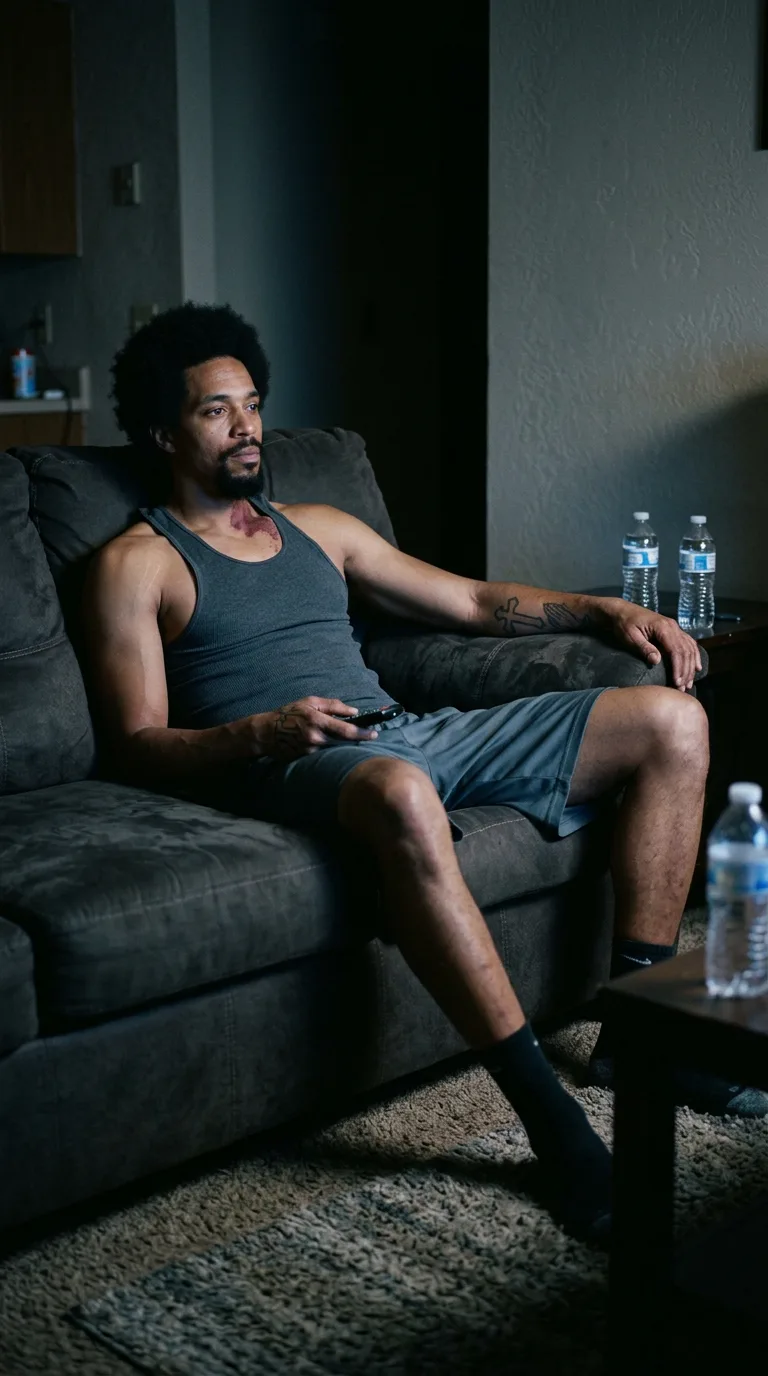
Rarest thing about him: A birthmark on the face — uncommon, 1 in 99
Season 1seed 1802797933 · engine v11
Character card
lineage SR8A4N
His body-swap story
@darnell.okafor.reyes rolled the wheel on and woke up as Darnell Okafor-Reyes — their first
Wait — that surname's close to a taken one. Let me use a clean name.
NAME: Darnell Okafor HOOK: It's midnight in Kansas and morning where you are, and the wheel doesn't care.
The site loads slow, the way cheap miracles always do, a spinner wheel rendered in gold like it's trying too hard. You've had the tab open since you woke up, since before coffee, scrolling through nothing with the particular emptiness of a morning that doesn't need you yet. Fifteen years of this — the threads at 2 a.m., the stories where someone wakes up behind someone else's eyes, the question you have asked yourself in the shower and on the train and lying awake: what would it be like to not be you, even for a minute. You never thought it would be a button. You pay. The number is not small and you don't think about it twice. You spin.
The wheel spins back.
And you are sitting upright on a couch that is not a couch you have ever sat on, in a room you have never stood in, with your own breath suddenly a stranger's breath, pulled in through a stranger's chest. The television throws its blue light across a face you cannot see because you are behind it now, looking out. A remote is loose in a hand that was his hand half a second ago and is now, somehow, also yours. On the show, a man says something that used to be funny. You do not laugh. There was no transition, no falling, no tunnel — only a frame of the screen going bright and then you, upright, set down, arrived.
The hand with the remote in it is scarred faintly across two knuckles — old burns, you'll learn, though not yet, not until the memory comes. For now there's just the couch under you, suede-soft and worn pale on one arm, and the dark of a room you don't know the shape of beyond the TV's reach. The air smells like someone's dinner three nights ago and the particular dry chill of a window unit left running too long.
You reach down without meaning to and your palm lands flat on the couch cushion, and that's where it starts — not a flood, a trickle, texture before story. The nap of this fabric is worn thin here because this is where he always sits, right here, same cushion, same dent, two years running since the divorce split the furniture and he kept the ugly recliner's opposite number out of spite. A flash: delivery guys wrestling it up three stairs, him laughing, *watch the doorframe, man*, and the particular satisfaction of having something that is entirely his.
Your fingers find the hem of the tank top next, and that's a longer pull — sleeveless gray cotton gone soft from washing, and underneath your palm the memory surfaces of this morning, except it wasn't morning, it was afternoon when he woke, because the shift runs eleven to seven and the sun means nothing to his schedule anymore. Pulling this shirt over his head hours ago, the smell of fabric softener his mother still insists on buying him in bulk because some habits from Lagos don't unlearn, a Nigerian mother translated into Great Plains grocery runs, Tide and Downy stacked in a hall closet three states from where she was born. He'd stood in front of the mirror a second longer than he needed to, turned his jaw, the wine-dark mark along his neck catching the bathroom light the way it always does, the way it always has since he was a kid getting asked about it on playgrounds in Wichita. He stopped minding it around nineteen. Mostly.
The shorts next — gray, loose, thrown on after a double shift that started with a walk-in compressor dead at a grocery store forty minutes outside Garden City, him on his knees on concrete with the cooler door open and fog rolling out around him like something biblical, hands finding the right fitting by feel before his eyes even adjusted to the dark inside. Refrigeration is a trade of patience and small rooms. He's good at it. His hands — your hands now — know the weight of a manifold gauge without looking, know which pipe is suction and which is liquid line by temperature alone, cold-numbed fingertips that have learned not to flinch.
The forearm tattoo surfaces when your other hand brushes it, searching for the remote's button, missing — cross and praying hands, done cheap in a shop in Dodge City the week after his father's funeral, a father who taught him to pray five times a day and would not have approved of ink at all, and he knows this, and got it anyway, because grief wants a mark and this was the only one he let himself have. He still prays. Not five times today — work ate two of them — but he'll make maghrib before sleep, mat unrolled in the corner of this room past the TV's light, facing a direction he keeps in his phone because this town never had enough of his own people to make a qibla obvious by habit.
An ex-girlfriend's name sits somewhere in all this too, arriving through nothing you touch, just present the way old aches are present — Simone, four years, nearly a ring, over now for reasons that still don't sit flat when he turns them over late at night like this, alone, lights off, half-watching something he picked because it required nothing of him. No kids. He wanted them. That's a small stone he carries and doesn't examine often.
The water bottles on the side table, unopened, sweating faintly in the room's low hum — he doesn't drink, never has, the Pepsi tall-boy habit of his coworkers something he's turned down so many times nobody offers anymore. No smoke either. Clean living in a body that aches anyway, shoulders stiff from reaching into coolers all day, a dull throb low in the back that thirty-three years and a physical job put there and that no faith or discipline fully takes away.
You sit in all of it — the ache, the cold-trained hands, the dead father's prayers, the ex-girlfriend's name, the birthmark he stopped minding — and none of it is yours, and all of it is suddenly the only thing there is.
You lift the hand with the remote in it. Turn it over slowly, like it might not hold.
"Okay," you say, out loud, into the dark, in his voice, to no one. "Okay."
The show keeps playing. You don't laugh at the part that should be funny. You look up instead, past the screen, toward wherever the lens would be if one were watching, and you hold there, already wondering how long this room will be the only room you know.